News
Aug. 31, 2026
In metal casting, a small amount of slag, oxide film, or ceramic debris can cause porosity, inclusions, leakage, and costly machining defects. A ceramic foam filter helps clean molten metal before it enters the mold. This guide explains ceramic foam filter for aluminum casting, silicon carbide ceramic foam filter applications, and how to choose a foundry ceramic foam filter for practical production needs.
Modern foundries use filters because melt cleanliness affects yield, surface quality, fatigue strength, and rejection rates. The filter does not replace correct furnace control or slag removal. Instead, it adds a controlled filtration step between the holding furnace and the mold or die cavity.

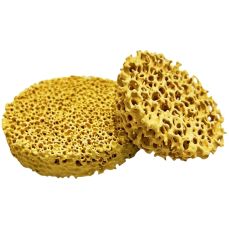
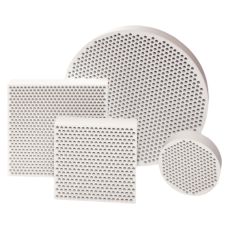
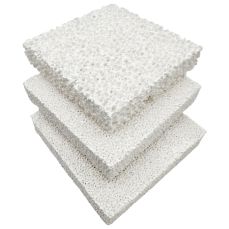
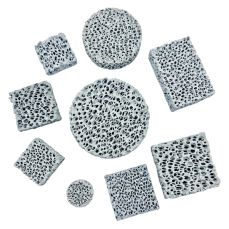
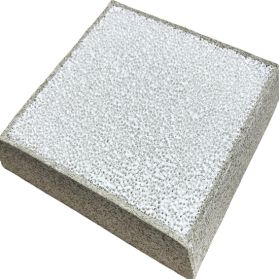
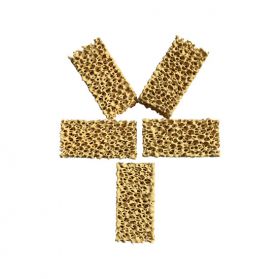
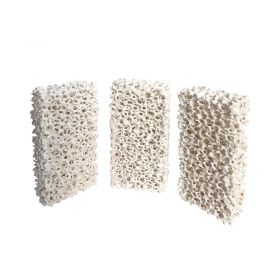
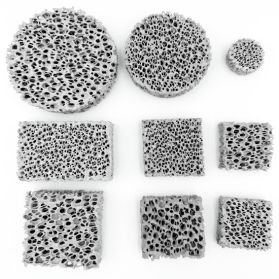
A Ceramic Foam Filter is an open-cell ceramic filtering unit with a three-dimensional network of connected pores. Molten metal flows through the ceramic structure while solid particles and non-metallic inclusions are held back by several mechanisms:
Unlike a simple screen, a foam filter has tortuous flow channels. The filter’s performance depends on ceramic material, pore density, thickness, filter area, metal temperature, alloy chemistry, and pouring rate.
The ceramic material should match the alloy temperature, chemical environment, and required filtration performance. Common materials include alumina, silicon carbide, and partially stabilized zirconia.
| Filter material | Common casting use | Important selection points |
|---|---|---|
| Alumina | Aluminum alloys and some non-ferrous metals | Good chemical stability for many aluminum casting operations; verify compatibility with the alloy and temperature. |
| Silicon carbide | Gray iron, ductile iron, copper alloys, and selected high-temperature applications | High thermal conductivity and strong thermal performance; grade and design must suit the metal. |
| Zirconia | Steel and other high-temperature alloys | Used where high refractoriness and chemical stability are required. |
Material selection should not be based on temperature alone. The foundry should also review molten metal chemistry, expected flow time, filter position, thermal shock risk, and whether the filter will be exposed to iron, copper, aluminum, or steel for a short or extended period.
Aluminum casting is one of the most common applications. Aluminum alloys can contain oxide films, entrained air, and particles from furnace treatment or recycled feedstock. A Ceramic Foam Filter can be installed in a pouring basin, runner system, filter box, or gating system.
In aluminum production, the filter is commonly used to:
Filtration is not a substitute for rotary degassing, flux control, or correct holding temperature. Hydrogen removal and oxide control require separate process controls.
Silicon carbide foam filters are widely considered for gray iron and ductile iron operations because the process uses higher temperatures and a heavier metal flow than aluminum casting. The filter can help retain slag, sand, refractory fragments, and other non-metallic particles.
For iron casting, engineers should check:
An undersized filter may restrict flow and cause incomplete filling. An oversized filter may increase material cost without improving the process. The correct size is determined by metal mass, pouring time, alloy, and available pressure.
Steel casting demands a refractory material with high thermal and chemical resistance. Zirconia-based ceramic foam filters are often evaluated for steel because steel is poured at a much higher temperature than aluminum.
Steel foundries must pay close attention to:
The filter specification should be validated through a controlled trial. A filter that performs well in aluminum should not automatically be used for steel.
Copper alloys require a filter that can tolerate high temperature and possible chemical interaction with the melt. Silicon carbide and other high-temperature ceramic solutions may be used depending on alloy composition and casting method.
Typical goals include reducing oxide particles, protecting the gating system, and stabilizing the flow into sand, permanent-mold, or investment-casting systems.
Investment casting requires careful control of inclusions because small defects can affect dimensional accuracy, sealing surfaces, and fatigue performance. A properly selected filter may be placed in the ceramic shell system or a dedicated filter location, provided the design does not create an unacceptable pressure loss.
In continuous and semi-continuous processes, filtration must remain stable for the full operating cycle. Filter capacity, thermal endurance, and pressure drop are more important than simply choosing the finest pore structure.
The main value of a Ceramic Foam Filter is process control. It creates a repeatable barrier against many solid inclusions during mold filling. Cleaner metal can support improved casting quality, but the result should be measured with production data rather than assumed.
Useful quality indicators include:
For example, a foundry can compare 30 production batches before and after filter installation. The comparison should record alloy, melt temperature, pouring mass, mold type, filter size, filter material, and rejection reason. This approach separates the effect of filtration from other changes such as degassing, gating redesign, or furnace maintenance.
Start with the actual alloy rather than a general metal category. Aluminum-silicon alloys, ductile iron, gray iron, copper alloys, and steel have different temperature and chemical requirements.
Choose alumina, silicon carbide, zirconia, or another suitable ceramic according to operating temperature and chemical compatibility. Ask the supplier for recommended metal types and test conditions.
Filter area is related to metal mass, flow rate, metal head, filter thickness, pore structure, and acceptable pressure drop. A practical starting point is to use the supplier’s sizing chart and then confirm the choice through a pouring trial.
Do not choose the smallest filter that physically fits the runner. A filter that is too small may slow the filling process, increase turbulence upstream, or stop flow before the mold is full.
PPI provides a reference for pore structure, but it should not be treated as a universal filtration rating. Two filters with the same PPI can have different strength, permeability, pore distribution, and filtration behavior.
When comparing products, request:
The filter should be located where it can remain stable and fully surrounded by metal during pouring. Common positions include the pouring basin, runner, filter box, sprue, and ladle outlet.
The design should prevent:
Preheating may be recommended for some high-temperature or sensitive applications. However, the preheating method must follow the supplier’s instructions. Uneven heating can create thermal stress and damage the filter before pouring begins.
Possible causes: excessive slag, high inclusion loading, filter area that is too small, low metal temperature, or an overly fine pore structure.
Actions: improve slag removal, increase filter area, review PPI, confirm pouring temperature, and inspect the filter after use to identify the blockage pattern.
Possible causes: poor seating, a gap around the filter, mold damage, or an incorrectly designed filter chamber.
Actions: improve mechanical support, reduce clearance, repair the surrounding refractory, and verify the filter position before each pour.
Possible causes: cracks from transport, thermal shock, direct metal impact, insufficient support, or a material that does not match the metal temperature.
Actions: improve handling, review preheating, change the filter material, add support, and reduce direct stream impact.
Possible causes: excessive pressure drop, insufficient metal head, filter thickness that is too high, or a filter area that is too small.
Actions: review the flow calculation, increase the filter area, adjust the gating design, or select a more permeable filter grade.
Possible causes: filter bypass, filter damage, excessive turbulence before the filter, poor furnace cleaning, or inclusions formed after filtration.
Actions: inspect the entire melt-handling process. Filtration cannot remove every defect source. Furnace slag control, degassing, transfer practice, runner design, and mold cleanliness must also be controlled.
A professional supplier should maintain batch-level quality control. Depending on the product and market, useful checks include dimensional inspection, visual inspection, pore-structure review, strength testing, thermal shock testing, and traceability records.
For foundry use, buyers should ask for:
International quality systems can help organize supplier control. ISO 9001:2015 defines requirements for a quality management system, while ASTM and other national standards may apply to specific casting, refractory, or testing procedures. The correct standard depends on the product and application, so the buyer should confirm the applicable specification with the supplier and end customer.
The purchase price of one filter is only part of the economic calculation. A foundry should compare the total cost of the process:
| Cost or benefit category | What to measure |
|---|---|
| Filter cost | Cost per filter, cost per casting, and replacement frequency |
| Scrap reduction | Rejection rate by inclusion, leakage, porosity, or surface defect |
| Machining efficiency | Tool damage, rework time, and machining rejection |
| Labor | Filter installation time, inspection time, and cleaning effort |
| Throughput | Pouring time, mold-fill completion, and batch output |
A simple evaluation formula is:
Net process benefit = avoided scrap cost + avoided rework cost + quality improvement value − filter and installation cost.
Use actual plant data over multiple batches. A single successful pour is not enough to prove a long-term improvement.
When comparing suppliers, focus on technical support as well as price. A suitable supplier should be able to discuss alloy type, filter material, PPI, dimensions, flow conditions, installation method, and inspection requirements.
Before placing a large order, ask for samples and run a controlled trial. Record the filter specification and casting results. Compare samples under the same conditions instead of changing the filter, pouring temperature, and gating system at the same time.
HEBEI CANGCHEN can be considered for foundry filtration projects that require ceramic foam filter selection, size customization, and application support. Buyers should provide the metal type, alloy grade, casting method, filter location, filter dimensions, pouring temperature, and target production volume to receive a more useful recommendation.
Its main purpose is to reduce the amount of non-metallic inclusions entering the mold. It can also help stabilize molten metal flow and reduce turbulence. It does not remove all dissolved gas or replace furnace treatment.
Alumina filters are commonly evaluated for aluminum casting, but the best choice depends on alloy chemistry, temperature, filter position, pouring rate, and required flow capacity. Filter size and PPI must also be selected for the specific casting design.
Silicon carbide filters are commonly considered for gray iron and ductile iron because they offer suitable high-temperature performance. The final choice should be confirmed through supplier data and a production trial.
No single filter specification should be assumed suitable for every metal. Aluminum, iron, and steel have different pouring temperatures, densities, chemical environments, and flow conditions. Material and design should be matched to the casting process.
No. A higher PPI may provide a finer pore structure, but it can also increase pressure drop and restrict flow. Filter performance depends on pore distribution, area, thickness, permeability, strength, and the amount of inclusion carried by the melt.
Start with metal mass, pouring rate, metal head, alloy, temperature, filter material, and acceptable filling time. Use the supplier’s sizing data, then confirm the selection through a controlled trial. The filter should be large enough to pass the required metal volume without early blockage.
Bypass usually occurs when the filter does not fit tightly in its chamber or when the surrounding refractory breaks. Check the filter dimensions, seating surface, support structure, and sealing method.
Some applications benefit from preheating, especially when thermal shock is a concern. The procedure depends on the ceramic material and metal. Follow the supplier’s instructions and avoid uneven heating.
Store filters in a dry, clean area in their original packaging. Protect them from impact, moisture, dust, and heavy loads. Do not use filters with visible cracks or damaged edges.
Begin with a process review. Record the metal type, alloy, pouring temperature, casting weight, pouring time, filter location, current rejection causes, and available filter space. Then request a technical recommendation and sample from a qualified supplier.
For additional guidance, review the resources on foundry practice, consult relevant ASTM or ISO documentation, and compare supplier technical data rather than relying on general product claims. You can also contact HEBEI CANGCHEN to discuss Ceramic Foam Filter Applications and arrange a product trial for your casting process.
How to Select The Correct Filter For Your Casting
Oct. 09, 2026
Why use TF COMBO BAG for molten aluminum
Oct. 01, 2026
Contact Us
+86 158 3011 4065
Guoruiyuan Building, ShengLi North Street, Chang'An District, Shijiazhuang City, Hebei Province, China.
Navigation
Navigation