Ceramic Foam Filter
Zirconia Ceramic Foam Filters are used for filtration of all types of steel like unalloyed, low alloyed, stainless and high-alloyed.
Filters are recommended especially for high quality grades of alloys.
Suitable for carbon steel, alloy steel, stainless steel, and nickel- or cobalt-based superalloys.
With their excellent resistance to attack and corrosion from molten steel liquid, they can effectively remove inclusions, reduce trapped gas from liquid metal and provide laminar flow, and then the filtered metal is significantly cleaner.
Cleaner metal results in higher-quality castings, less scrap, and fewer inclusion defects. They are the best choice for filtering of determined for filtering of steel and steel alloys up to the temperature of 1700℃.
Description
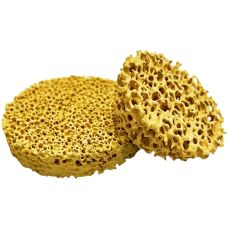
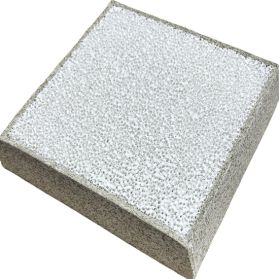
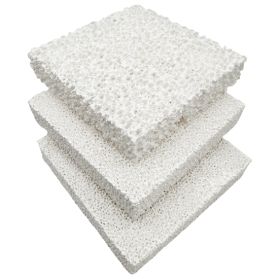
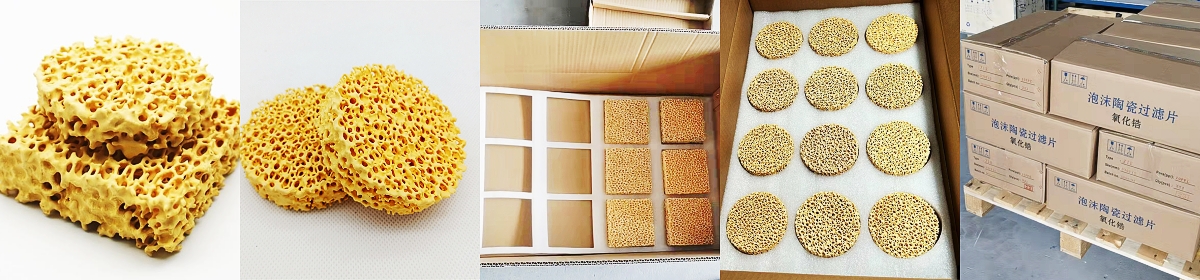
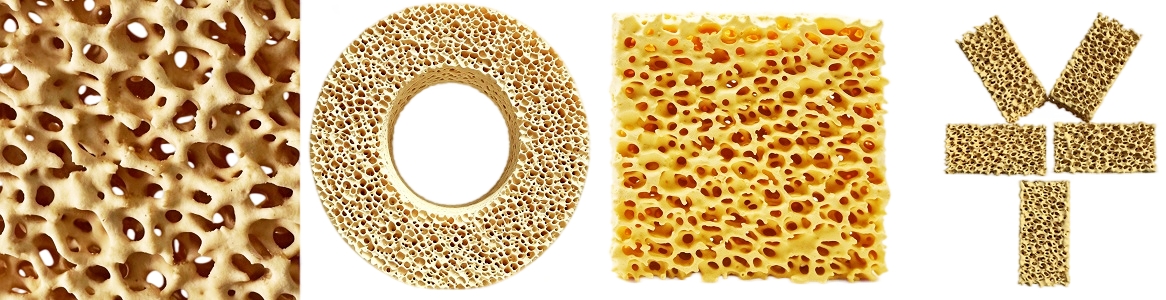
Zirconia ceramic foam filter is manufactured from partially stabilized zirconia (ZrO₂) ceramic. A reticulated polyurethane sponge is impregnated with a zirconia slurry, dried, and sintered at high temperature. The polymer skeleton is burned out during firing, leaving a rigid, light-yellow to cream-colored ceramic foam with an open, interconnected pore network.
Zirconia ceramic foam filters are the best choice for filtering steel and steel alloys up to the temperature of 1700℃. Filters are recommended especially for high quality grades of alloys.
They have good resistance to attack and corrosion of liquid steel, can effectively remove inclusions in liquid metal, reduce trapped gas in liquid metal, and provide laminar flow, so that the filtered metal is significantly clean. Cleaner metals lead to higher quality castings, less scrap and fewer inclusion defects.
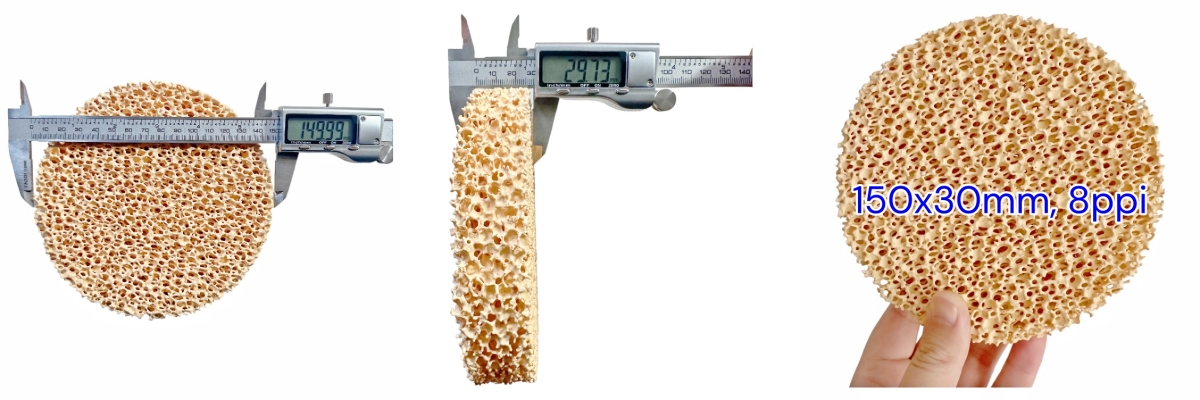
Technical Data Sheet:
| Type | Zirconia ceramic foam filter for steel and high alloy |
| Color | Yellow |
| ZrO2(%) | 85-90 |
| Al2O3 (%) | 5-10 |
| SiO2(%) | ≤4 |
| MgO(%) | 4-5 |
| Porosity | 80-90% |
| Bulk Density | 0.8-1.5g/cm3 |
| Compressive strength | ≥1.5Mpa(Room temperature) |
| PPI | 10-40PPI(PPI=pores per inch) |
| Work Temperature | ≤1700℃ |
| Thermal shock resistance (Times/1100°C) | 6 |
| Certificate | ISO9001:2015 |
| REACH & RoHS |
Regular Size:
| Dimensions (mm) | Zirconia Ceramic Foam Filter | |
| Pouring Rate(kg) | Filtration Capacity(kg) | |
| 50×50×22 | 3~5 | 30 |
| 50×75×22 | 4~6 | 40 |
| 75×75×22 | 7~12 | 60 |
| 75×100×22 | 8~15 | 80 |
| 100×100×22 | 14~20 | 100 |
| Dia 50×22 | 2~6 | 18 |
| Dia 80×22 | 6~10 | 50 |
| Dia 90×22 | 8~16 | 70 |
Application scenarios:
● Zirconia Ceramic Foam Filters are used for filtration of all types of steel like unalloyed, low alloyed, stainless and high-alloyed.
● Filters are recommended especially for high quality grades of alloys.
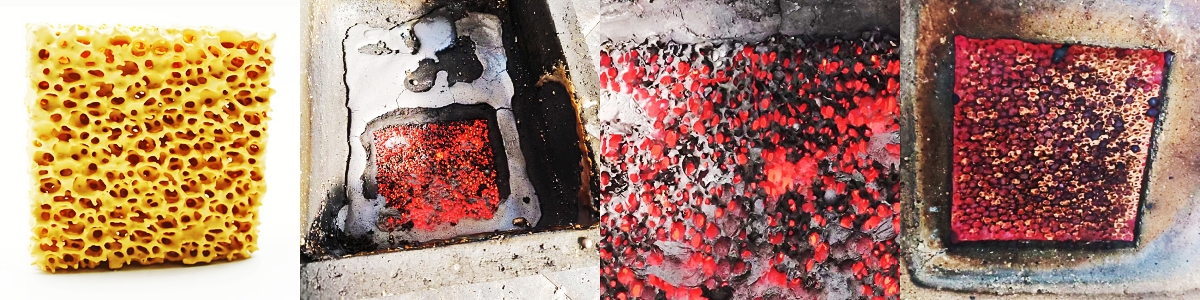
● With their excellent resistance to attack and corrosion from molten steel liquid, they can effectively remove inclusions, reduce trapped gas from liquid metal and provide laminar flow, and then the filtered metal is significantly cleaner.
● Cleaner metal results in higher-quality castings, less scrap, and fewer inclusion defects.
● They are the best choice for filtering of determined for filtering of steel and steel alloys up to the temperature of 1700℃.
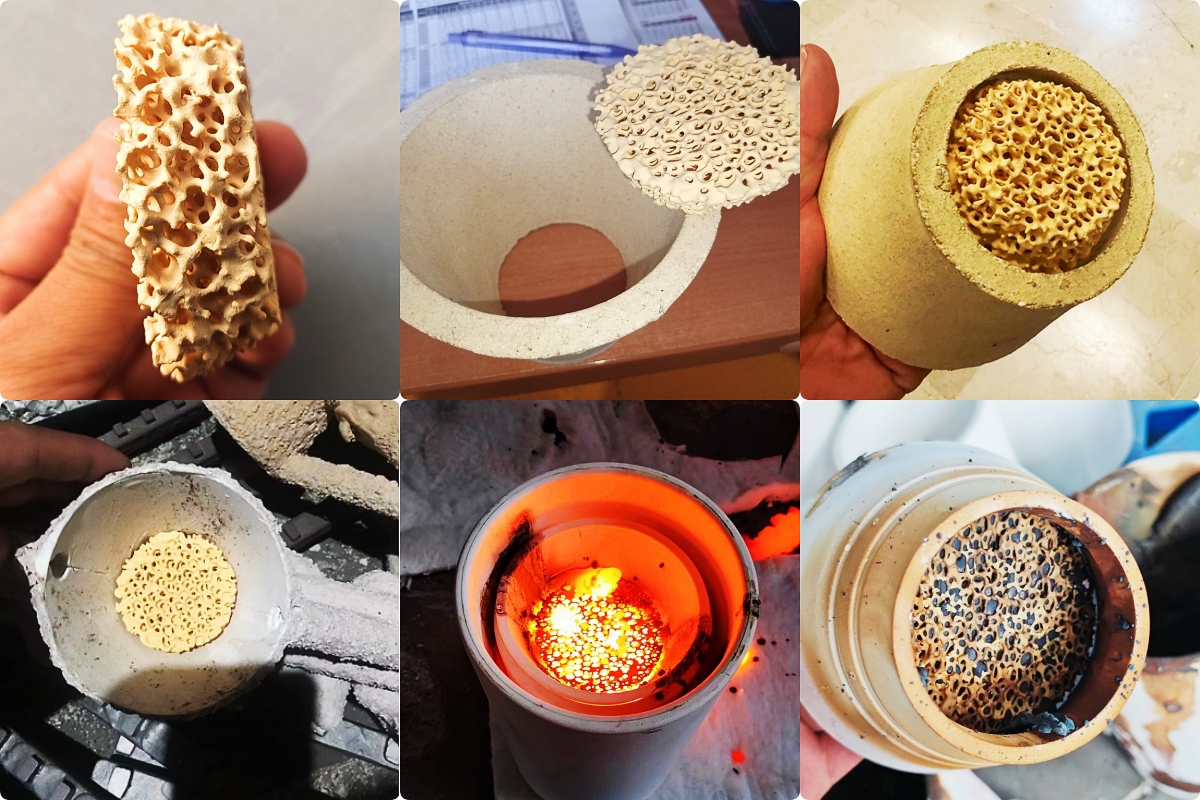
Zirconia is selected for steel casting for four reasons:
1. Temperature capability. The filter withstands continuous service at about 1700 °C, well above the 1550–1650 °C pouring range of carbon steel, alloy steel, and stainless steel. Zirconia melts at about 2715 °C, leaving a wide safety margin.
2. Chemical inertness. Zirconia does not react with molten steel, ladle slag, mold wash, or the oxides and sulfides generated during deoxidation. The filter does not degrade, shed particles, or alter the chemistry of the melt.
3. Hot strength. The body retains compressive strength at steel-pouring temperature, so it survives the initial metal surge and the hydrostatic head of a heavy casting without crumbling. A filter that breaks apart introduces ceramic fragments into the steel — a defect worse than the inclusions it was meant to remove.
4. Thermal shock resistance. The stabilized body survives the sudden first contact with 1600 °C metal and the temperature gradient across the plate without cracking.
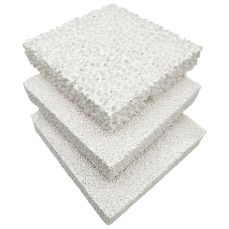
Standard porosity ranges from 80% to 90%, with a bulk density of about 0.8–1.0 g/cm³. The open-cell structure provides a large internal contact surface on which non-metallic inclusions are captured throughout the filter depth.
Functions:
● Reduction in inclusion levels
● Good filtration capacity
● Ideal for the filtration of high alloyed steel
● High efficiency
● Filters can be preheated for investment casting application
Quality Inspection:
Three most important key points that make our quality always best are:
● The most advanced testing equipment and technology are adopted today in Hebei Cangchen to ensure the consistant filters quality.
● There is a quality inspection team with rich experience and technology to keep best quality in our quality control department.
● Thanks to many years of product export and feedback information from domestic and foreign customers, we have accumulated considerable experience and expertise in quality control and improvement.
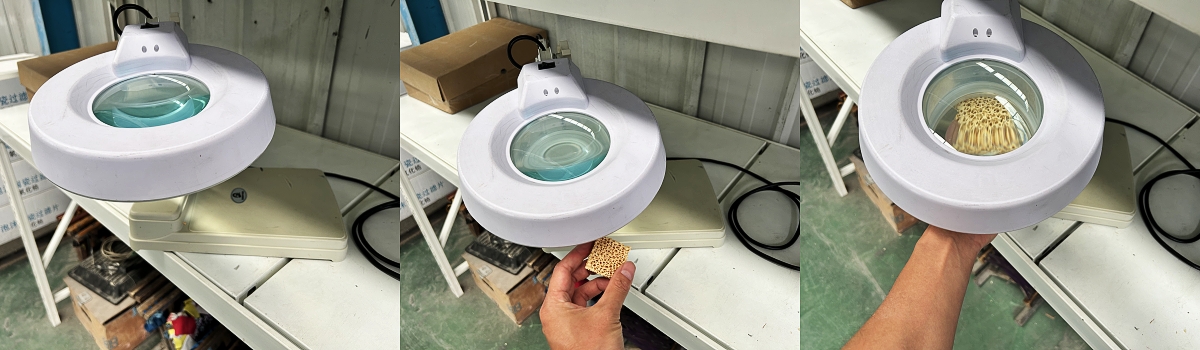
For now, Hebei Cangchen is a professional manufacturer with ISO certificate and our Zirconia ceramic foam filters have been passed RoHS And Reach test and certified.

Frequently Asked Questions:
1. Why is zirconia required for steel? Why not silicon carbide?
Silicon carbide filters soften and react at steel-pouring temperatures above about 1500 °C, contaminating the melt with silicon and carbon. Stabilized zirconia remains rigid and inert up to about 1700 °C, which is why it is the standard choice for carbon steel, alloy steel, and stainless steel poured at 1550–1650 °C.
2. What PPI should I use?
● Large carbon steel castings over 500 kg use 10 PPI.
● General-purpose steel castings use 15 PPI.
● Stainless steel and medium precision parts use 20 PPI.
● Investment-cast precision parts and superalloy components use 30 PPI.
3. Do I need to preheat the filter?
Preheating is optional for small pads but is recommended for large or heavy castings to reduce thermal shock and prevent the first metal from freezing on the filter face.
4. How much does the filter reduce flow?
Expect roughly a 10–20% reduction in flow rate and a 10–20 °C temperature drop across the filter. Adjust pouring time and pouring temperature accordingly.
5. Can zirconia filters be used for iron or aluminum?
They can, but it is not cost-effective. For iron and copper-alloy casting, silicon carbide filters are the appropriate product; for aluminum, alumina filters are the standard choice. Zirconia is reserved for steel and high-temperature superalloys.
6. How many times can a filter be reused?
Zirconia foam filters are single-use consumables. After pouring, they are removed with the gating system during shakeout and discarded.
7. Can custom sizes and shapes be supplied?
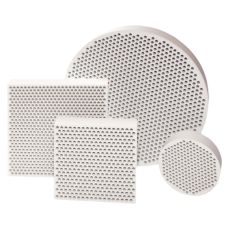
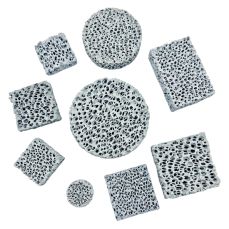
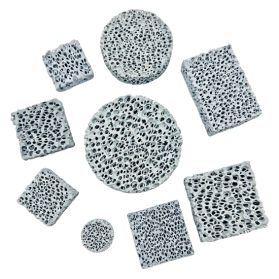
Yes. Square, round, and custom geometric shapes are available. Send your drawing or gating dimensions for a recommendation.
Application:
Filtration of molten steel and alloy
Filtration of large scale iron casting
Filtration of high quality grades of alloys
Preheated for investment casting application
Look forward to hearing from you:
Contact Us
+86 158 3011 4065
Guoruiyuan Building, ShengLi North Street, Chang'An District, Shijiazhuang City, Hebei Province, China.
Navigation
Navigation