News
Aug. 31, 2026
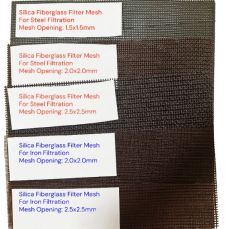
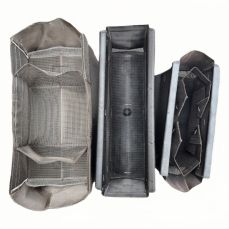
In metal casting, one small inclusion can cause a leak, crack, or rejected part. Fiberglass Filtration Mesh helps remove slag, oxide films, sand, and other non-metallic particles before molten metal enters the mold. This guide explains how fiberglass filtration mesh for molten aluminum works, how to select the correct mesh, and how to install it safely. It also covers performance data, cleaning limits, quality checks, and common mistakes so buyers and foundry teams can make a practical choice.

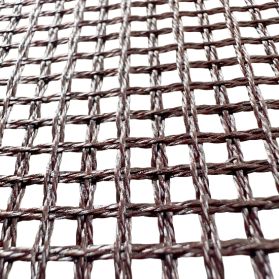
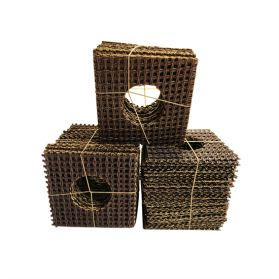
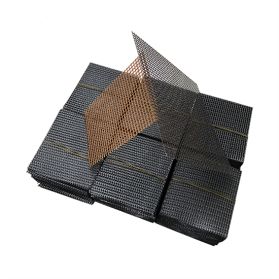
Fiberglass filtration mesh is a woven or formed filter made from glass-fiber strands. The mesh creates a controlled barrier that allows liquid metal or another process fluid to pass while retaining larger solid particles.
In foundry work, the mesh may include a heat-resistant coating, resin treatment, or additional support layer. The final temperature rating, chemical resistance, and strength depend on the fiber type, coating, strand diameter, mesh count, and manufacturing process.
The product is not the same as ordinary fiberglass cloth used for insulation or composite reinforcement. A filtration mesh must have a controlled opening pattern and enough mechanical stability to remain in position during flow.
For a simple square mesh, the approximate opening can be estimated with this formula:
Opening size in millimeters ≈ 25.4 ÷ mesh count − strand diameter in millimeters
This is only an estimate. The supplier’s technical drawing and test report should be used for final design decisions.
Molten metal can carry oxides, slag, refractory fragments, sand, and other inclusions. These materials may enter the mold during pouring. When the liquid metal passes through fiberglass filtration mesh, the mesh can retain particles that are larger than its effective openings.
The filter works through several mechanisms:
Filtration does not replace good furnace practice. The melt must still be skimmed, degassed when required, and transferred with clean tools. A filter that is overloaded with slag can reduce flow and increase the risk of incomplete filling.
Aluminum casting is one of the main areas where a fine filter can help reduce oxide and slag inclusions. Fiberglass filtration mesh may be used in runners, pouring systems, filter boxes, or other controlled points in the gating design.
Common applications include:
The correct mesh must match the alloy temperature, metal flow rate, casting weight, and required cleanliness level. A mesh that is too fine may block before the mold is filled.
Copper alloys require careful thermal design because they are processed at higher temperatures than many aluminum alloys. The filter material, coating, support structure, and contact time must be checked against the actual alloy and pouring temperature.
Fiberglass mesh can also be considered for selected zinc and non-ferrous casting processes. Compatibility must be confirmed before use because alloy chemistry, temperature, and flow speed can change filter performance.
Depending on its coating and construction, fiberglass filtration mesh may be used in industrial screens, pre-filtration, process tanks, and equipment protection. These applications require separate chemical-compatibility data. A mesh designed for foundry use should not automatically be used in water, solvent, food, or chemical processing.
Inclusion control affects casting quality, machining performance, pressure tightness, and surface appearance. A single filter cannot remove every defect, but it can provide a repeatable barrier at a critical point in the process.
The main benefits include:
These benefits should be measured with production data. Useful indicators include inclusion counts, radiographic defect rates, leakage-test results, scrap percentage, pressure drop, and casting yield. For example, a foundry can compare 30 castings made without filtration with 30 castings made using a specified mesh. The comparison should use the same alloy, mold, pouring temperature, and flow conditions.
Start with the liquid being filtered. Aluminum, copper alloy, zinc, water, resin, and chemical liquids require different materials and coatings. Provide the supplier with the alloy or fluid name, operating temperature, chemical exposure, and contact time.
Do not select a mesh by appearance alone. Determine the size of the particles that must be retained. If the process contains very fine oxide films, a simple coarse screen may not provide enough control. If the goal is to stop large slag pieces, a coarse mesh may provide better flow and longer service life.
Filter capacity depends on more than surface area. It also depends on viscosity, temperature, particle loading, pressure, and the time needed to fill the mold.
A basic design relationship is:
Flow rate = filter area × average flow velocity
Actual performance is affected by blockage. For this reason, the supplier should provide pressure-drop or flow-test data when the application is critical.
Mesh count is useful for product identification, but opening size should control the final decision. Two meshes with the same nominal count can have different clear openings if their strand diameters differ.
Ask for these values:
Do not rely on the general melting point of glass. The coating, binder, edge treatment, support frame, and contact time may determine the real operating limit. Request the supplier’s maximum continuous temperature and short-term exposure limit for the exact product.
For molten-metal use, the filter should also be evaluated for thermal shock. A cold filter placed directly into a high-temperature metal stream may shrink, crack, release coating particles, or lose its shape.
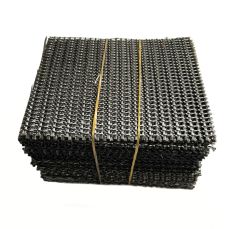
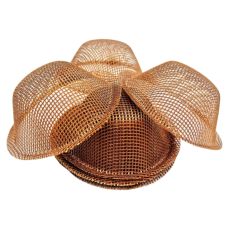
Common designs include rolls, sheets, discs, rectangular pieces, framed screens, and custom-cut parts. The filter should fit the housing without gaps around the edge. A bypass gap can allow unfiltered material to pass around the mesh.
The mesh must resist the filtered material, handling forces, vibration, and pressure. Check whether the coating can react with the alloy or process fluid. Also confirm that cut edges will not shed loose strands into the product.
For production validation, begin with a controlled trial. Measure fill time, filter condition after use, visible inclusions, casting weight, and defect results. Adjust one variable at a time so the effect of the mesh can be identified.
Many fiberglass filtration meshes used in foundry operations are treated as single-use components. Reuse should only be considered when the supplier confirms that the material can be cleaned and requalified.
After exposure to molten metal, the mesh may have hidden cracks, blocked openings, heat-damaged coatings, or reduced strength. Washing or brushing may remove visible residue but cannot prove that the original filtration performance has returned.
Store unused mesh in a dry, covered area. Keep it away from oil, acids, alkalis, direct water contact, and heavy objects. Use first-in, first-out stock control and keep the original packaging until the product is ready for inspection.
A professional supplier should be able to provide product information that matches the batch delivered. Useful documents include:
For dimensional screening, ASTM E11 is a recognized reference for woven wire test sieves and may help buyers understand terms such as nominal aperture and sieve designation. It does not automatically certify every fiberglass product, so the supplier’s product-specific data remains necessary.
For workplace safety, foundries should also review OSHA guidance on foundry operations and respiratory hazards. The U.S. Environmental Protection Agency provides information on emissions and controls for metal casting facilities. These sources are useful for building a broader process-control plan, but they do not replace local safety rules or the manufacturer’s instructions.
Reference resources:
Possible causes include an opening that is too small, excessive slag loading, low metal temperature, insufficient filter area, or a flow rate that is too high. A larger filter area or a coarser pre-filter may help, but the change must be tested against inclusion results.
This usually indicates a gap between the mesh and its support. Check the frame, seating surface, cut dimensions, and edge seal. A filter is only effective when the full flow passes through the active area.
Possible causes include thermal shock, incorrect temperature exposure, poor support, mechanical impact, or a damaged product. Review preheating, frame design, handling, and the supplier’s temperature limits.
Filtration may not solve inclusions caused by dirty ladles, turbulent filling, poor skimming, excessive oxide formation, or contaminated charge material. Review the entire melt-handling process instead of changing only the mesh.
Inspect the coating, cut edges, and support structure. Use a product designed for the specific application and ask for a shedding or integrity-control method when loose fibers could affect the final part.
Industrial teams should use suitable gloves, eye protection, protective clothing, and respiratory controls during cutting and handling. Fiberglass strands can irritate the skin, eyes, and airways. Cutting should be performed in a controlled area with appropriate dust extraction.
When the mesh is used with molten metal:
Safety data must come from the exact product and the workplace risk assessment. A general fiberglass description is not enough for a coated or resin-treated filtration mesh.
Before placing an order, prepare the following information:
Send this information to the supplier before asking for a price. A low unit price does not show that the mesh is suitable. The correct comparison should include service life, rejected castings, installation time, filter capacity, and total process cost.
It can be suitable when the exact mesh, coating, support, and temperature rating are designed for molten aluminum. Always confirm compatibility with the supplier before production use. Do not use ordinary fiberglass fabric without a verified filtration specification.
It can retain particles related to its opening size, but filtration performance also depends on flow speed, particle shape, blockage, and mesh structure. For fine inclusions, ask for test data rather than relying only on the nominal mesh count.
There is no universal answer. The correct choice depends on alloy, casting weight, flow rate, target particle size, and available filter area. Start with the supplier’s recommended range and confirm it through a controlled casting trial.
Some products can be cut, but cutting may leave loose fibers or weaken the edge. Use a clean cutting method and confirm whether the edge needs sealing or a frame.
Most foundry filtration mesh is used once because heat and retained slag can change its structure. Reuse is acceptable only when the manufacturer provides a validated cleaning and inspection procedure.
Record flow time, pressure drop when available, filter condition, inclusion results, casting yield, and defect type. Compare the data with a defined baseline using the same alloy and casting conditions.
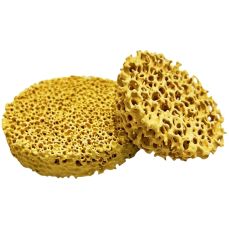
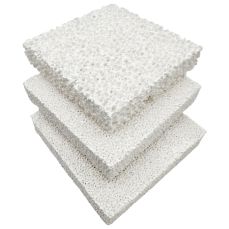
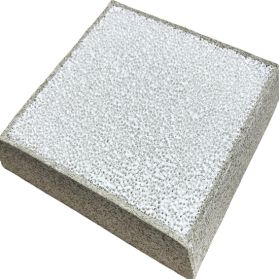
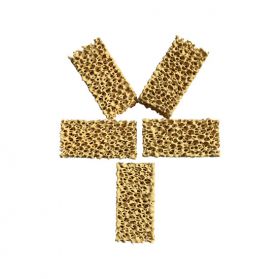
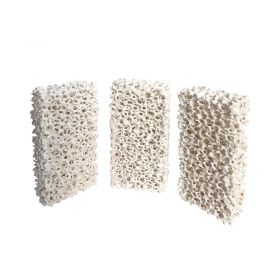
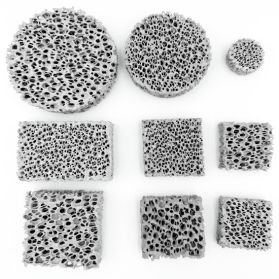
No. Fiberglass mesh is a woven or mesh-based structure, while a ceramic foam filter has a three-dimensional porous network. They differ in temperature capability, flow resistance, particle retention, and installation method.
Contact HEBEI CANGCHEN with your alloy, operating temperature, flow rate, filter dimensions, and target opening size. Request a product datasheet, sample, certificate, and application recommendation before starting a full production order.
Begin by defining the particle problem, measuring the current casting process, and checking the available filter space. Then compare opening size, open area, temperature rating, support design, and batch documentation. A small trial with recorded results is safer than changing several process variables at once.
For additional guidance, review the product datasheet and installation instructions from HEBEI CANGCHEN, request a sample, and ask for a recommendation based on your actual alloy and casting conditions. If you are learning how to choose fiberglass filtration mesh, use the checklist in this guide and confirm every technical value before production use.
How to Select The Correct Filter For Your Casting
Oct. 09, 2026
Why use TF COMBO BAG for molten aluminum
Oct. 01, 2026
Contact Us
+86 158 3011 4065
Guoruiyuan Building, ShengLi North Street, Chang'An District, Shijiazhuang City, Hebei Province, China.
Navigation
Navigation