News
Sep. 09, 2026
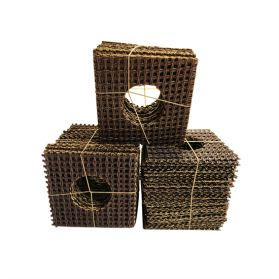
This premium disposable depth‑filtration filter bag is purpose‑engineered for high‑end aluminum and aluminum‑alloy casting applications.
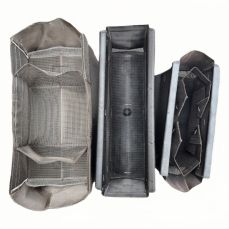
● Woven from genuine carbon‑fiber cloth from the raw‑material phase, it features an integrated three‑dimensional bag‑shaped construction.
● It combines impurity capture, deep‑bed filtration, flow diversion and flow homogenization in one unit.
● Installed within casting launders, pouring troughs and gating systems, it delivers stable deep purification for molten aluminum without generating gas‑related casting defects or altering alloy chemical composition.
Distinct from carbonized fiberglass filter products, which are produced by applying post‑carbonization treatment to fiberglass substrates, this filter bag uses carbon fiber as its intrinsic base material with no underlying fiberglass layer.
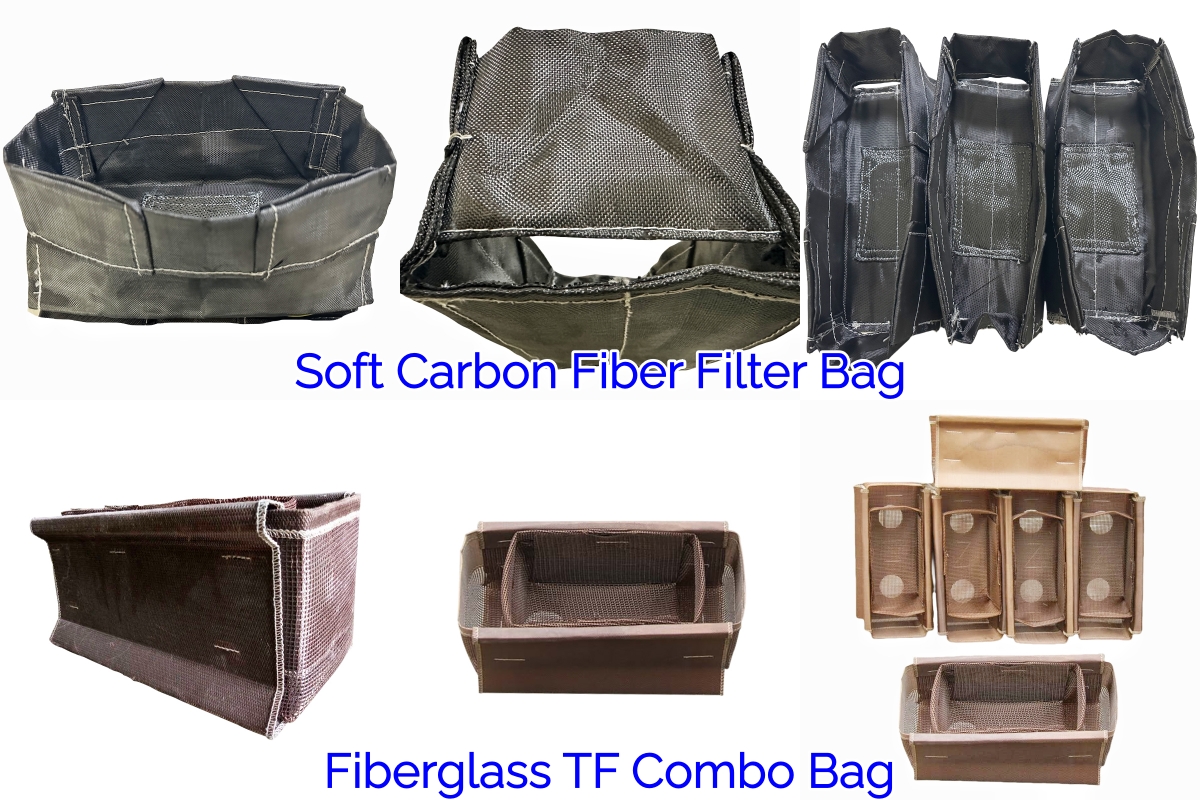
The base fabric is woven from high‑strength continuous carbon‑fiber yarn with carbon content above 90 %. The material delivers outstanding high‑temperature stability and excellent chemical inertness against molten aluminum. It will not react with aluminum melt or modify alloy chemistry, and maintains stable structural performance with a maximum continuous operating temperature up to 1100 °C.
No organic resin is incorporated into the base fabric. This delivers ultra‑low gas evolution during pouring and completely eliminates porosity risks caused by resin combustion.
All seams are stitched with dedicated carbon‑fiber sewing threads.
Under prolonged scouring from high‑temperature molten aluminum, the threads resist melting and fiber shedding to prevent secondary contamination of the melt.
Unlike conventional flat fiberglass filter media manufactured by simple cut‑and‑sew workflows, this carbon fiber filter bag adopts multi‑layer composite weaving and integral bag‑forming craftsmanship.
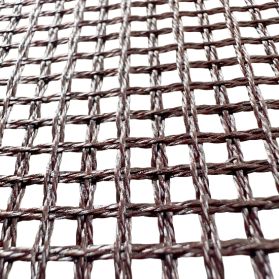
1. High‑strength continuous carbon‑fiber yarns are woven into multi‑layer gradient‑pore composite base fabric. It is not standard two‑dimensional leno weaving for flat screen mesh. Outer layers adopt relatively larger apertures to secure high melt throughput, while inner fine‑pore layers boost capture performance for micro‑sized inclusions. Precise loom tension control ensures uniform fiber distribution and consistent gradient‑pore structure across the full fabric surface.
2. Special inorganic high‑temperature surface modification treatment is applied to enhance non‑wetting performance against molten aluminum and improve anti‑erosion durability. Neither resin impregnation nor subsequent carbonization firing steps are required for this carbon‑fiber‑origin material.
3. Treated fabric is cut and assembled into a one‑piece bag geometry. Multi‑track reinforced stitching is applied across the main body, bottom and transition corners. Stress‑bearing edges are fitted with binding‑strip reinforcement to resist tearing under the impact of high‑volume molten‑aluminum flow.
4. Custom manufacturing is available for bag depth, multi‑layer composite configuration, opening dimensions and overall outline to match individual launder layouts, trough dimensions and on‑site casting‑process parameters. Special‑size OEM orders are supported.
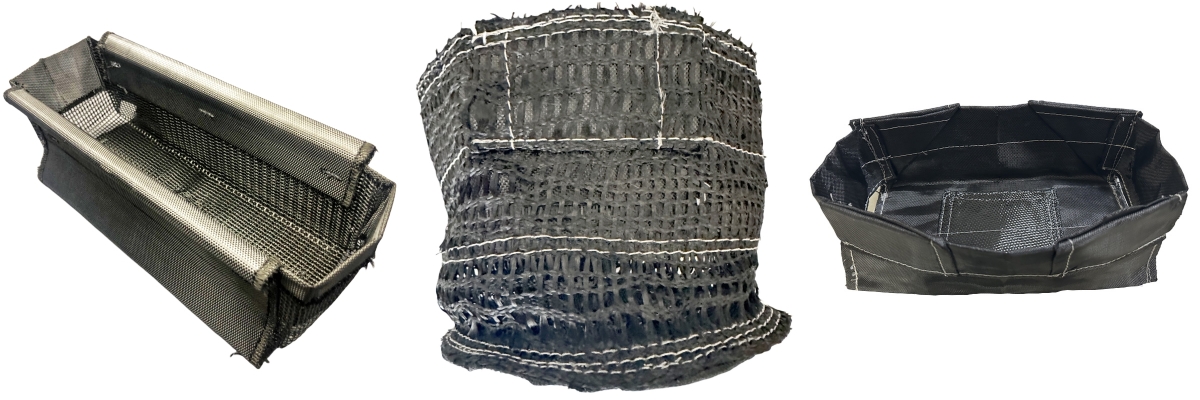
Its functional principle differs significantly from the surface‑sieving mechanism of flat fiberglass mesh and carbonized fiberglass filter bags. Fiberglass‑based filters predominantly trap particles larger than their aperture on a single surface layer. This carbon fiber filter bag performs gradient depth filtration throughout its three‑dimensional inner cavity.
1. Molten aluminum enters the inner cavity of the filter bag. Large‑sized oxide dross, bulky slag chunks and refractory debris are mechanically retained on the inner bag surface to build up an initial filter‑cake layer.
2. Molten aluminum gradually permeates through the multi‑layer gradient carbon‑fiber fabric. As the melt repeatedly changes flow direction within stacked carbon‑fiber layers, fine‑scale alumina inclusions and dispersed oxide films are captured through a combination of mechanical interception, inertial impaction and the inherent surface‑adsorption properties of carbon‑fiber material. Impurities become trapped deep within the fabric matrix instead of resting only on an outer surface.
3. The three‑dimensional bag cavity together with multi‑layer fabric breaks turbulent melt flow, dissipates flow impulse, homogenizes velocity distribution across the full cross‑section, suppresses vortex formation and minimizes secondary oxide‑skin generation during pouring.
4. Purified molten aluminum flows outward through the outer‑layer fabric and passes into downstream casting hardware. Captured inclusions remain confined inside the filter‑bag cavity and multi‑layer fabric. The entire filtration cycle runs with ultra‑low gas release and produces no smoke from resin combustion.
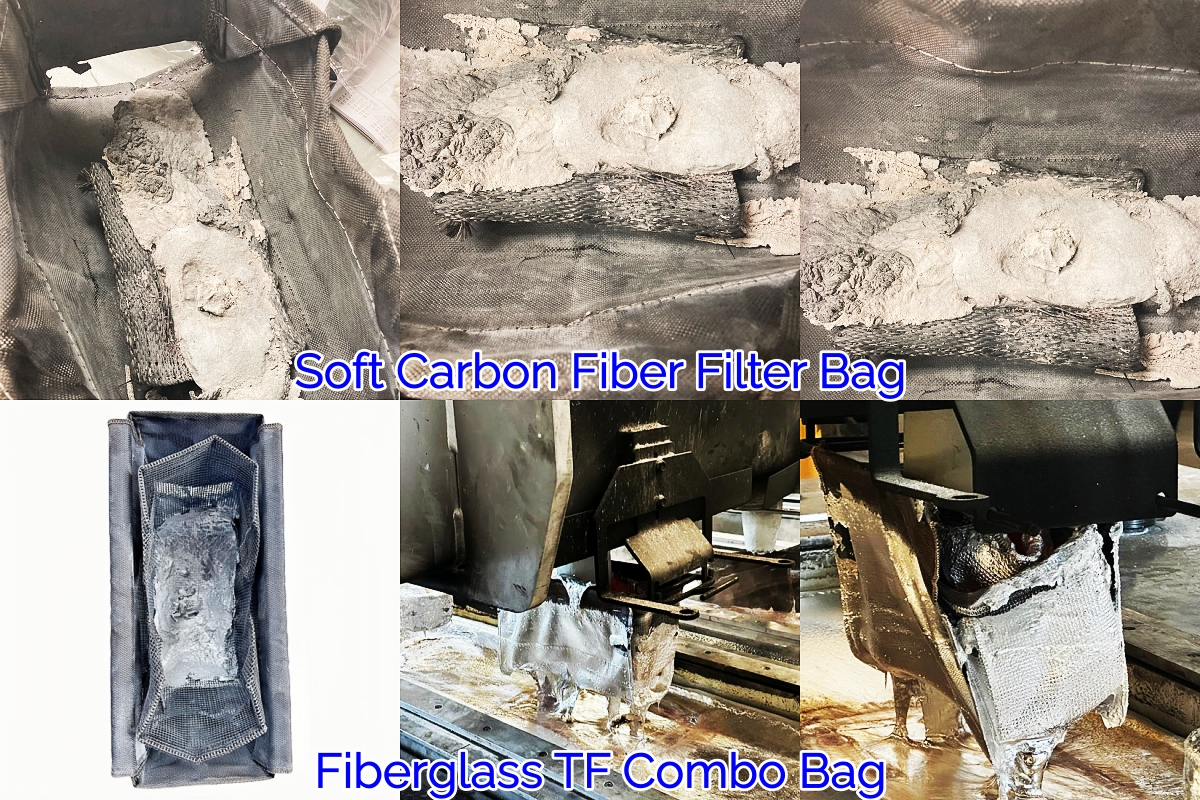
Compared with conventional carbonized fiberglass filter bags that mainly intercept large‑size slag on the material surface, this carbon fiber filter bag achieves higher removal efficiency for both coarse slag lumps and micron‑level dispersed oxide inclusions via gradient depth filtration. It effectively reduces common casting defects including slag inclusions, pinholes, blow‑holes and surface blemishes.
Zero‑resin raw‑material composition enables nearly smokeless pouring and avoids gas‑induced porosity.
It is highly suitable for high‑precision aluminum castings such as automotive structural components, wheel hubs, new‑energy‑equipment aluminum housings, premium‑grade aluminum billets and slabs.
Finished castings show improved surface finish and more homogeneous internal microstructure. Mechanical properties including tensile strength and elongation are enhanced, and foundry scrap rates drop noticeably. The flexible three‑dimensional bag‑style structure supports large‑volume melt throughput and delivers reliable performance for gravity casting, low‑pressure casting and semi‑continuous DC casting processes.
1. Genuine carbon‑fiber substrate: Constructed from original carbon‑fiber woven cloth rather than post‑carbon‑modified fiberglass substrate. Zero‑resin formulation ensures ultra‑low gas‑emission performance.
2. Depth‑filtration‑oriented structure: Multi‑layer gradient‑pore composite weaving, not simple single‑layer surface screening. It provides larger impurity holding capacity and resists clogging during extended continuous pouring.
3. Robust integral workmanship: Integral bag‑forming processing with multi‑row reinforced stitching and edge reinforcement. It delivers outstanding tear‑resistance under high‑flow‑rate molten‑aluminum impact with low risk of fiber shedding.
4. Flexible custom‑manufacturing: Bag depth, multi‑layer configuration, opening size and overall dimension can be tailored to fit site‑specific casting conditions. OEM service is available.
5. Proven manufacturing background: Built on mature quality‑control systems developed across a full range of foundry‑filter product lines. Complete material‑test documentation can be supplied. Products have accumulated abundant real‑world application records in global markets with proven stable re‑order performance.
6. Professional application‑oriented technical support: Technical resources are available to provide product‑selection guidance and practical on‑site application suggestions for foundry operators.
Fiberglass Filter Mesh for Molten Aluminum Casting Only
Sep. 07, 2026
Contact Us
+86 158 3011 4065
Guoruiyuan Building, ShengLi North Street, Chang'An District, Shijiazhuang City, Hebei Province, China.
Navigation
Navigation