News
Oct. 26, 2026
In metal casting, a small amount of slag, oxide, or other inclusion can weaken a finished part or cause a surface defect. A ceramic foam filter Manufacturer helps foundries choose filters that suit the alloy, pouring temperature, and required metal flow. This guide covers ceramic foam filter for aluminum casting, filter selection, installation, and the practical answer to whether a used filter can go back into service.

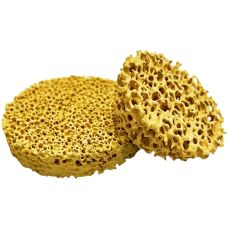
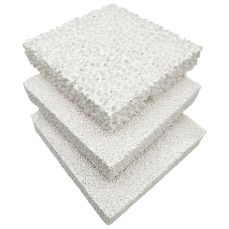
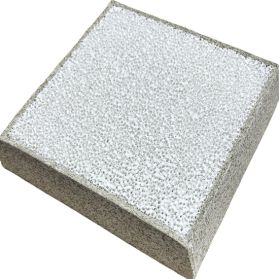
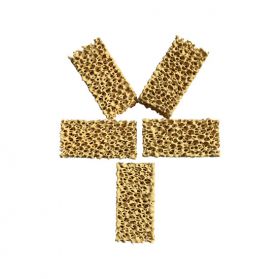
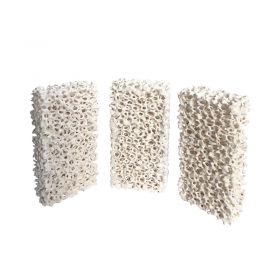
A ceramic foam filter is a porous, heat-resistant component placed in the gating system—the channels that carry molten metal into a mold. As metal passes through the filter’s connected pores, the structure helps hold back non-metallic inclusions. Depending on the filter and process, removal can occur through physical interception, adhesion to pore surfaces, and the buildup of captured particles.
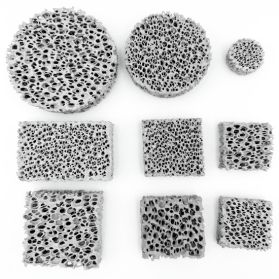
Foundry workers often describe filter grade in PPI, or pores per inch. Common commercial grades include 10, 20, 30, 40, 50, and 60 PPI, although available choices vary by supplier and material. PPI is a measure of the foam structure; it is not a direct micron rating and does not alone predict the size of every particle a filter will capture. Filter dimensions, porosity, metal head, alloy, and pouring rate also affect flow.
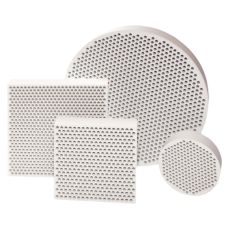
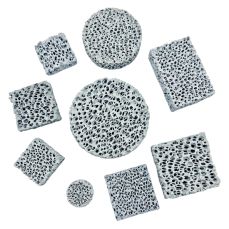
Filters are made from different refractory ceramics. Alumina-based filters are widely used for aluminum alloys, silicon-carbide filters are commonly selected for iron applications, and zirconia-based filters may be used for steel casting. The appropriate material depends on operating temperature, chemical compatibility, and the foundry’s process requirements.
Usually, no. After one pour, the filter may contain trapped inclusions, frozen metal, and solidified slag. Those materials can block pores and reduce the open area available for the next pour. The filter may also have experienced thermal stress or handling damage that is difficult to see. Reusing it can therefore make flow and filtration performance unpredictable.
Do not clean a used filter and return it to production unless the filter supplier and the foundry’s process engineering team have specifically qualified that practice. A visual inspection alone cannot confirm that internal pores are clear or that the ceramic is free from cracks. For normal production, plan for one filter per pour or mold, follow the product’s instructions, and dispose of used filters according to local rules.
This is the standard practical answer to the question “Are Ceramic Foam Filters Reusable?”: they are generally designed for one use, not repeated casting cycles. A foundry ceramic foam filtration plan should account for filter replacement as part of the consumables and mold-preparation process.
Aluminum foundries: Used in gravity, low-pressure, and other suitable casting systems to help reduce oxide films and non-metallic inclusions. Filter material and grade should match the alloy and pouring conditions.
Iron casting: Silicon-carbide filters are commonly used in ductile iron and gray iron applications. The gating design must provide enough metal flow without creating excessive turbulence.
Steel casting: High-temperature ceramic options, including zirconia-based products, may be selected for steel processes. Confirm temperature and chemical compatibility with the supplier.
Automotive and machinery parts: Filters can support production of cast components where inclusion control and repeatable metal delivery matter. They do not replace sound melting, skimming, or mold design.
Precision and general engineering castings: A filter may be used where the casting specification, geometry, and gating layout allow it to be installed correctly.
Suitability is process-specific. A filter cannot correct every source of porosity, shrinkage, or poor surface finish. Those defects may have other causes, so casting trials and defect analysis remain important.
A properly selected filter can help limit the amount of entrained non-metallic material reaching the mold cavity. It also provides a more controlled path for molten metal through the gating system. These benefits matter because inclusions may contribute to machining problems, surface defects, or reduced mechanical performance, depending on their type and location.
Filter performance is not described by one universal efficiency percentage. Results depend on alloy, filter material, PPI, filter area, metal head, temperature, pouring speed, and the type and concentration of inclusions. ASM Handbook, Volume 15: Casting, and technical literature from the American Foundry Society discuss casting process design and melt cleanliness as connected factors. Treat supplier performance figures as test-specific and compare them only when the test conditions are stated.
Identify the alloy and temperature. Select a ceramic material rated for the metal and operating conditions. Do not assume that a filter intended for aluminum is suitable for iron or steel.
Choose a starting PPI. Finer structures may provide more opportunities to capture inclusions, but they can also restrict flow. Use the filter maker’s recommendation and validate the choice in your own casting process.
Check the filter’s area and thickness. Filter size affects flow capacity. Confirm the dimensions fit the filter seat and match the required pour rate.
Review the gating design. The filter must be supported and sealed so molten metal does not bypass its edges. Make sure the runner, pouring basin, and filter position are compatible.
Confirm handling and storage requirements. Keep filters dry, protected from impact, and free of dust or loose particles. Reject pieces with visible cracks or damage.
Run a controlled trial. Record alloy, filter grade, dimensions, pouring temperature, pour time, and casting results. Change one main variable at a time where practical, then inspect the castings and any process-related defects.
A responsible Ceramic Foam Filter Manufacturer should be able to explain its material options, available PPI grades, dimensional tolerances, recommended applications, and handling instructions. Ask for technical data for the exact filter model rather than relying on a general product description.
Check the filter before use. Do not install one that is cracked, chipped, wet, or contaminated.
Place it in the designed filter seat in the correct orientation, if the product specifies one.
Make sure the surrounding refractory or gating material supports the filter and prevents metal from flowing around it.
Use the pouring practice established for the mold and alloy. Avoid unnecessary delays that could allow metal to cool and freeze in the filter or runner.
After casting, record any slow flow, incomplete fill, filter breakage, or unusual inclusion pattern. Use those observations to guide the next process review.
Exact pouring temperatures and flow rates should come from the alloy specification and the foundry’s qualified process. They should not be copied from a generic filter guide because alloy composition, casting design, and equipment can change the correct operating window.
| Consideration | What the filter can contribute | What still needs process control |
|---|---|---|
| Inclusion control | Can hold back some non-metallic particles as metal passes through the porous structure. | Melt treatment, skimming, and clean transfer remain important. |
| Metal flow | Provides a defined route through the gating system. | Filter area, PPI, head pressure, and pouring practice determine whether flow is adequate. |
| Part quality | May help reduce inclusion-related defects in a suitable, well-controlled process. | It does not by itself prevent gas porosity, shrinkage, or defects caused by mold and alloy conditions. |
| Production planning | Can be specified as a repeatable mold consumable. | Most filters should be replaced after one pour; used filters should not be assumed fit for reuse. |
Share practical production details when requesting a recommendation. Useful information includes the alloy, casting method, pouring temperature range, target pour time, gating dimensions, filter-seat size, and the defect or inclusion issue being investigated. If available, provide photographs and trial records.
Ask the supplier to state the filter material, PPI, dimensions, tolerances, storage guidance, and intended metal type. For a new application, begin with a controlled trial and compare results using the same inspection method. This is more useful than choosing a filter only by price or by a PPI number.
Generally, no. Captured inclusions and solidified metal can block internal pores, while heat or handling may cause hidden damage. Reuse should occur only if the supplier and the foundry have validated a specific reuse procedure.
No. A higher PPI indicates a finer foam structure, but it can also increase resistance to flow. The best grade depends on the alloy, inclusion challenge, filter area, metal head, and required fill time.
No. Ceramic materials have different temperature and chemical-resistance characteristics. Select a material designed for the metal being cast and confirm compatibility with the supplier.
No. It is intended to help with non-metallic inclusion control. Gas porosity, shrinkage, cold shuts, and other defects may require separate changes to melting, venting, alloy treatment, or mold and gating design.
Follow the product instructions. As a general handling practice, keep filters dry, clean, and protected from impact before use. Moisture or damage can create risks during handling and casting.
Before your next production run, review the filter seat, alloy requirements, and current defect records. Read the supplier’s user guide, then request a filter recommendation based on your actual casting conditions. HEBEI CANGCHEN can be contacted to discuss ceramic foam filter options, material selection, and application details. Share your process data and validate the proposed grade in a controlled trial to build a reliable foundry ceramic foam filtration plan.
Top 10 Applications Of Fiberglass Filtration Mesh
Oct. 26, 2026
Are Ceramic Foam Filters Reusable
Oct. 26, 2026
Three Gaskets Options Alumina CFF Aluminum Foundry
Oct. 19, 2026
Contact Us
+86 158 3011 4065
Guoruiyuan Building, ShengLi North Street, Chang'An District, Shijiazhuang City, Hebei Province, China.
Navigation
Navigation