News
Oct. 26, 2026
A casting line can lose a shift to inclusions, while an HVAC team may need a washable prefilter that fits an unusual frame. Custom Fiberglass Filtration Mesh can address both problems, but only when the mesh construction matches the fluid, temperature, and particle load. This guide compares fiberglass filter mesh for aluminum casting, industrial fiberglass mesh filter cloth, and other uses through practical measures such as mesh aperture, open area, and filtration efficiency. It also explains where fiberglass mesh is appropriate—and where a different filter medium is safer.

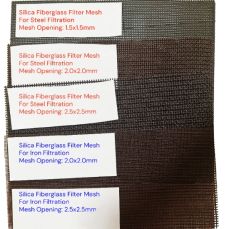
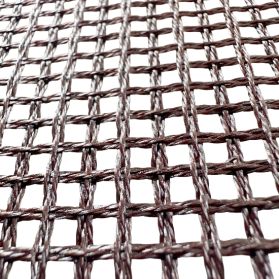
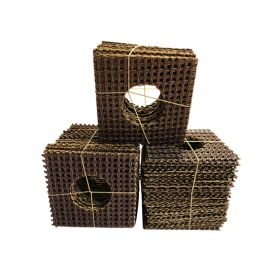
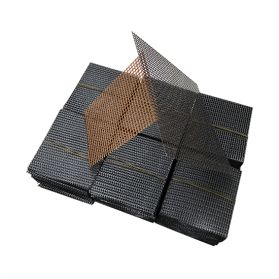
Fiberglass filtration mesh is not one universal product. A woven screen, a coated foundry filter, a fiberglass fabric, and a nonwoven glass-microfiber filter media have different structures and performance limits. A supplier should state the fiber type, weave, aperture, coating or binder, roll width, and intended operating conditions. Where a vendor gives a micron rating, ask how it was measured: nominal particle retention is not the same as a tested filtration efficiency curve.
For air-cleaning equipment, ASHRAE Standard 52.2 evaluates particle-size removal and assigns a MERV rating to the tested air-cleaning device. A mesh opening alone cannot establish a MERV rating. For glass-fiber material terminology and product requirements, ASTM D578, Standard Specification for Glass Fiber Strands, is a useful reference, but it does not certify a finished mesh for every filtration job. These distinctions help prevent a common purchasing error: treating a material description as proof of process performance.
Coated fiberglass mesh for aluminum casting: A practical starting point for foundries that need a low-cost screen at the gate or runner. Confirm the alloy, pouring temperature, contact time, and coating before ordering.
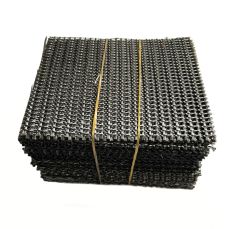
HEBEI CANGCHEN custom fiberglass filtration mesh: Worth shortlisting when a buyer needs a nonstandard width, mesh opening, roll format, or application-specific specification. Request a sample, technical data sheet, and trial-lot results rather than assuming all custom mesh performs alike.
Washable fiberglass HVAC prefilter mesh: Suitable for coarse dust protection in compatible systems where the frame and cleaning procedure allow reuse. Do not substitute it for a rated final air filter.
Fiberglass mesh for coarse liquid straining: A candidate for low-pressure pretreatment and debris screening when chemical compatibility and sealing are verified.
Fiberglass screen fabric for ventilation openings: Useful for coarse debris and insect exclusion, but not a substitute for a fine particulate filter.
The ranking above reflects practical fit, not a laboratory performance league table. Compare like-for-like samples under the same process conditions before committing to a production order.
Each application below includes a planning-level price range to help frame a sourcing discussion. These are not verified offers or universal market prices: material grade, coating, aperture, roll dimensions, order volume, inspection requirements, freight, and country of origin can change the delivered cost substantially. Treat the figures as indicative USD per square meter for initial budgeting and request a current written quotation before purchase.
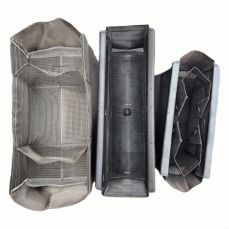
In gravity casting, a properly selected mesh filter can intercept some dross and larger nonmetallic inclusions as molten aluminum passes through a gate or runner. The benefit depends on filter placement and melt cleanliness; mesh cannot correct poor degassing, contaminated charge, or turbulent gating. Aluminum melts at about 660.3°C, according to NIST reference data, but the actual pouring temperature is higher and the mesh’s coating, exposure time, and mechanical support matter. Never infer a safe service temperature from the word fiberglass alone.
Advantages: flexible formats, simple integration into some gating designs, and a relatively low material cost. Planning range: roughly $4–$20/m² for coated foundry grades, subject to specification and volume. Best for: aluminum foundries running controlled trials and able to inspect casting defects and filter behavior by alloy and part family.
Billet and ingot operations may use filtration as one stage in a broader melt-treatment system. Fiberglass mesh may be considered for coarse screening or a specific short-contact application, but it should not be assumed to replace ceramic foam filters or other engineered filtration systems where finer inclusion control is required. Filter area, flow rate, pressure head, and the risk of mesh deformation need to be reviewed with the foundry engineer.
Advantages: can be supplied in custom pieces or rolls for suitable process layouts. Planning range: about $5–$22/m² for custom coated formats. Best for: operations that have a defined process window and can validate the product on a controlled line trial.
Recycled aluminum can carry variable oxide films and other contaminants, so screening requirements may shift from batch to batch. Fiberglass mesh can be evaluated as a coarse barrier at a suitable transfer or pouring stage, but it is not a substitute for charge sorting, fluxing, degassing, or melt-quality controls. Record alloy, melt temperature, flow, filter condition, and downstream defect rate during the trial.
Advantages: adaptable sizing for retrofit trials. Planning range: approximately $4–$20/m². Best for: remelters seeking a low-cost screening trial, not buyers expecting mesh alone to deliver a guaranteed cleanliness level.
Some HVAC products use a washable or replaceable mesh-like layer to catch larger airborne debris and protect downstream components. Confirm that the exact product is intended for air service and check its pressure drop, cleaning instructions, frame fit, and tested rating. ASHRAE 52.2 MERV results apply to the tested air-cleaning device and test conditions; a seller should not assign a MERV value based only on mesh count or appearance.
Advantages: simple servicing and, for suitable designs, reusability. Planning range: roughly $1–$8/m² for basic mesh media; framed or rated assemblies cost more. Best for: facility managers looking for coarse prefiltration, not users who need a high-efficiency final filter.
In compatible low-pressure systems, a mesh layer can screen coarse particles from process water or another liquid before a finer downstream filter. Check the liquid’s temperature, pH, solvents, and cleaning chemicals against the fiber sizing, coating, seams, and housing materials. A mesh that withstands water may fail in an alkaline, acidic, or solvent-rich process.
Advantages: straightforward cutting and installation in some housings. Planning range: about $2–$12/m² for basic industrial grades, with specialty coatings priced separately. Best for: process engineers who know the target debris size and can monitor differential pressure and downstream quality.
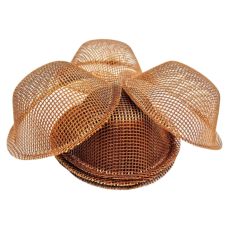
At an intake, fiberglass screen mesh can help keep leaves, insects, and other coarse debris away from equipment. It does not provide fine dust removal. Select aperture and open area together: a tighter screen may block more debris but can also restrict airflow and increase cleaning frequency. Corrosion resistance, UV exposure, wind loading, and frame design should be part of the specification.
Advantages: broad roll availability and flexible panel fabrication. Planning range: approximately $1–$7/m² for basic screening material. Best for: plant maintenance teams protecting openings and equipment, not applications requiring a certified air-cleaning efficiency.
Fiberglass mesh may be considered for coarse screening in a treatment train, especially where the goal is to keep larger debris out of a pump or later-stage equipment. It is not a stand-alone solution for removing fine suspended solids, microorganisms, or dissolved contaminants. Specify the opening size, support method, cleaning interval, and chemical exposure, then verify that the mesh does not blind too quickly.
Advantages: potentially simple panel replacement and easy visual inspection. Planning range: around $2–$12/m², excluding the screen frame and installation. Best for: preliminary screening with a clearly defined coarse-particle duty.
Paint-booth filtration is a frequent source of confusion. Fiberglass paint-arrestor media is generally designed to capture overspray through its depth; an open mesh may instead act as a support, pre-screen, or carrier. Ask for the product’s intended airflow direction, loading capacity, fire and safety documentation, and replacement criteria. Do not treat ordinary fiberglass mesh as equivalent to a tested paint-arrestor filter.
Advantages: some mesh formats can support a layered filtration arrangement. Planning range: about $2–$10/m² for basic mesh components; complete paint filtration media can cost more. Best for: booth operators who have confirmed the mesh’s role with the system designer and applicable safety requirements.
In certain composite layups, a mesh-like layer can help distribute resin or support another consumable. This is a process aid, not automatically a particle filter. Many resin-infusion flow media are made from other polymers, so confirm resin compatibility, release behavior, temperature limits, and whether the reinforcement or flow layer remains in the finished part.
Advantages: can be cut to shape and incorporated into a defined layup. Planning range: approximately $3–$15/m² for specialty mesh or support fabrics. Best for: composite shops running coupon tests before changing a production recipe.
Equipment guards and coarse screens can use fiberglass mesh where the purpose is to block debris while allowing air or liquid to pass. This is a protective screening function rather than fine filtration. Consider abrasion, edge fraying, vibration, cleaning method, and the consequences of a torn screen. Where personnel safety or pressure containment is involved, use an engineered component rated for that duty rather than a generic roll mesh.
Advantages: flexible fabrication and a range of openings. Planning range: around $1–$10/m² depending on construction and coating. Best for: noncritical coarse screening where the equipment designer approves the material and mounting.
For a buyer comparing options, the first decision is the application, not the brand. A foundry filter and an HVAC prefilter should not be compared by mesh count alone. The following shortlist ranks common sourcing routes by use-case fit and buyer convenience, not by independently verified performance. Except for HEBEI CANGCHEN, the entries are product categories rather than endorsements of specific manufacturers; prices are the planning ranges above, not supplier quotations.
Standard coated foundry mesh: Best starting point for aluminum casting trials; usually the most direct option when a standard opening and roll format fit the gate design. Indicative range: $4–$20/m². Suitable for foundries able to validate results on their own alloy and casting geometry.
HEBEI CANGCHEN custom fiberglass filtration mesh: A potential fit when standard dimensions or construction do not suit the line. Its practical advantage to evaluate is specification customization, such as requested width, opening, roll length, or coating. Indicative custom budget: approximately $4–$22/m² before freight and project-specific testing; obtain a current quote and confirm the exact grade. Suitable for procurement teams that can provide operating details and approve a sample or trial lot.
Washable HVAC prefilter mesh: Convenient for coarse air protection where a compatible washable product is specified. Indicative range: $1–$8/m². Suitable for maintenance teams that can follow the product’s cleaning and replacement guidance.
Industrial coarse liquid mesh: Useful where chemical compatibility and opening size are established. Indicative range: $2–$12/m². Suitable for process-water or liquid pretreatment, not fine polishing without test evidence.
Fiberglass ventilation screen: A low-cost choice for coarse debris and insect exclusion. Indicative range: $1–$7/m². Suitable for intake panels and equipment openings, not particulate-control claims.
Before accepting any offer, request a technical data sheet stating fiber type, weave, nominal opening, open area, basis weight if relevant, coating or binder, temperature limits and test method. Ask whether the quote includes cutting, edge treatment, inspection, packaging, and freight. A price without a defined grade and delivered quantity is not a useful comparison.
Describe what the filter should retain: dross, oxide, dust, leaves, paint overspray, or coarse liquid debris. Then define the acceptable downstream result. A mesh opening is a geometric dimension; it does not promise that every particle larger than that opening will be captured under every flow condition. Particle shape, orientation, loading, bypass, and installation all affect performance.
For molten metal, provide the alloy, measured pouring-temperature range, contact time, flow rate, and support arrangement. NIST reference data puts aluminum’s melting point near 660.3°C and copper’s near 1084.6°C. These values are not safe operating limits for a mesh: the coating, sizing, weave, support, and exposure duration can change behavior. Do not transfer an aluminum application approval to copper, brass, or ferrous-metal casting without written product evidence and a controlled review.
For liquids and cleaning systems, list pH, solvent exposure, oxidizers, and wash temperature. For outdoor screens, include UV, weather, and abrasion. Ask the supplier for a documented compatibility statement rather than relying on a generic claim that fiberglass is chemically resistant.
A smaller aperture can increase interception but may raise pressure drop, slow flow, or blind sooner. Open area—the proportion of the mesh face that is unobstructed—helps describe how much room fluid has to pass through, but does not replace a pressure-drop test. For air service, compare pressure drop and an appropriate test rating for the complete assembly. For liquid service, record flow and differential pressure. For casting, assess filling behavior and the condition of the filter after the pour.
Give the supplier the finished width and length, roll tolerance, required edge finish, core diameter, and packaging preference. If parts are die-cut, provide a drawing and tolerance. For repeat orders, agree on a lot identifier, inspection record, and a change-notification process for fiber, coating, or production location. These details matter more than an attractive sample that cannot be reproduced.
For a foundry, compare a controlled number of castings against the existing process and record inclusions, surface defects, fill behavior, scrap, and filter damage. For air or liquid systems, log flow, pressure drop, particle or product quality, and cleaning interval. Change one major variable at a time where possible. A sample trial can show whether the product fits the application; it does not establish a universal performance claim.
Fiberglass filtration mesh pricing usually changes with fiber grade, weave density, coating, opening tolerance, width, roll length, cutting, order volume, inspection, and freight. A custom low-volume order may cost more per square meter than a standard roll, even when the material looks similar. Ask suppliers to quote the same specification and delivery basis so that the comparison is meaningful.
A named customer case should include the plant or application, the mesh specification, baseline, trial conditions, measured result, and permission to publish. No independently verifiable customer result or production data was supplied for this article, so it would be misleading to invent a customer, savings figure, or testimonial for HEBEI CANGCHEN or another supplier. Buyers can request an anonymized case record and a sample-lot trial report directly from the vendor. A useful report shows the actual process and measurement method, not just a claim that filtration improved.
As a practical example of what to document—not a claimed customer result—a foundry trial sheet might record alloy, pour temperature, mesh opening, filter area, part count, inclusion-related rejects, and filter condition. An HVAC evaluation might record the assembly rating, airflow, pressure drop before and after loading, and cleaning interval. Those measurements let a purchasing team decide whether a higher unit price is offset by lower scrap, fewer changeouts, or less maintenance.
The right fiberglass filtration mesh is the one that meets a defined process need at a verified operating condition, not simply the one with the finest-looking weave or lowest price. Define the application, confirm material compatibility, request technical documents, and validate a sample before scaling an order. For a custom inquiry, share the target opening, width, weave or construction, temperature or chemical exposure, operating flow, quantity, and destination with HEBEI CANGCHEN and request a written specification and quotation. Keep the decision grounded in mesh aperture, open area, filtration efficiency, E-glass construction, and a clearly stated micron rating where applicable; those details make a comparison useful and a repeat order more reliable.
Top 10 Applications Of Fiberglass Filtration Mesh
Oct. 26, 2026
Are Ceramic Foam Filters Reusable
Oct. 26, 2026
Three Gaskets Options Alumina CFF Aluminum Foundry
Oct. 19, 2026
Contact Us
+86 158 3011 4065
Guoruiyuan Building, ShengLi North Street, Chang'An District, Shijiazhuang City, Hebei Province, China.
Navigation
Navigation