News
May. 14, 2026
The core differences between them mainly lie in three aspects: structure, performance and applicable scenarios.
| Comparison Points | Leno Weave | Plain Weave |
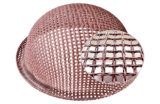
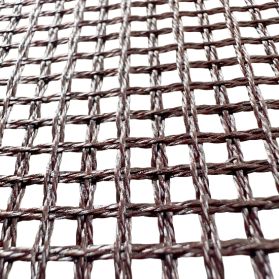
| Core Structure | The warp yarns are divided into base yarns and twisted yarns. The twisted yarns are twisted around the base yarns on both sides of the weft yarns, and then interwoven with the weft yarns. | The warp and weft threads are alternately and straightly interwoven from top to bottom, forming a regular grid without any twist or kinking. |
| Appearance characteristics | The fabric has a stable and non-deformable mesh structure with fixed and non-sliding mesh holes. | The fabric surface is smooth and uniform, presenting a dense/loose grid pattern with easily deformable mesh holes. |
| Advantages | 1. The mesh structure is stable, with extremely strong anti-slip and anti-tensile capabilities.2. It has excellent breathability, and the yarns do not shift easily.3. It is lightweight, flexible and stiff, does not deform easily, and has high dimensional stability. | 1. Simple structure, high production efficiency, low cost2. Many interlacing points, good wear resistance and tear resistance3. Smooth fabric surface, no difference between front and back sides, suitable for most fibers |
| Disadvantages | 1. The weaving process is complex and requires a special loom. The cost is relatively high.2. The overall fabric is relatively thin and lightweight. Its wear resistance is not as good as that of a high-density plain weave.3. The mesh structure limitation prevents the realization of extremely high-density weaving. | 1. The loose plain weave has "slippage yarns", and the mesh can be easily stretched into a diamond shape, resulting in a decrease in actual mesh count.2. The high-density plain weave will have a reduced ventilation performance.3. The mesh stability is poor, and it is not suitable for high-stretch or strong wind vibration scenarios. |
| Typical Applications | Industrial and foundry casting filter mesh (liquid/gas filtration) | Ordinary filter screen, regular fabric |
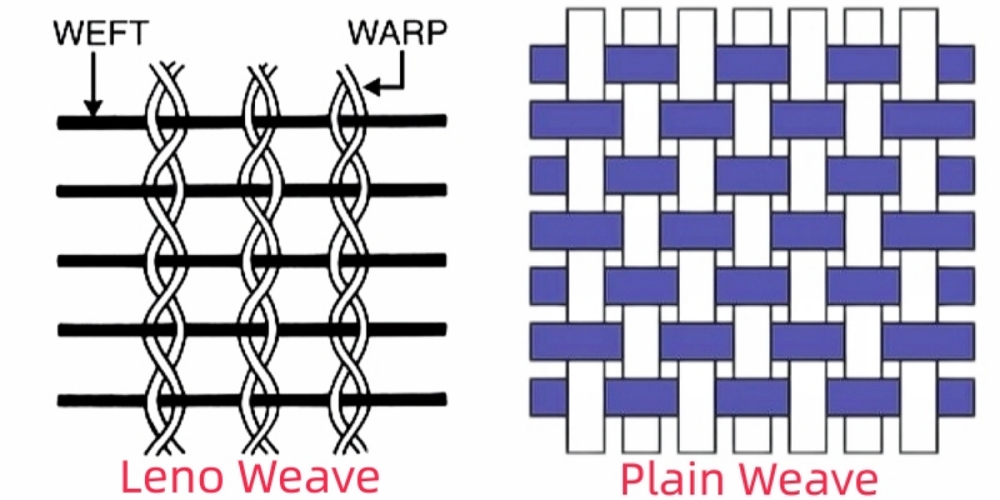
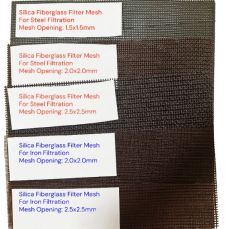
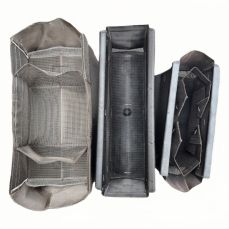
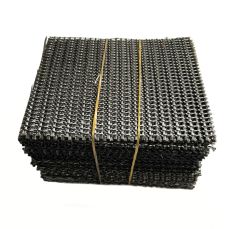
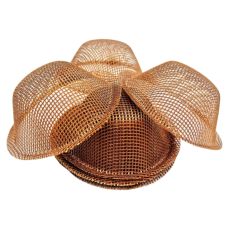
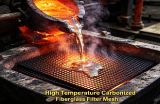
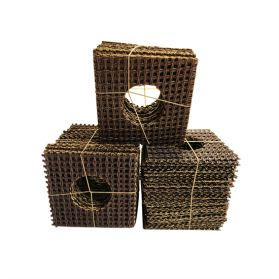
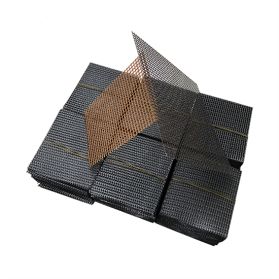
● Fiberglass filter mesh produced by Hebei CangChen is leno weave to provide the best mesh to our global clients.
● There are many core advantages such as: high-temperature resistance, purification, stable flow, low cost, and no pollution, which are best used for aluminum, copper, iron, steel, and other materials.
● Three kinds of filter meshes, Alkaline-free fiberglass filter mesh for aluminum, silica mesh for iron, copper, and high silica mesh for steel.
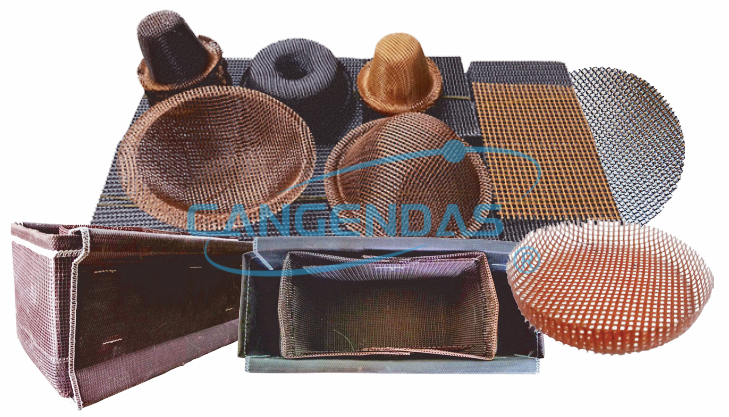
● High temperature resistance: 900–1600℃ for regular use, up to 1700℃ for high silicon oxide under short time, suitable for aluminum, copper, iron, and steel.
● No reaction, no pollution: It has no chemical reaction with aluminum liquid/iron liquid/steel liquid and does not introduce impurities such as iron and carbon.
● Compared with wire mesh: It does not increase iron content in the returned materials. The riser and gate can be directly recycled for reuse, significantly reducing costs.
● Mechanical interception combined with deep adsorption: Effectively filters out non-metallic impurities such as oxidized skins, slag, sand particles, and refractory material debris.
● Reduce waste rate: It can decrease defects such as slag holes, sand holes and inclusions by 50% - 60%.
● Enhance mechanical properties: The strength, elongation and fatigue resistance of the castings are more stable and better.
● Improve machining: Reduce hard spots and significantly reduce tool wear.
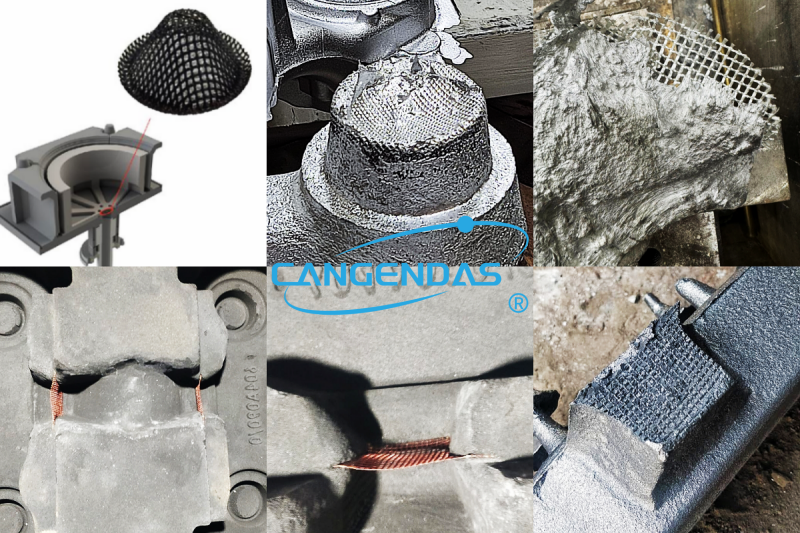
● Divergence effect: Converts turbulent flow into laminar flow, making the liquid flow more stable.
● Less oxidation and less corrosion: Reducing pores, pinholes and cold shuts, resulting in a smoother surface of the castings.
● Simplify the pouring system: It can simplify the design of the riser and pouring channels, thereby increasing the production rate of the process.
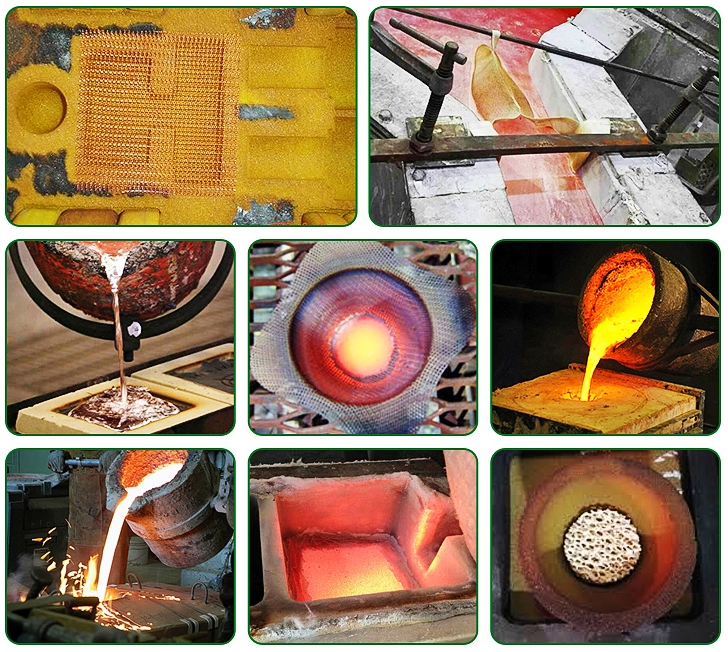
● High strength, resistant to erosion: After coating treatment, it has excellent thermal shock resistance, is not prone to breakage, and does not deform.
● Low odor and no smoke: The high-quality filter has low odor and low smoke content, which is environmentally friendly and safe.
● Low cost and easy installation: Cheaper than ceramic foam filters; can be cut to size and directly poured into the runner without the need to modify the mold.
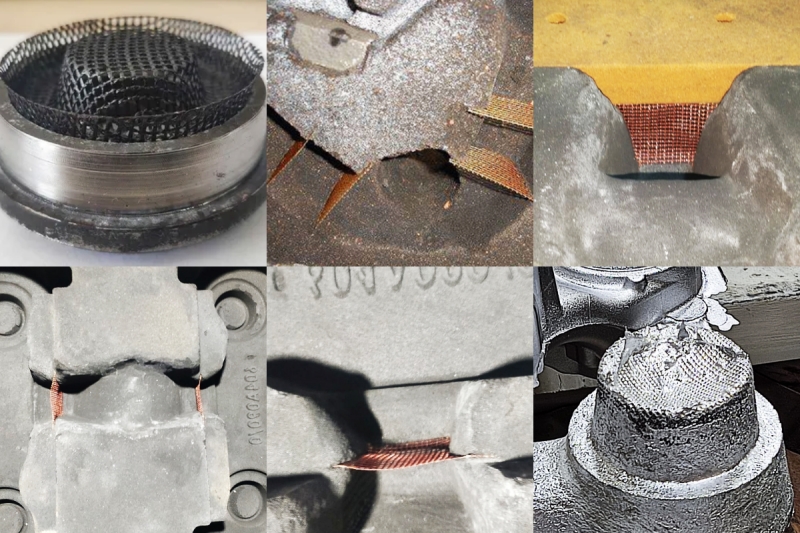
● Aluminum/Aluminum Alloy (800–900℃): Wheels, cylinder blocks, aluminum rods, etc.
● Copper alloy (at ~1200℃): Copper sleeves, copper castings
● Cast iron (1400–1450℃): Gray iron, ductile iron
● Cast steel (1600℃+): Special type for high silicon oxide applications

How to Select The Correct Filter For Your Casting
Oct. 09, 2026
Why use TF COMBO BAG for molten aluminum
Oct. 01, 2026
Contact Us
+86 158 3011 4065
Guoruiyuan Building, ShengLi North Street, Chang'An District, Shijiazhuang City, Hebei Province, China.
Navigation
Navigation