News
Sep. 17, 2026

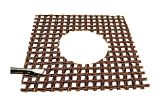
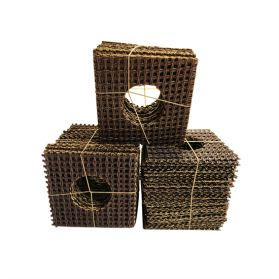
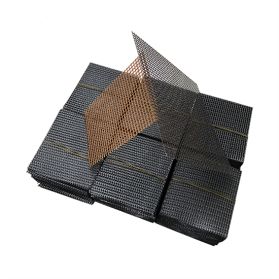
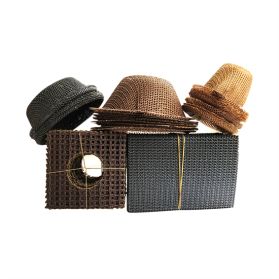
Industrial fiberglass filter media helps factories remove solid particles from air, water, molten metal, and process fluids. A Fiberglass Filtration Mesh uses woven glass fibers to provide controlled openings, high strength, and stable performance at elevated temperatures. Dust collection systems depend on filter efficiency and low pressure drop to protect equipment and maintain airflow. Foundry filtration also needs a media that can resist heat shock and chemical attack. Liquid filtration requires a uniform pore structure to reduce clogging and improve service life. This article explains how fiberglass filter media works, where it is used, and how buyers can select the correct grade.
Industrial fiberglass filter media is used to separate particles from air, water, chemicals, molten metal, and other industrial streams. Its main benefits are high tensile strength, controlled filtration openings, resistance to temperatures that can exceed 500 degrees Celsius in suitable grades, low moisture absorption, and stable dimensions. The best product depends on the target particle size, operating temperature, chemical exposure, flow rate, and required filter efficiency. A supplier such as HEBEI CANGCHEN can customize mesh count, wire diameter, coating, roll width, and filter shape for different industrial systems.
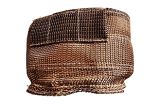
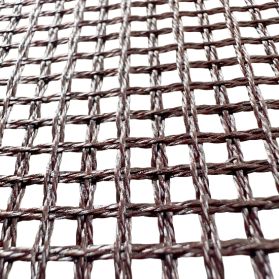
Industrial fiberglass filter media is made from continuous glass yarn or chopped glass fiber. The fibers are woven, stitched, molded, or formed into a filter panel, filter bag, filter disc, or mesh insert. The material can be supplied with a plain weave, twill weave, or special open mesh pattern.
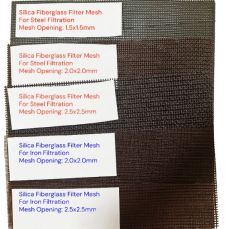
The filter openings control the size of particles that can pass through the material. Mesh count describes the number of openings per inch. Wire diameter affects strength, open area, pressure drop, and service life. A coating may improve abrasion resistance, flexibility, or compatibility with a specific fluid.
| Parameter | Typical industrial range | Effect on performance |
|---|---|---|
| Mesh count | 4 to 200 openings per inch | Controls the approximate opening size and filtration level |
| Fiber diameter | 5 to 13 micrometers for common woven yarn systems | Influences tensile strength, flexibility, and surface area |
| Opening size | About 20 to 5,000 micrometers, depending on construction | Determines the particles retained by the mesh |
| Roll width | 0.5 to 2.0 meters for many industrial orders | Reduces cutting waste during filter fabrication |
| Roll length | 10 to 100 meters, depending on thickness and weight | Supports continuous production and lower joint frequency |
| Operating temperature | 200 to 550 degrees Celsius, depending on coating and design | Determines whether the media can work in hot gas or metal systems |
Air pollution control and dust collection
Foundry and molten metal filtration
Water and liquid filtration
Chemical and process filtration
Industrial ventilation and HVAC pre-filtration
Oil, fuel, and hydraulic fluid filtration
Fiberglass filter media is used in dust collector bags, filter cartridges, exhaust filters, and high-temperature gas filtration systems. It can capture ash, cement dust, mineral particles, powder, and other suspended solids. The final result depends on fiber diameter, surface treatment, gas velocity, dust loading, and cleaning method.
For example, a woven filter cloth with a basis weight of 400 to 800 grams per square meter can provide a stronger support layer than a light screen. A finished filter bag may operate at a gas velocity of 0.5 to 1.5 meters per minute, depending on dust type and system design. Lower velocity usually reduces pressure drop and improves particle capture.
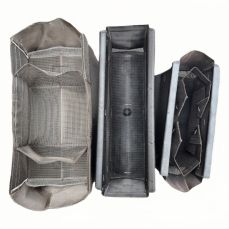
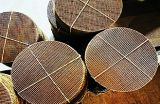
Foundries use fiberglass filtration mesh to remove slag, oxides, sand, and non-metallic inclusions from molten aluminum, copper, iron, and selected alloys. The mesh is placed between the melting unit and the mold or inside a filter housing.
Fiberglass mesh is often selected for aluminum filtration because it combines low weight with good thermal stability. The correct grade must match the metal temperature, which may range from about 650 to 1,500 degrees Celsius. In many applications, the glass mesh is used as a reinforcement or support structure with a refractory coating. The coating and installation method determine the final temperature limit.
Important design factors include:
Mesh opening size and metal flow rate
Filter area and expected inclusion load
Thermal shock resistance
Compatibility with the alloy and refractory coating
Resistance to tearing during installation
Fiberglass filtration mesh is used as a support layer, strainer, pre-filter, and separation screen in water treatment and industrial liquid systems. It can remove larger solids before a cartridge filter, membrane, or fine filter stage.
A coarse mesh may remove particles larger than 500 micrometers. A finer woven structure can be designed for openings below 100 micrometers. The actual filtration result depends on the opening distribution and the way the mesh is installed. It should not be described as an absolute filter rating unless the product has been tested for that rating.
Fiberglass media can be used in resin processing, pigment production, mineral processing, plating, and chemical manufacturing. Glass fibers have low moisture absorption compared with many natural fibers. A suitable binder or coating can improve resistance to acids, alkalis, solvents, and repeated washing.
Users should confirm the chemical compatibility of the glass type, coating, seam, adhesive, and support frame. A chemical compatibility test should run at the actual concentration, temperature, and exposure time used in production.
Fiberglass filter panels can protect fans, coils, heat exchangers, and downstream fine filters. They are often used as a first-stage filter where dust loading is high. A pre-filter reduces the workload of expensive high-efficiency filters.
For HVAC applications, buyers should compare initial resistance, final resistance, dust holding capacity, and face velocity. A filter with an initial pressure drop of 50 to 150 pascals may be suitable for some low-resistance systems, but the equipment manufacturer should confirm the operating limit.
Woven fiberglass mesh can act as a support screen or coarse filter in oil, fuel, and hydraulic systems. The mesh helps protect pumps, valves, and injectors from large particles. A resin-free or chemically compatible construction may be required when the fluid can attack common binders.
High temperature resistance
Controlled openings and repeatable filtration
Good tensile and tear strength
Low moisture absorption
Wide chemical compatibility options
Flexible product design
Longer service life in demanding systems
Glass fibers soften at a much higher temperature than most organic filter fibers. However, the complete filter is limited by the coating, stitching thread, adhesive, frame, and mounting method. Uncoated glass yarn may tolerate high heat, while a coated product may have a lower continuous operating temperature.
Manufacturers should provide separate values for continuous temperature, short-term temperature, and thermal shock exposure. This prevents users from applying a peak temperature rating to continuous operation.
Fiberglass has high tensile strength and limited elongation. A typical woven mesh may show a tensile strength from 500 to more than 2,000 newtons per 5 centimeters, depending on yarn size and weave. Dimensional stability helps maintain the intended opening size during operation.
Strength testing can follow methods such as ASTM D5035 for strip tensile properties. Fabric weight can be checked with ASTM D3776. These tests help compare production batches and verify the agreed specification.
Glass itself does not absorb water in the same way as cotton or many other textile fibers. This helps the filter maintain its weight and dimensions in humid environments. Surface coatings and contamination can still affect water behavior, so wet-condition tests remain useful.
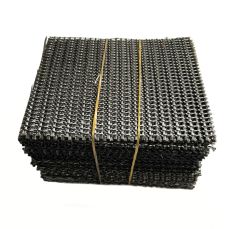
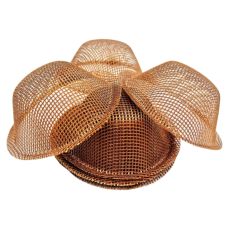
Industrial fiberglass filter media can be produced as rolls, sheets, discs, sleeves, filter bags, and die-cut panels. A manufacturer can adjust mesh count, yarn size, weave, width, edge treatment, coating, and joining method.
HEBEI CANGCHEN can support custom production for industrial filtration projects. A technical order should state the target opening size, filtration purpose, temperature, chemical exposure, roll dimensions, and required inspection documents.
| Material | Temperature capability | Main strengths | Common limitations | Typical uses |
|---|---|---|---|---|
| Fiberglass | High, often 200 to 550 degrees Celsius for finished media | Good heat resistance, strength, dimensional stability | Can be brittle if folded or handled without proper coating | Hot gas, foundry, dust, liquid pre-filtration |
| Polyester | Usually about 120 to 150 degrees Celsius | Good flexibility and cost efficiency | Lower temperature resistance | General dust collection and liquid filtration |
| Polypropylene | Usually about 80 to 100 degrees Celsius | Low density and useful chemical resistance | Not suitable for many hot gas applications | Water, chemicals, and disposable filters |
| Stainless steel mesh | High, depending on alloy and construction | Excellent mechanical strength and cleanability | Higher cost and greater weight | High-pressure liquid and metal processing |
| Ceramic fiber media | Very high in selected designs | Strong resistance to extreme heat | More brittle and often more difficult to fabricate | High-temperature furnaces and specialty filtration |
Define the material being filtered.
Measure the particle size and contaminant load.
Record temperature, pressure, flow rate, and chemical exposure.
Select the mesh opening and filter area.
Choose the yarn, weave, coating, and support structure.
Confirm cleaning, replacement, and disposal requirements.
Request a sample and review inspection data.
Start with the particle size distribution instead of choosing a mesh only by name. If the process contains particles from 50 to 500 micrometers, a mesh with a nominal opening near the lower part of that range may improve retention. It may also increase pressure drop and clogging. A two-stage system can provide better results than one very fine filter.
Filter area affects flow resistance. A larger area lowers the average face velocity. For example, increasing the active area from 1 to 2 square meters at the same flow rate reduces the average velocity by about 50 percent. This can extend service life and reduce fan or pump energy demand.
List the normal temperature, maximum temperature, heating rate, cooling rate, and exposure duration. Also list the fluid pH, solvent type, concentration, and cleaning chemicals. These details help the supplier select the correct glass yarn and coating.
A filter that fits poorly can leak around the edges even when the media itself has good efficiency. Confirm the finished length, width, diameter, seam type, gasket material, support cage, and clamping method. For filter bags, the seam strength should match the pressure and cleaning cycle.
The following process shows how industrial fiberglass filter media can move from a technical request to a finished shipment.
Technical specification
-> Raw glass yarn inspection
-> Warping and weaving
-> Heat setting or coating
-> Slitting and cutting
-> Dimensional and visual inspection
-> Performance testing
-> Packaging and batch release
The supplier records the required mesh count, opening size, yarn type, width, length, coating, temperature, and application. The order should also identify whether the media is for dust collection, foundry filtration, liquid filtration, or another process.
Incoming yarn is checked for linear density, visible damage, moisture, and batch identity. A production record should connect the raw material batch to the finished roll number.
The warp and weft yarns are arranged according to the selected weave. Operators check mesh count and fabric tension during production. Excessive tension can change the opening size and reduce flexibility.
A coating may be applied to reduce fraying, improve handling, or increase abrasion resistance. Heat treatment can stabilize the fabric. Coating weight should be measured in grams per square meter when it is part of the customer specification.
Common inspection items include:
Mesh count in both directions
Opening size and uniformity
Width and roll length
Basis weight and coating weight
Tensile strength and tear resistance
Visual defects, broken yarns, and contamination
Moisture content and packaging condition
For a controlled production program, samples can be taken from the beginning, middle, and end of a roll. A practical inspection plan may test one sample set per production batch, with additional tests for new materials or process changes. R&D teams can use three or more pilot runs to compare opening size, pressure drop, and service life before full implementation.
Testing should match the final application. Air filters may be tested for pressure drop, dust holding capacity, and particle removal efficiency. Liquid filters may be tested for flow rate, bubble point, or particle retention. Foundry filter media may be tested for thermal shock, metal flow, and inclusion removal.
ASTM D5035 can support tensile testing of textile materials. ASTM D3776 can support fabric mass measurement. ISO 9001 based quality systems can help control documents, corrective actions, and traceability. The exact test method should be agreed before production because different methods can produce different results.
| Problem | Likely cause | Recommended action |
|---|---|---|
| High initial pressure drop | Opening is too small or filter area is too low | Increase filter area or select a more open mesh |
| Particle leakage | Damaged mesh, poor seal, or incorrect opening size | Inspect the media and sealing system; verify the specification |
| Rapid clogging | High dust load or no pre-filtration stage | Add a coarse pre-filter or use staged filtration |
| Mesh breakage | Excessive tension, abrasion, or thermal shock | Change the support method and confirm temperature limits |
| Coating peeling | Poor curing or chemical incompatibility | Review coating type, curing conditions, and chemical exposure |
| Uneven filtration | Variable opening size or uneven flow distribution | Check weaving control and improve the filter housing design |
Maintenance starts with regular pressure drop checks. Record the pressure drop at installation and compare it with weekly or daily readings. A rapid increase often indicates clogging, excess dust, moisture, or a damaged filter.
Inspect filter media for holes, frayed edges, broken seams, discoloration, and hard deposits. Do not use aggressive cleaning methods unless the material and coating have been tested. Compressed air cleaning, reverse-flow cleaning, and liquid washing can produce different mechanical loads.
Replacement timing depends on operating conditions. A filter should be replaced when efficiency falls below the process requirement, pressure drop reaches the equipment limit, or the media shows structural damage. A service record with operating hours, cleaning cycles, pressure drop, and failure cause can improve future media selection.
HEBEI CANGCHEN can provide fiberglass filtration mesh for industrial filter makers, foundries, water treatment companies, and process equipment users. Product planning can include mesh count, opening size, yarn type, coating, roll width, and finished filter shape.
A reliable supplier should provide more than a material name. Buyers should receive a clear specification, batch identification, inspection results, packing details, and a response process for nonconforming material. Sample approval before mass production can reduce installation risk and avoid costly equipment downtime.
For a new project, provide the operating temperature, flow rate, pressure, contaminant type, target particle size, filter dimensions, cleaning method, and expected service life. These data allow the supplier to recommend a practical fiberglass filter media structure.
Industrial fiberglass filter media provides a strong and adaptable solution for air, water, chemical, oil, and molten metal filtration. Its controlled openings, high tensile strength, low moisture absorption, and heat resistance support demanding industrial processes. Correct selection requires more than choosing a mesh count. Engineers must also consider particle size, flow rate, pressure drop, temperature, chemical exposure, coating, and filter design. With documented testing, batch traceability, and application support from suppliers such as HEBEI CANGCHEN, fiberglass filtration mesh can improve equipment protection, process stability, and filter service life.
Zirconia Ceramic Foam Filter (CFF)
Sep. 17, 2026
Industrial Fiberglass Filter Media: Uses And Benefits
Sep. 17, 2026
Customized TF Combo Bag for DC Aluminum Filtration Use
Sep. 16, 2026
Contact Us
+86 158 3011 4065
Guoruiyuan Building, ShengLi North Street, Chang'An District, Shijiazhuang City, Hebei Province, China.
Navigation
Navigation