News
Sep. 14, 2026
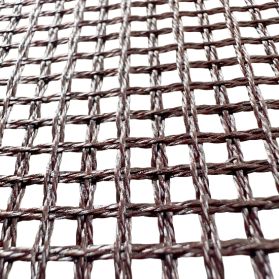
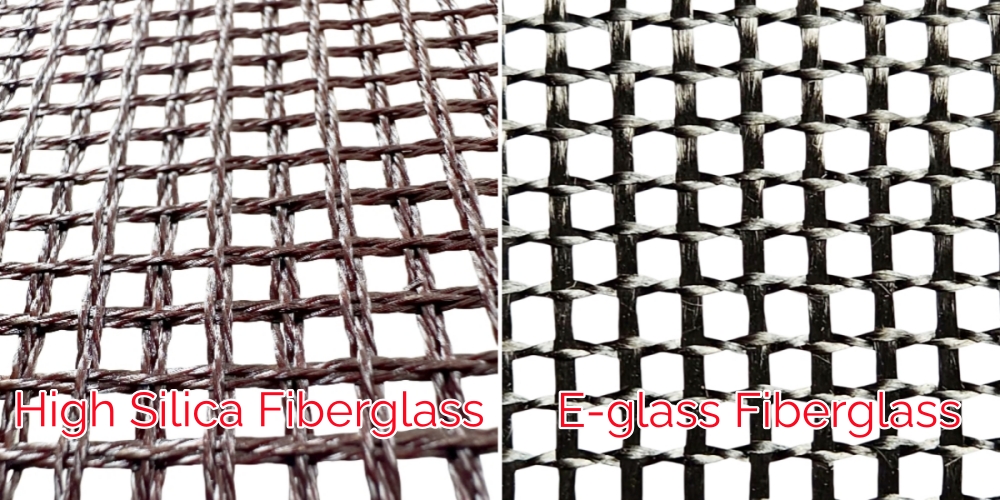
High Silica Fiberglass Filter Mesh VS E-Glass Fiberglass Filter Mesh
| Item | High Silica Fiberglass Filter Mesh | E-Glass Fiberglass Filter Mesh |
| SiO₂ Content | ≥96% | 52%–56% |
| Continuous Working Temperature | 1400–1620℃ | 700–800℃ |
| Peak Temperature Resistance | Up to 1700℃ | Max 850℃ |
| Fiber Structure | Porous silica structure, with internal micro-pores | Dense solid glass fiber, no micro-pores |
| Mechanical Property | Brittle, medium strength, anti high-temperature scouring | High toughness, flexible, anti-impact, not easy to break |
| Filtration Mechanism | Block large slag + adsorb fine micro inclusions | Block oxide slag, mainly stabilize melt flow |
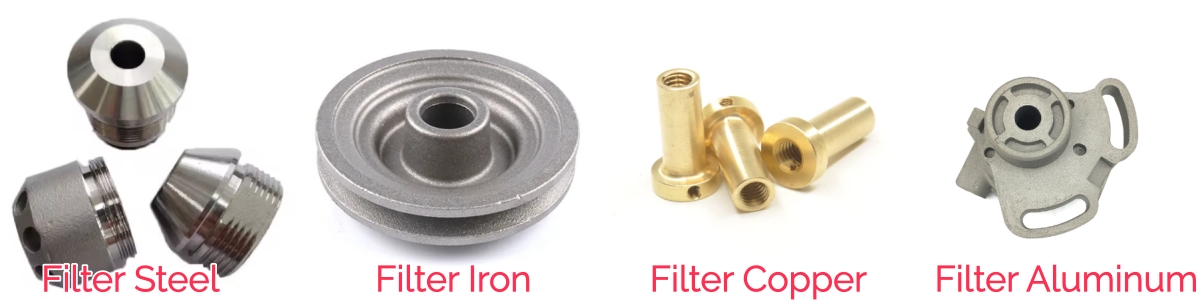
| Applicable Metal Melt | Iron, ductile iron, steel, stainless steel, copper alloy, high temp aluminum | Only aluminum alloy |
| High-temperature Stability | Excellent, no softening, no shedding, no contamination | Poor above 850℃, fiber melting & collapse |
| Application | High temperature ferrous & copper alloy precision casting | Ordinary aluminum alloy gravity / low-pressure casting |
| Cost | Higher | Economical & cost-effective |
| Item | High Silica Fiberglass Filter Mesh | E-Glass Fiberglass Filter Mesh |
| Application Scenarios | 1. Grey iron, ductile iron, cast steel and stainless steel castings 2. Brass, bronze and other copper alloy castings 3. Heavy-section castings, long pouring cycles and high-precision castings (valves, pumps, hydraulic parts) 4. Superheated molten aluminum casting | 1. Aluminum alloy gravity casting, low-pressure casting, sand casting and permanent mold casting 2. Gate and riser filtration; standard material for aluminum cap filters |
| Main Function | Block large slag clusters and adsorb fine oxide inclusions to prevent slag holes and inclusion defects. | Block aluminum oxide skin and floating slag, stabilize melt flow, reduce air entrapment and secondary oxidation. |
| Limitations | Poor resistance to strong alkali melt. | For aluminum alloy only. Prohibited for iron, steel and copper casting. Fibers melt and collapse at high temperature, causing serious inclusion defects. |
| Item | High Silica Fiberglass Filter Mesh | E-Glass Fiberglass Filter Mesh |
| Raw Material & Process | E-glass fabric treated by high-temperature acid leaching to remove boron, calcium and other soluble components, then sintered at high temperature | E-glass raw materials melted and drawn into filaments directly, woven with virgin fiber, no acid purification |
| SiO₂ Content | ≥96% | 52%~56% |
| Main Composition | High purity SiO₂ | SiO₂, B₂O₃, CaO, Al₂O₃; alkali oxide <0.8% |
| Fiber Microstructure | Porous silica skeleton with internal micro-pores | Dense solid glass fiber, no internal micro-pores |
| Chemical Properties | Good high-temperature chemical inertness, no reaction with molten iron and copper; poor resistance to strong alkali | Stable at room temperature. Boron and calcium components decompose above 850℃, contaminating iron and copper castings |
| Texture | Brittle, easy to break when folded | High toughness, foldable and tear-resistant |
| Item | High Silica Fiberglass Filter Mesh | E-Glass Fiberglass Filter Mesh |
| Base Fabric | E-glass fabric used as base material | Directly use virgin E-glass filament |
| Key Procedures | 1. Weaving 2. High-temperature acid leaching to remove boron and calcium 3. Washing and neutralization 4. Sintering at 600~800℃ 5. Cutting | 1. Melt glass raw materials and draw into E-glass filaments 2. Weave filaments into mesh fabric 3. Impregnation with high-temperature resin 4. Heat setting 5. Cutting / cap forming |
| Process Features | Acid leaching + high-temperature sintering to remove low-melting components and form porous high-purity silica fibers | No acid leaching or sintering. Simple process: weaving and resin impregnation |
| Process Purpose | Improve temperature resistance, form micro-pores and ensure stability in hot molten metal | Provide mesh toughness and prevent fiber fraying |
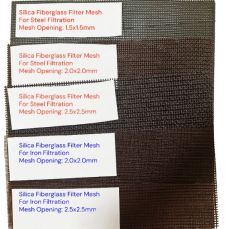
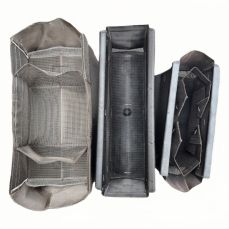
✅For grey iron, ductile iron, steel casting and copper alloy casting.
✅Captures furnace slag, refractory debris and oxide inclusions during pouring to eliminate slag and sand defects.
✅Handles molten metal up to 1600℃.
✅Can also be used for aluminum casting at extreme heat but at higher cost.
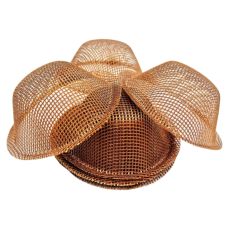
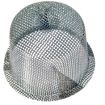
✅Exclusive for aluminum casting: gravity casting, low-pressure die casting, sand casting.
✅Blocks aluminum oxide skin and slag, rectifies melt flow and reduces turbulence & re-oxidation.
✅Most gate cap filters are made of E-glass.
✅When scrap parts are remelted, the filter floats on the surface of molten aluminum and can be easily skimmed off for recycling.
❌❌❌They are not suitable for pouring molten iron or steel. At high temperatures, the material melts and breaks down, contaminating ferrous castings.
Foundry filtration solutions from Hebei Cangchen
Sep. 13, 2026
Contact Us
+86 158 3011 4065
Guoruiyuan Building, ShengLi North Street, Chang'An District, Shijiazhuang City, Hebei Province, China.
Navigation
Navigation