News
May. 26, 2026
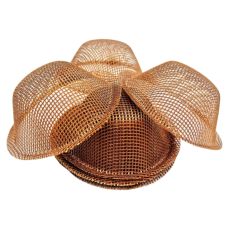
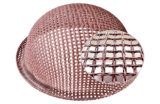
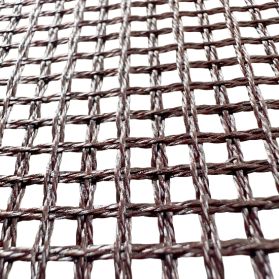
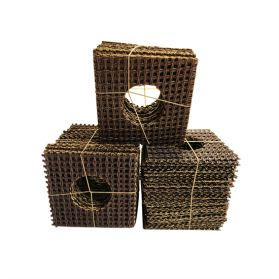
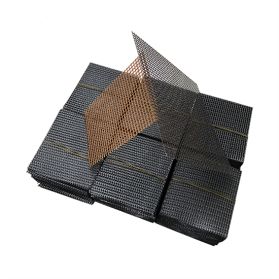
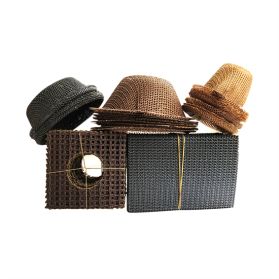
The Fiberglass Cap Filter for molten aluminum (also known as cap-type Fiberglass filter or pouring cup filter screen) is a specialized component for purifying molten aluminum in the aluminum casting industry.
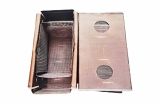
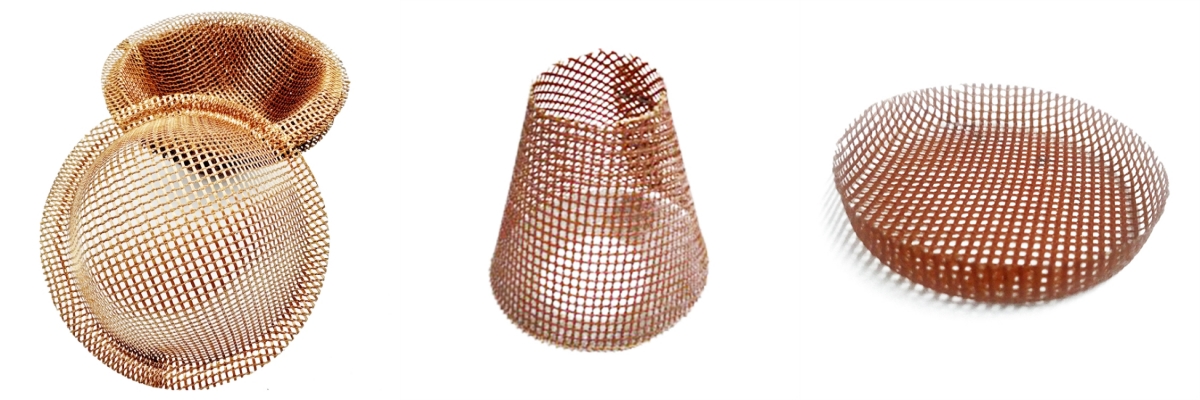
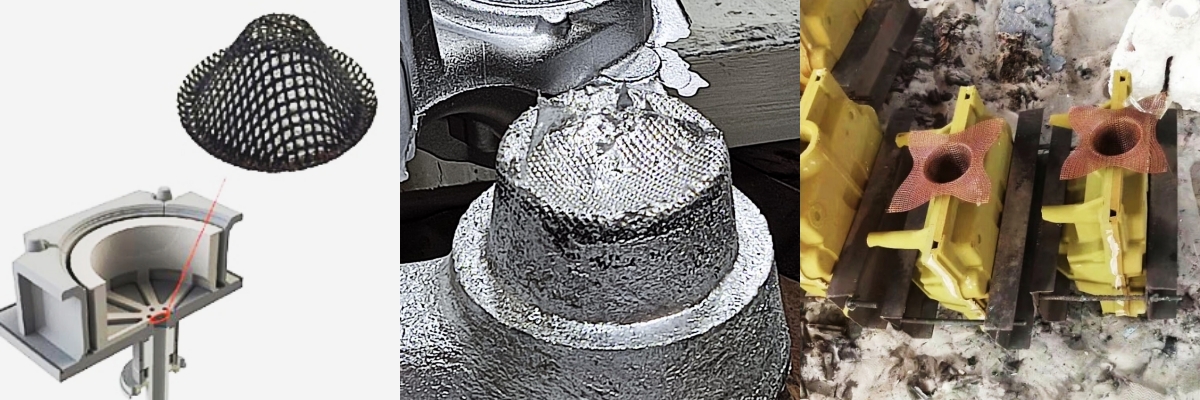
● It is in the shape of a "cap/bowl/cone" and can be directly placed on the upper opening of the pouring cup/straight pouring channel.
● It is specifically designed for aluminum at temperatures ranging from 650 to 750 degrees Celsius.
● It efficiently removes impurities, maintains stable flow, reduces gas pores, and improves the yield of high-quality castings.
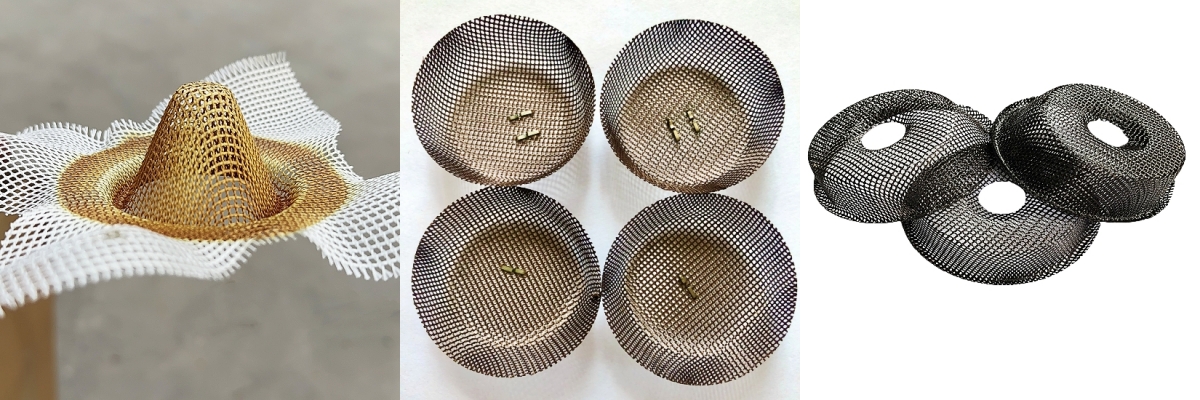
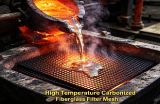
● Material: Alkali-free/high silica fiberglass (E-fiberglass or high silica fiberglass), high-strength high-twist yarn weaving; surface coated with high-temperature resistant resin (brown) or high-temperature carbonization coating (black), fire-resistant, low gas emission, resistant to aluminum liquid erosion.
● Temperature resistance: Long-term ≤ 850℃, short-term 900℃. Suitable for aluminum liquid pouring within the range of 650–750℃.
● Structure: Three-dimensional cap shape (circular/conical/square), reinforced edges, seamless overall; hole diameter 0.8–2.5 mm, high porosity and large slag absorption capacity.
1. Mechanical interception: Blocks large particle impurities such as alumina slag, refractory materials, and sand particles.
2. Fiber adsorption: Fine non-metallic inclusions (≤ 50 μm) are adsorbed onto the surface of the glass fibers.
3. Steady-flow rectification: Disperse the turbulent flow, reduce the Reynolds number, and minimize secondary oxidation; also remove air bubbles and eliminate foaming, thereby lowering the porosity.
● Automobile: Wheels, cylinder block, piston, transmission housing.
● General: Aluminum rods, aluminum ingots, aluminum plates, precision aluminum alloy castings.
● Process: Sand casting, Metal casting, Shell casting, Low-pressure / Gravity casting.
1. Temperature matching: For aluminum liquid below 700℃, choose the brown resin type; for 700–750℃, choose the black carbonized type with low gas emission.
2. Hole diameter selection: For ordinary castings, 1.5–2.5 mm²; for precision parts, 0.8–1.2 mm².
3. Installation: Place the cap with the opening facing downwards and secure it to the pouring cup to prevent leakage; preheat to 100–200℃ before pouring to prevent cracking.
4. Replacement: Replace one furnace at a time; replace it promptly when there is blockage or excessive pressure difference.
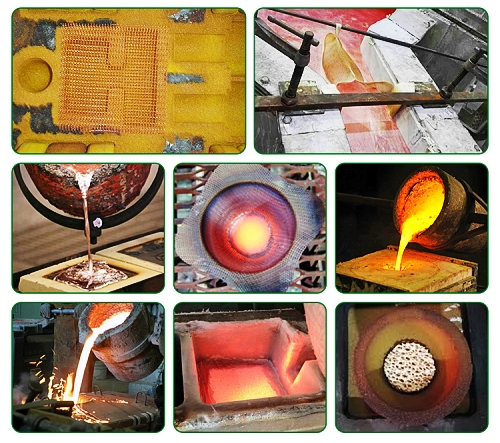
✅ High-purity filtration: Slag removal rate ≥ 90%, significantly reducing casting defects such as slag inclusion, pores, and shrinkage cavities.
✅ Does not contaminate the aluminum liquid: No iron is precipitated, and the composition of the aluminum liquid remains unchanged; the waste filter can be returned to the furnace along with the aluminum slag, eliminating the need for iron removal, resulting in low recovery costs.
✅ Simple installation: Simply attach it to the gate cup and it will seal to prevent cross-flow; no need to modify the mold; suitable for sand molds, metal molds, and low-pressure casting.
✅ Low cost, high efficiency: Low unit price, suitable for single production run; Product quality rate increased by 5–15%, significant overall cost reduction.
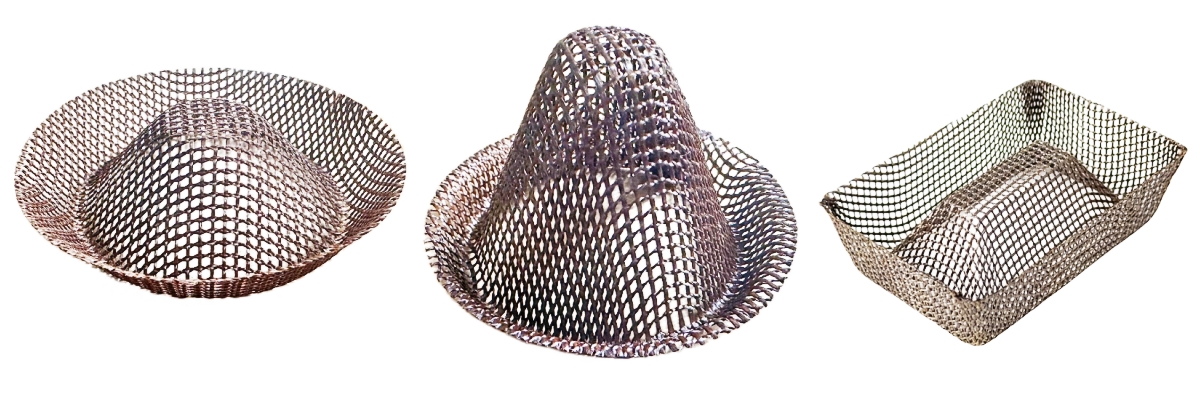
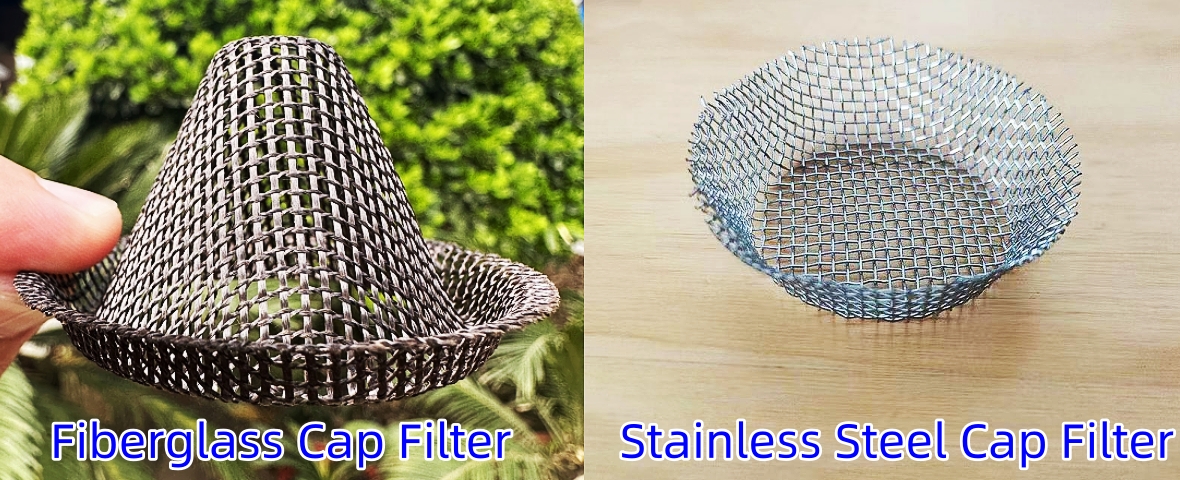
More and more clients choose our fiberglass cap filters to replace their stainless cap filters, and they also asked more information of differences between two filters, so, we make a compared list as follow:
Please pay more attention to the red marks, which are the most different.
| Item | Fiberglass Cap Filter | Stainless Steel Cap Filter |
| Main material | High silicon oxide/alkali-free glass fiber, with a surface coating resistant to high temperature | 304/316 stainless steel, ordinary iron-chromium stainless steel wire. |
| Applicable temperature | Long-term temperature range of 650 to 750℃, with a maximum short-term Max. temperature of 850℃. | Long-term temperature ≤ 700℃, prone to softening and deformation at high temperatures. |
| Dust removal/purification effect | Mechanical interception combined with surface adsorption can remove fine impurities and alumina residues, with a high slag removal rate. | Only physically intercept large particles of impurities, with weak adsorption capacity for fine slag inclusions. |
| Flow control | Rectification and stabilization of flow, reduction of turbulence in the aluminum liquid, decrease of secondary oxidation and casting porosity. | The rectification effect is poor, and it is prone to splashing and turbulence. |
| Metal precipitation risk | No iron elements are precipitated, thus not polluting the aluminum liquid and not altering the alloy composition. | At high temperatures, it is prone to oxidation and iron penetration, resulting in an excessive iron content in the aluminum liquid. |
| Gas Emit | Coating modification results in extremely low gas generation, and it is unlikely to cause gas porosity defects. | No significant odor emission |
| Reprocessing | It can be directly recycled back into the furnace along with the aluminum slag, without the need for sorting, making the recycling process very convenient. | Mixing in aluminum liquid will increase iron content. It must be sorted out separately and sent back to the furnace, which is troublesome. |
| Structural strength | The texture is rather brittle and it is prone to breakage under strong impact. Therefore, it should be handled with care and moved gently. | The metal has high toughness, is resistant to impact and scratches, and has excellent durability. |
| Service life | Single use for a single pouring. One furnace, one change. | Can be reused multiple times. |
| Composite cost | Low unit price, low cost per use | The unit price is relatively high. It can be reused, but the costs for sorting and removing iron are relatively high. |
| Adaptation process | Sand casting, metal mold casting, low-pressure casting, precision cast aluminum. | Coarse-cast, ordinary aluminum castings with low requirements for impurities. |
| Major defect | Strictly prohibit violent impacts and sudden temperature changes. | Easy iron leakage, unstable flow rate, insufficient filtration of fine impurities. |
How to Select The Correct Filter For Your Casting
Oct. 09, 2026
Why use TF COMBO BAG for molten aluminum
Oct. 01, 2026
Contact Us
+86 158 3011 4065
Guoruiyuan Building, ShengLi North Street, Chang'An District, Shijiazhuang City, Hebei Province, China.
Navigation
Navigation