News
Jul. 16, 2026
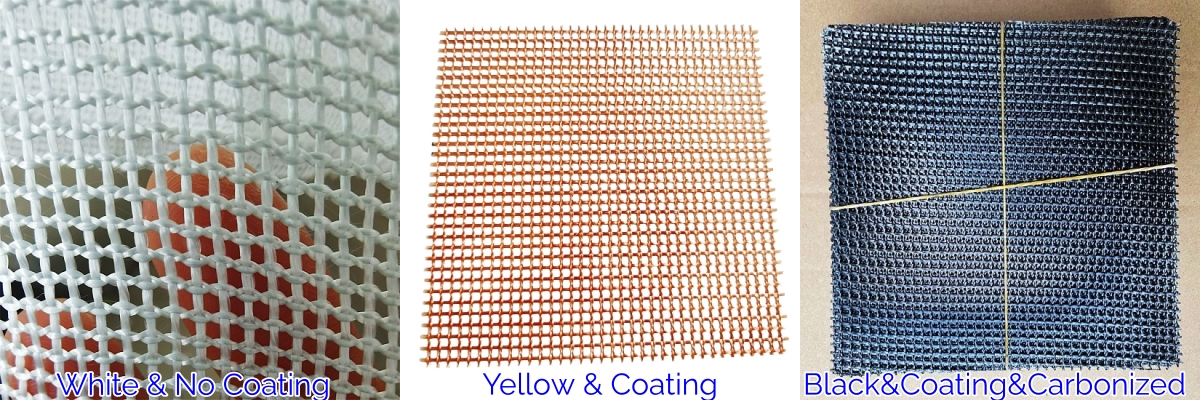
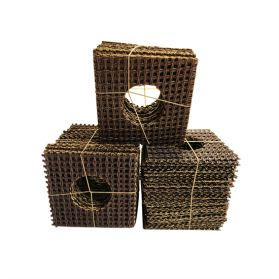
1. The filtration effect is the poorest: Without coating for shaping, the mesh pores will be expanded after the aluminum liquid washes over and fine oxide residues directly penetrate, resulting in a high incidence of casting defects such as inclusions.
2. High temperature risk: The filter screen will be quickly soften and collapse above 700℃, resulting in failure of filtration and all the slag being flushed into the cavity.
3. Excessive gas emission: When the organic yarn comes into contact with the molten aluminum, it releases a large amount of gas, resulting in the batch scrapping of the castings due to gas pores and pinholes.
4. Applicable only: For extremely low-demand recycling of crude aluminum castings and one-time simple casting, not suitable for finished products.
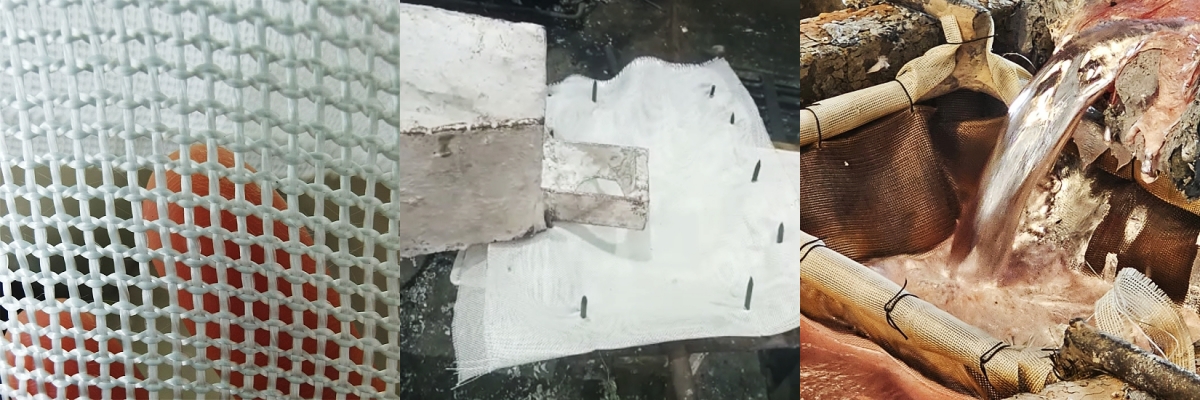
1. Filtering effect is moderate: The surface is coated with a high-temperature-resistant layer, the mesh is stable, and it can intercept most of the blocky oxide slag and furnace slag.
2. Limitations: The coating contains a large amount of organic resin, it will continuously release gas when exposed to aluminum liquid at temperatures above 750°C, so, precision parts are prone to develop subsurface air holes. Prolonged casting (continuous pouring in low-pressure casting) leads to coating erosion, resulting in filter screen damage, fiber detachment and contamination of the aluminum liquid.
3. Application: General die-cast parts, aluminum ingots, low-end wheels, structural components, mass production with relatively loose requirements for pores.
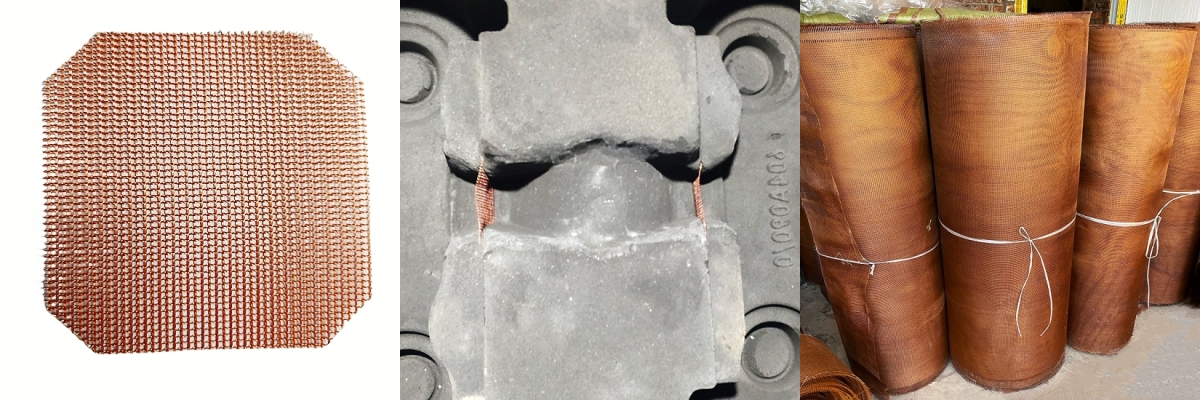
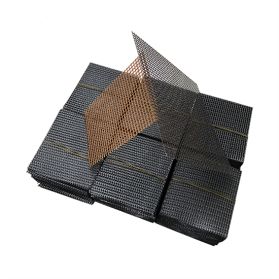
1. Optimal filtration effect: The carbonization process removes all organic resins. The filter screen maintains its size and does not expand the mesh under high temperature, effectively intercepting fine suspended oxide scales, mud, and sand residues, significantly improving the surface finish of the castings.
2. Zero smoke emission, low gas generation: The entire casting process is smokeless and odorless. It completely eliminates the pores and pinholes caused by resin combustion, significantly reducing the scrap rate.
3. Structural stability: Resistant to continuous erosion by aluminum liquid. It is not prone to damage even during low-pressure casting or large-flow pouring. Almost no fibers fall off, and no black spot inclusions defects are generated.
4. Application: Automotive wheel hubs, pistons, new energy shell components, precision die-casting, mirror-polished aluminum parts, and high-end castings with zero air holes.
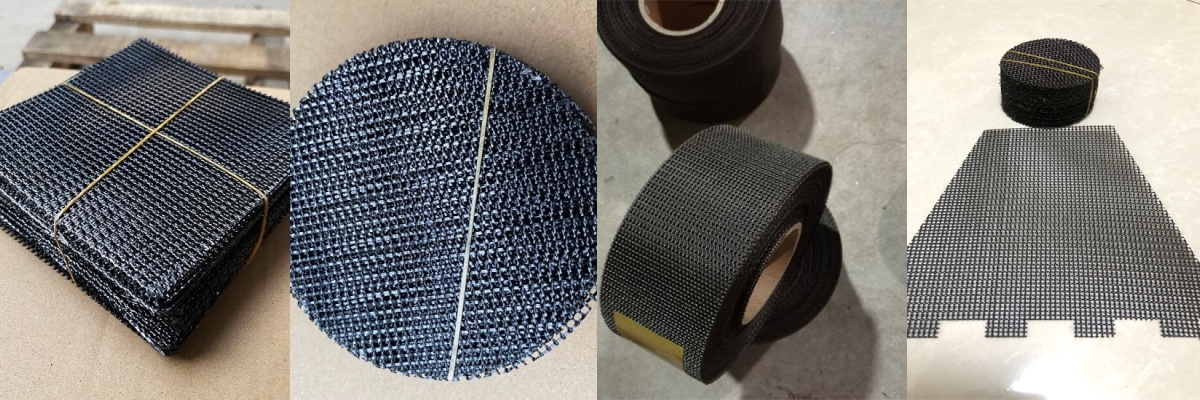
This is only a temporary coarse filter for waste aluminum and rough casting without any quality requirements. It is not recommended for regular production of finished products as there are too many defects.
Common aluminum parts, aluminum rods, low-end die-castings, limited budget, the castings can have a few air bubble defects, mass production for large quantities.
✅The castings are required to be polished, have perfect air tightness, no air holes, and no inclusions.
✅Low-pressure casting, continuous long-duration pouring, large flow aluminum liquid.
✅Producing wheel hubs, pistons, and precision parts made of new energy aluminum alloy.
✅The workshop has strict environmental protection requirements, and there must be no thick smoke or unpleasant odors.
✅Long-term use can reduce the scrap rate of castings and offset the higher procurement cost of the filter screens.
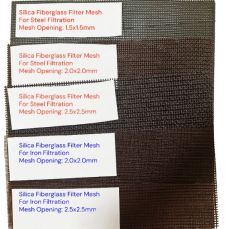
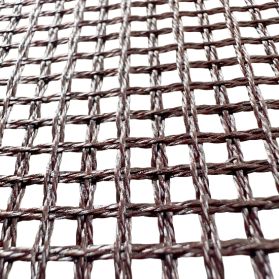
Fiberglass Filter Mesh For Aluminum Casting Filtration | |||
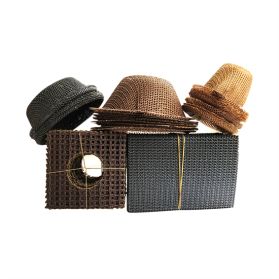
| Items | White without coating | Yellow with coating | Black carbonized (oxygen-free carbonization treatment) |
| Technology | Only fiberglass weaving, without high-temperature resistant organic coating. | Fiberglass + ordinary organic high-temperature resistant slurry impregnation and drying. | On the basis of the yellow mesh, undergo anaerobic high-temperature carbonization, burn off all the organic binders, and form a carbon protective layer on the surface. |
| High-temperature resistance limit | 700℃, very easy to be soften and collapse the mesh | 800℃, short-term tolerance, prone to shrinkage and deformation under long-term high temperature conditions. | 850℃ to 900℃, the structure remains stable at high temperatures, without collapsing or shrinking. |
| Gas Emit/Smoke | Extremely, emitting thick smoke and pungent odors. | Medium level, with a small amount of smoke. The castings are prone to developing pores. | Extremely low (≤ 30 cm³/g), smokeless and odorless, reducing pore defects at the source |
| Filter fineness | The fibers are loose and have large pores. It is a coarse filtration method, and can only catch large impurities. | The pores are uniform, of medium precision, and capable of filtering regular oxide slag. | The fibers have high strength, stable pores, high precision, and can intercept even fine oxide scales and suspended residues. |
| Strength and filament breakage | The texture is soft and it is prone to being stretched and deformed. It is also easy to lose fiber residues during casting. | The hardness is average. If the aluminum liquid is in contact with it for a long time, the wires may break and chips may fall off. | Overall rigidity is high, resistant to aluminum liquid erosion, with very few fibers falling off, and does not contaminate the aluminum liquid. |
| Cost price | The cheapest type. | Affordable, mass-produced general-purpose model. | The highest price among three material. |
| Core defect | Excessive gas emission, collapsed net, poor filtration, only temporary coarse filtration. | High temperature causes gas generation, and prolonged casting can lead to damage. The risk of pores is also high. | High procurement costs. |
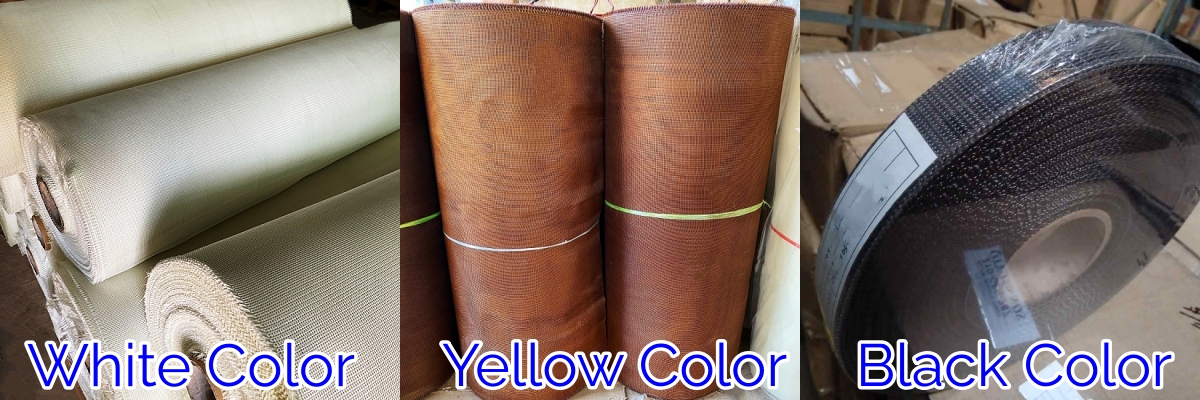
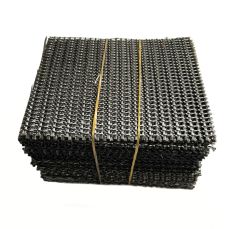
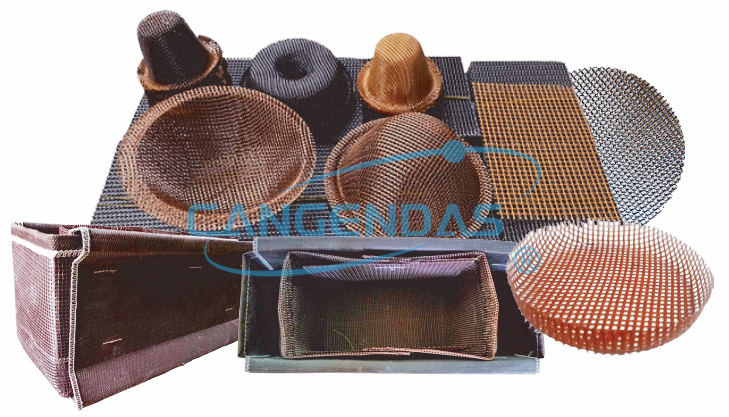
We, Hebei Cangchen, a professional Chinese manufacturer specializing in black carbonized fiberglass filter mesh for molten aluminum filtration.
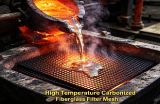
Our carbonized black fiberglass filter mesh adopts high-temperature anaerobic carbonization treatment. Compared with ordinary white and yellow fiberglass mesh, it features ultra-low gas emission, excellent high-temperature resistance up to 900℃, stable mesh structure without collapsing, and superior filtration performance to intercept fine oxide slag, which effectively reduces casting defects like pores and inclusions.
✅We own independent registered trademark.
✅Complete export certificates are available: REACH, RoHS and SDS safety data sheets for all products.
✅We have passed ISO Three-in-One Management System Certification (ISO9001 Quality / ISO14001 Environmental / ISO45001 Occupational Health & Safety).
✅We support full customized sizes, weaving density and packing according to your production demands.
✅Competitive factory-direct prices and stable delivery lead time are guaranteed.
Feel free to send us your specifications for a detailed quotation.
We sincerely look forward to establishing long-term cooperation with you.
How to Select The Correct Filter For Your Casting
Oct. 09, 2026
Why use TF COMBO BAG for molten aluminum
Oct. 01, 2026
Contact Us
+86 158 3011 4065
Guoruiyuan Building, ShengLi North Street, Chang'An District, Shijiazhuang City, Hebei Province, China.
Navigation
Navigation