News
Jun. 04, 2026
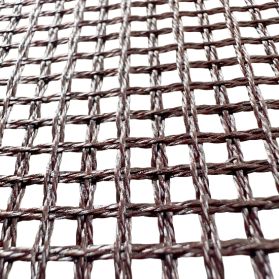
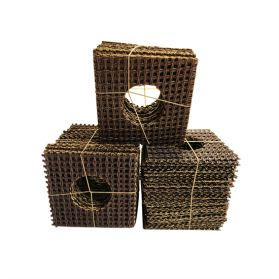
1. Fiberglass filter mesh(for cast aluminum only)
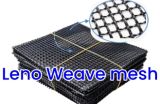
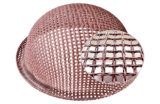
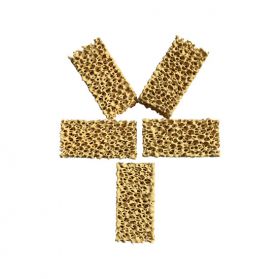
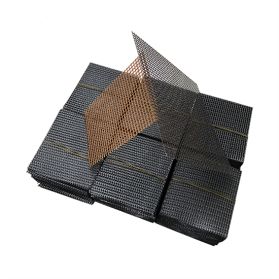
2. Stainless steel filter mesh
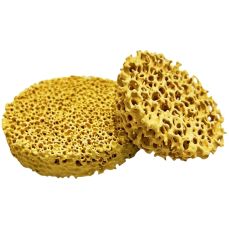
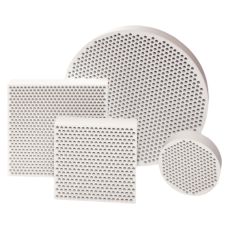
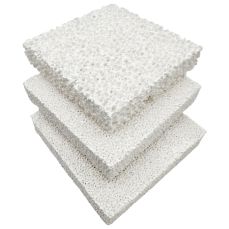
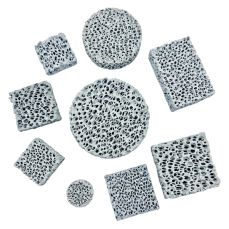
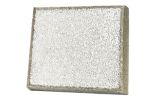
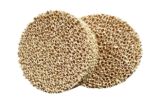
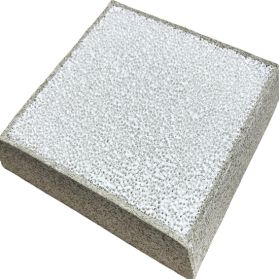
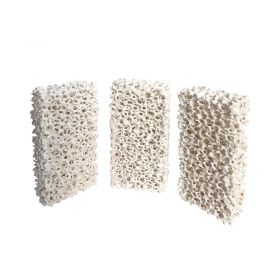
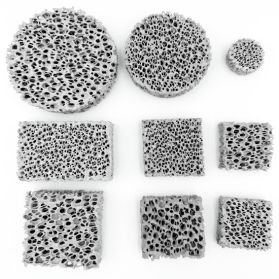
3. Ceramic foam filter (silicon carbide/alumina)
| Item | Fiberglass filter mesh (for cast aluminum only) | Stainless steel filter mesh | Ceramic foam filter (SiC/alumina) |
| Core adaptation scenarios | Common sand casting, gravity casting, low-pressure aluminum casting, continuous casting of aluminum billets, all categories are applicable | High-temperature cast steel and cast iron are only suitable for special scenarios involving ultra-high-temperature aluminum liquid. | High-pressure gas-tight parts, aerospace precision aluminum parts, high-temperature special aluminum alloy filters. |
| Risk of aluminum liquid contamination | Alkali-free fiberglass does not contain iron or heavy metals and does not pollute the composition of the aluminum liquid at all. | Contains iron elements. At high temperatures, iron will seep into the aluminum liquid, contaminating the aluminum quality. | Chemically stable, no element is released, and zero pollution. |
| Recycling of waste materials | The gate, riser and waste net can be directly remelted in the furnace without any loss of raw materials. | Iron-containing waste cannot be directly recycled in the furnace. It needs to be sorted and downgraded for processing, resulting in significant loss of raw materials. | The ceramic fragments cannot be recycled. They need to be thoroughly sorted out; otherwise, it will cause impurities in the castings. |
| Resistance to high temperature | Continuous use at 700 - 850℃, short-term peak temperature of 900℃, suitable for conventional aluminum liquid at 680 - 750℃ | When continuously used at temperatures above 1000℃, the maximum temperature resistance is extremely high. | When continuously used at temperatures above 1200℃, the heat resistance performance is the best. |
| Filter fineness | Standard mesh size is 1.0 - 2.5mm. It can intercept over 95% of large-sized impurities and can adsorb micrometer-sized fine impurities. | The mesh can be made finer, achieving higher mechanical screening accuracy, but it lacks the adsorption and filtration effect. | The pores of the foam ceramics can reach the micrometer level. With the strongest ability to filter ultra-fine impurities, it can achieve deep and precise filtration. |
| Cost | The unit price is extremely low. It is the top choice for small-scale mass production. The overall usage cost is the lowest. | The unit price is moderate. It can be reused, but the reprocessing loss offsets the cost advantage. | The unit price is extremely high, only suitable for high-precision and high-demand scenarios, and the overall cost is the highest. |
| Processing adaptability | It can be cut at the site with scissors, and the irregular-shaped gating channels can be customized and formed. The installation is flexible. | It can be cut, but it has high hardness and the on-site processing is very difficult. | Fixed specifications for molding, unable to be cut on-site. Customization of irregular-shaped parts is costly and takes a long time. |
| Gas Emit | After high-temperature pre-carbonization, the gas emission volume is ≤ 30 mL/g, with low volatility. The porosity defects of the castings can be reduced by more than 50%. | No risk of gas emission, no gas leakage. | No risk of gas emission, no gas leakage. |
| Anti-erosion deformation ability | The tensile strength at room temperature is ≥ 60N for 4 strands of yarn. It does not deform during the normal pouring cycle. | Metallic material, with extremely strong resistance to erosion and deformation. | Brittle material, with poor resistance to thermal shock and erosion, prone to cracking. |
| Constant current rectification effect | It can disperse the turbulent and vortex flow of the molten aluminum, reduce secondary oxidation, and achieve excellent steady flow effect. | Only achieves filtering, with no obvious effect of stable current rectification | Only achieves filtering, without the effect of stable current rectification. |
Today, we will introduce Fiberglass filter mesh(for cast aluminum only) separately!
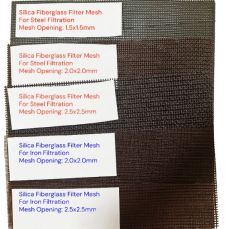
Special non-alkali fiberglass for aluminum filter mesh (aluminum borosilicate, with alkali oxides less than 0.8%), warp-knitted with high-twist yarns, the entire net is impregnated with high-temperature resistant resin and pre-carbonized and shaped at high temperature, and the surface is treated with high-temperature resistant coating, which is different from the high-silicon oxide glass fiber nets used for cast steel.
• Raw materials: E glass fiber non-alkali yarn, free of iron and heavy metals, and does not contaminate the composition of the aluminum liquid
• Processing: Weaving → Immersion in high-temperature adhesive → Drying and carbonization → Cutting/Stamping into shapes (sheets, caps, tubes, irregular shapes)
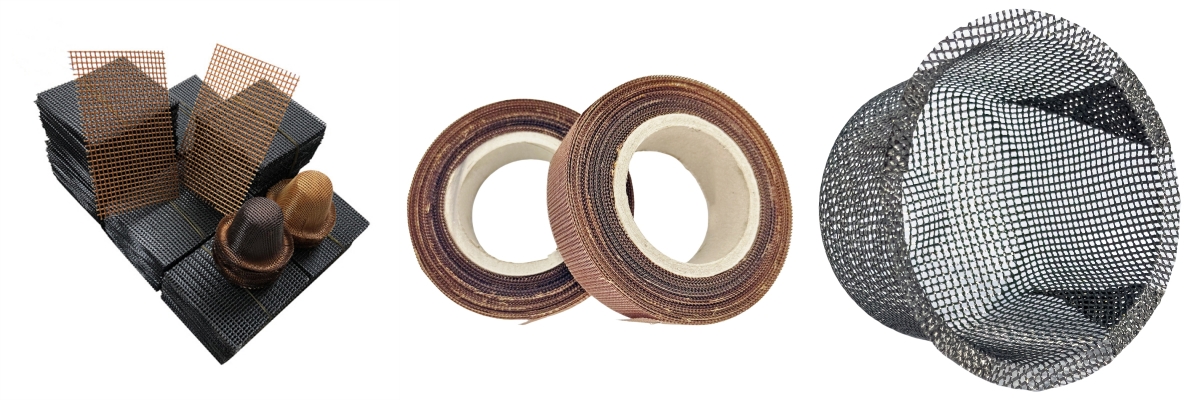
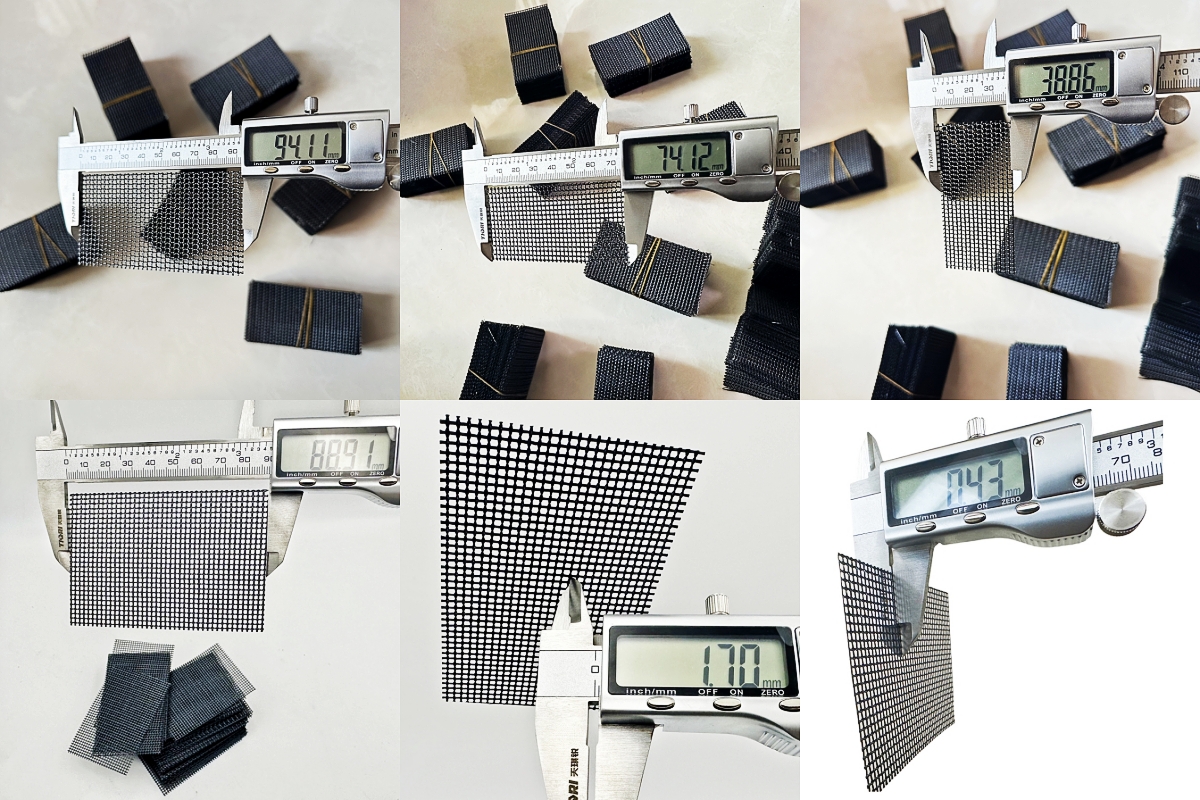
1. Flat-panel filter (the most common type)
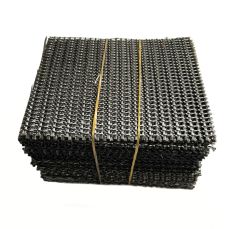
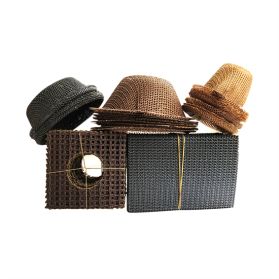
Square/round sheet materials and rolls can be cut on-site at will; suitable for sand casting and gravity casting with metal molds. They can be placed at the cross-channels and internal gates.
Standard sizes: 100×100/150×150/200×200/300×300mm, with an unlimited length for the entire roll (1m wide).
2. Cap-type/Saucer-type filter screen (low-pressure cast aluminum, hub-specific)
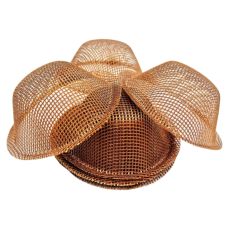
The inverted funnel shape is fixed at the bottom of the gate cup. It is a standard feature for low-pressure casting of automotive aluminum wheels and cylinder heads. It effectively collects impurities and ensures the best flow stability.
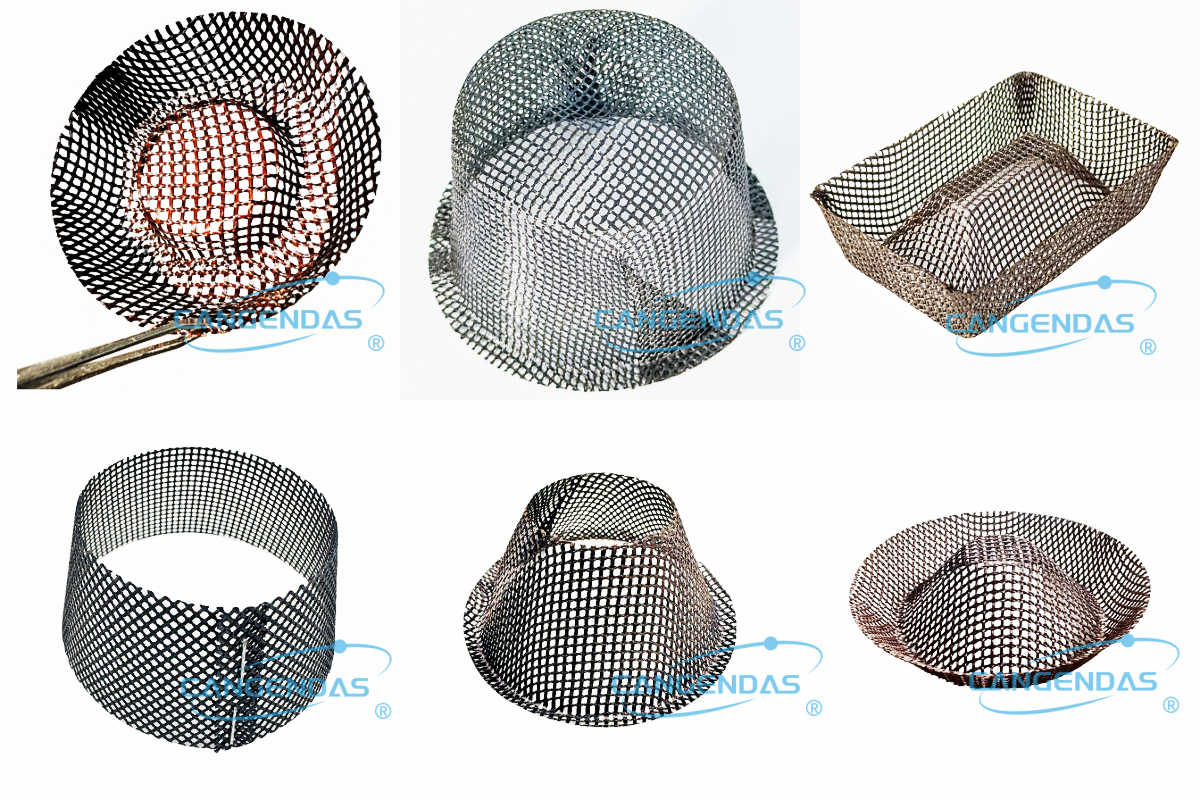
3. Cylindrical/bag-type filter screen (aluminum rod, aluminum ingot continuously cast)
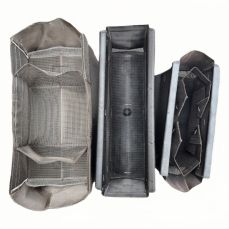
Long strip bag type, with both diversion and deep filtration functions. It is used in the production line for continuous casting of aluminum billets and large plate ingots.
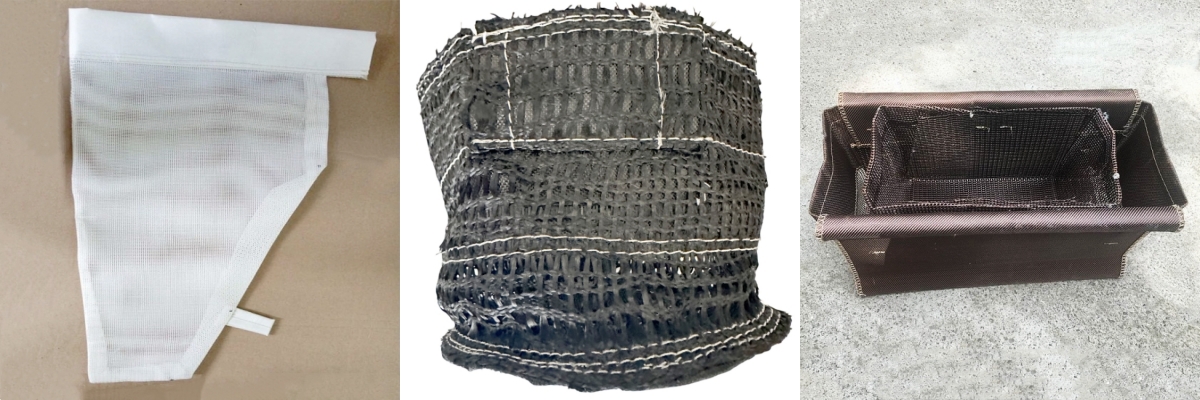
1. Mechanical screening: Filters out alumina skins, sand particles, and large impurities such as furnace slag (impurity retention rate for particles larger than the mesh size is over 95%).
2. Fiber adsorption: The glass fiber pores adsorb micron-sized fine oxide impurities;
3. Steady-flow rectification: Disperse the turbulence and vortex in the molten aluminum, reduce the secondary oxidation of the aluminum liquid, and prevent the generation of new oxide slag at the source.
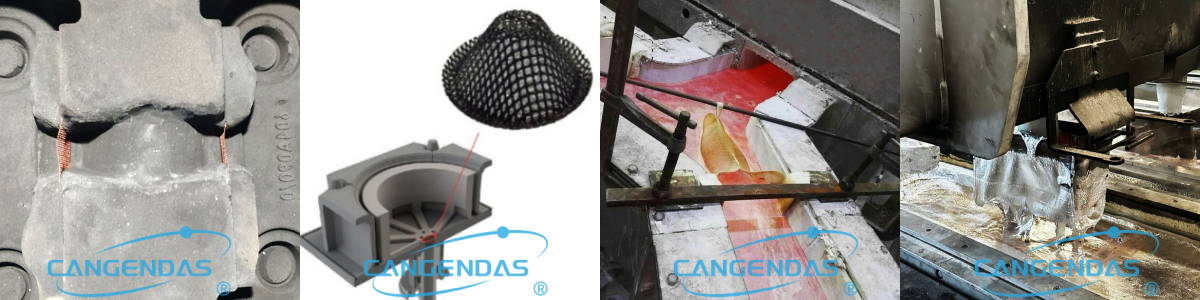
1. Preferred position: Bottom of the gate cup > Lower end of the direct pouring channel > Junction of the transverse pouring channel and the internal pouring channel. The closer to the cavity, the better the filtration effect.
2. Installation and fixation: The periphery of the filter screen is compacted by molding sand. For the wet mold, the pressure on one side is 15mm; for the dry mold, it is 20 to 30mm. This is to prevent the screen from deviating and causing slag leakage.
3.Gating area: The cross-sectional area of the pouring channel at the filter screen installation position should be 2 to 4 times that of the original pouring channel to prevent the filter screen from getting clogged and causing pressure build-up or insufficient pouring.
4. Aluminum liquid temperature: The normal pouring temperature is 680 - 740℃. Above 850℃, the aluminum liquid becomes soft easily; below 650℃, it is prone to clogging the net.
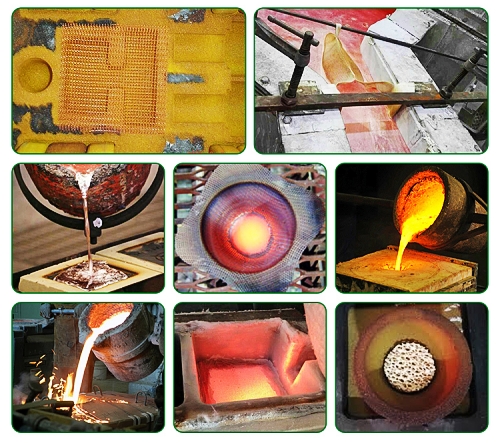
1. Molding process:
Gravity sand casting, metal mold (hard mold) casting, low-pressure casting, shell mold casting, investment casting, aluminum billet continuous casting.
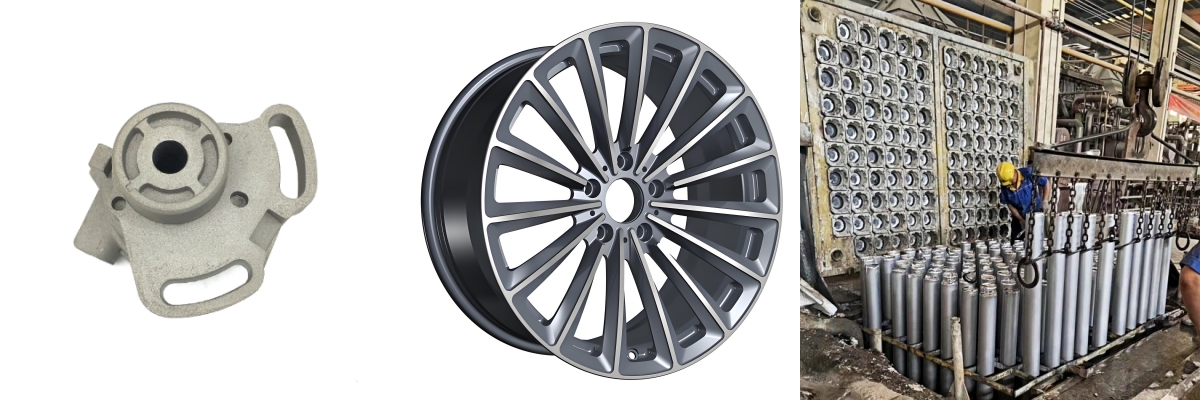
2. Terminal casting:
Car wheels, engine pistons/cylinder heads, transmission housings, aluminum alloy valve bodies, aluminum rods/aluminum ingots, new energy shells, precision aluminum castings for hardware.
Contact Us
+86 158 3011 4065
Guoruiyuan Building, ShengLi North Street, Chang'An District, Shijiazhuang City, Hebei Province, China.
Navigation
Navigation