News
Jun. 02, 2026
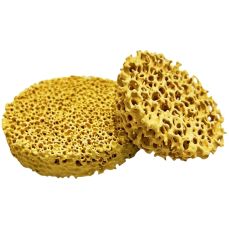
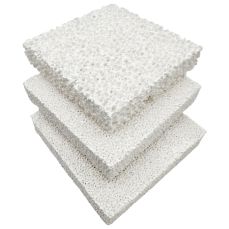
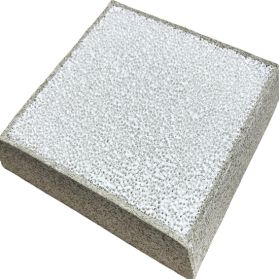
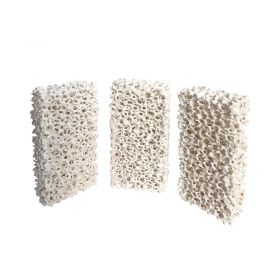
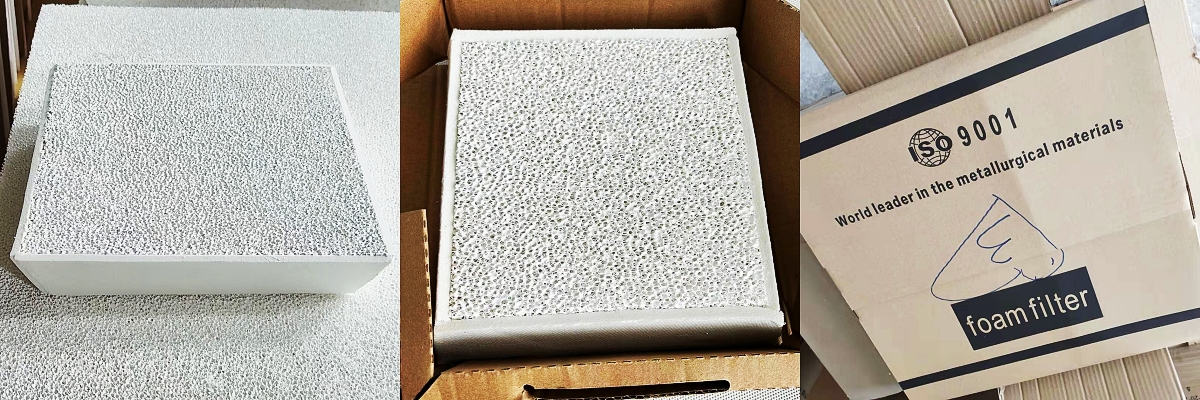
Alumina ceramic foam filter plate is made from high-purity alumina (Al₂O₃ ≥ 93%) and is formed by the organic foam impregnation method.
It is a three-dimensional mesh-like porous ceramic and specifically designed for high-temperature filtration of aluminum and aluminum alloy liquids.
It is used to remove inclusions, regulate the flow field, and improve the quality of castings. It is the mainstream solution for large-flow and high-precision aluminum liquid filtration.
● Material composition: The content of Al₂O₃ is 93% - 96%, with the remainder being a small amount of sintering additives; white in color, phosphorus-free formula, avoiding contamination of the aluminum liquid.
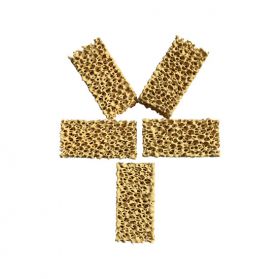
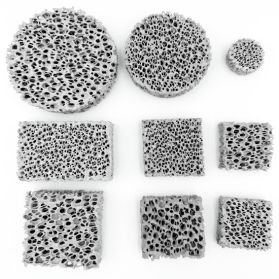
● Hole structure: Three-dimensional connected network, porosity 80%–90%; hole density 10–60 PPI (number of holes per inch length), commonly 10/20/30/40 PPI.
● Diameter range: approximately 0.3 - 1 mm. The higher the PPI, the smaller the diameter, the higher the filtration accuracy, and the lower the flow rate.
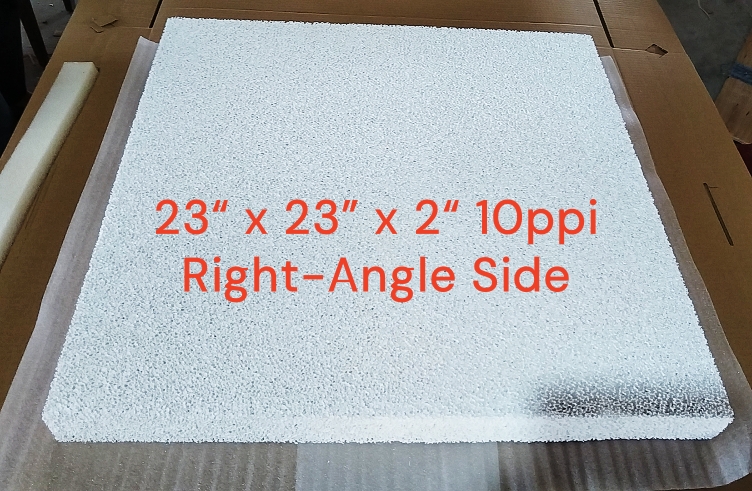
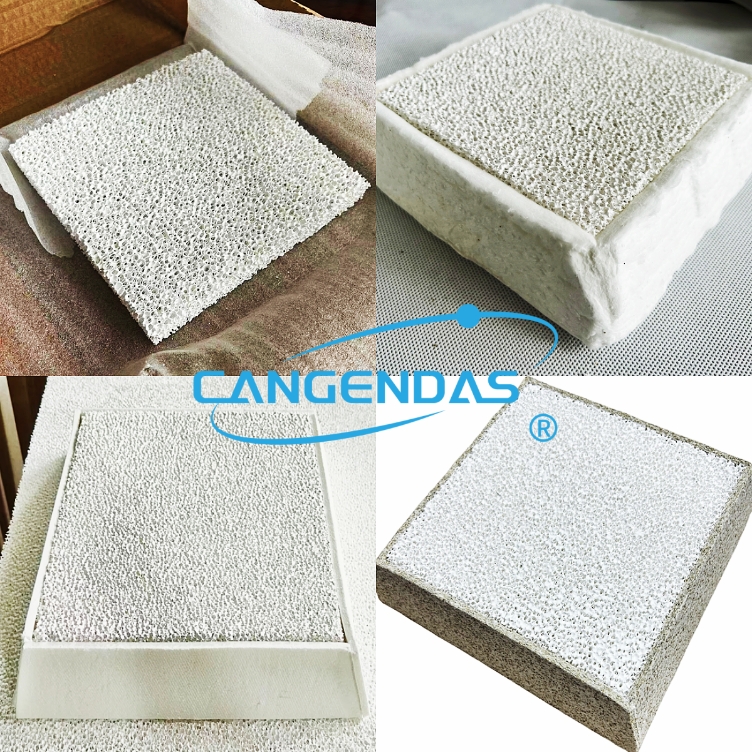
● Thickness: Standard 50 mm (customizable), with a 17.5° ± 1.5° chamfer on the side, facilitating the installation of the seal.
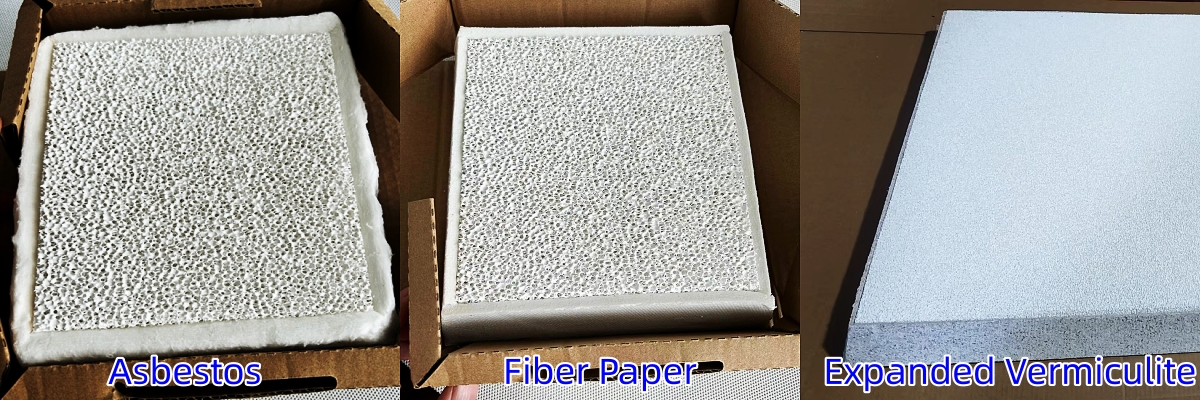
● Gaskets: There are three gaskets: 1. Asbestos, 2. Fiber Paper, 3. Expanded Vermiculite.
● Small size: 178×178, 230×230, 305×305
● Medium size: 381×381, 432×432, 508×508, 584×584
● Ultra-large customization: up to 1000×1000, thickness 50–100 mm.
● Dimension tolerance: Length ±3 mm, Width ±2 mm, Diagonal difference ≤ 5–9 mm.
● Maximum operating temperature: ≤ 1100℃ (up to 1350℃ for short periods), suitable for molten aluminum at 700–950℃.
● Compressive strength: ≥ 0.8 MPa. The strength remains stable at high temperatures and there is no risk of chipping.
● Thermal shock resistance: ≥ 6 times (from 1100℃ to water cooling), capable of withstanding rapid temperature fluctuations of molten aluminum.
● Volume density: ≤ 0.5 g/cm³, lightweight and low thermal inertia.
● Chemical stability: Resistant to erosion by aluminum liquid, non-reactive, non-detachable, and with a low rate of slag detachment.
1. Framework preparation: Polyurethane foam (PU) is pre-treated to form a three-dimensional interconnected pore network.
2. Slurry impregnation: The high-purity alumina slurry (containing sintering additives) is vacuum-impregnated and evenly coated onto the foam framework.
3. Roll forming: A specialized roll-forming process is used to control the thickness and uniformity, and to remove excess slurry.
4. Drying and curing: Slow drying at low temperature to prevent cracking.
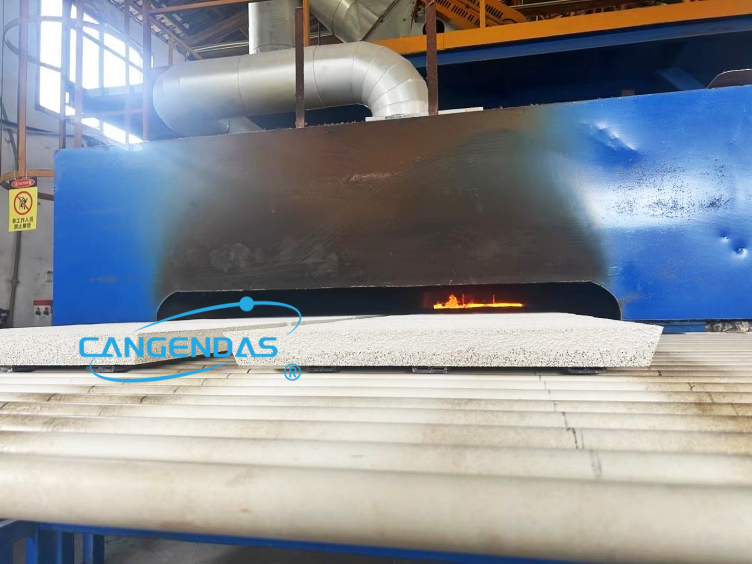
5. High-temperature sintering: The material is heated at 1550–1600℃ for a period of time before being cooled, resulting in the formation of a stable ceramic phase.
6. Cutting and chamfering: Precisely cut the dimensions, machine a 17.5° sealing chamfer, and inspect the packaging.
● Automotive industry: High-pressure cast/low-pressure cast aluminum parts such as wheel hubs, cylinder blocks, cylinder heads, and transmission housing.
● Aerospace: High-precision aluminum alloy castings, structural components.
● General Casting: Sand casting, metal mold casting, and lost foam casting of aluminum parts.
● Aluminum processing: Filtering of aluminum liquid used for casting plates, aluminum foil, and profiles.
● Others: Filtration of low-melting-point non-ferrous metal liquids such as magnesium alloys and zinc alloys.
1. Preheating: Preheat at 200–300℃ for at least 30 minutes before use to remove moisture and prevent cracking due to thermal shock.
2. Sealing: Place in the filter box and seal the four sides with ceramic fibers or refractory mud to prevent leakage and short circuit.
3. Flow rate control: The initial flow rate is ≤ 5 cm/s. It is gradually increased after stabilization. The higher the PPI, the lower the flow rate.
4. Replacement cycle: For a single filter, it should be replaced after handling 500 - 2000 kg of aluminum liquid (depending on the cleanliness of the aluminum liquid), and it should be replaced immediately if there is blockage (increase in pressure difference).
5. Prohibited Actions: Strictly prohibited from rapid cooling or heating, from contact with molten iron/steel, and from violent striking.
✅ High filtration efficiency: Removes ≥ 95% of oxides, slag, and non-metallic inclusions.
✅ Large flow compatibility: The large plate can filter 500 - 5000 kg of aluminum liquid at one time, suitable for large-scale castings/continuous casting.
✅ Improve casting quality: Reduce pores, inclusions and shrinkage porosity, and increase mechanical properties by 10% - 20%.
✅ Simplify the pouring system: Eliminate the complex slag-blocking structure to reduce costs and increase production efficiency.
How to Select The Correct Filter For Your Casting
Oct. 09, 2026
Why use TF COMBO BAG for molten aluminum
Oct. 01, 2026
Contact Us
+86 158 3011 4065
Guoruiyuan Building, ShengLi North Street, Chang'An District, Shijiazhuang City, Hebei Province, China.
Navigation
Navigation