Application
May. 21, 2026
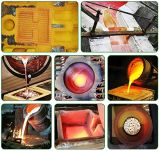
During the melting and pouring processes of aluminum alloys, cast iron, copper alloys, and cast steel, the molten metal is inevitably subject to problems such as oxidation inclusions, slag, gases, and turbulence.
Metal liquid filtration is the core process for improving quality and reducing waste in casting production, and it is a necessary procedure for the production of medium and high-end castings.
All liquid casting metals are required to be filtration and purification.
During the entire process of metal melting, casting, transportation, and pouring, solid impurities such as oxide scales, slag, refractory material debris, and sand particles will be produced.
If the casting is carried out directly, these impurities will remain inside the casting, causing fatal defects such as inclusions, slag holes, and cavities, which will directly result in the failure of the casting.
Filtration can effectively intercept large and small particles of impurities and purify the molten metal at its source.
Without filtration during pouring, the metal liquid flows rapidly, the water flow is chaotic, and the rolling and impact are severe.
It is highly likely to suck in air and wash away the sand mold.
The filtration product can disperse the chaotic liquid flow, maintain uniform flow velocity, and ensure smooth flow, significantly reducing problems such as sand washing, mold collapse, flash, and uneven wall thickness of the castings.
The pouring turbulence will entrain a large amount of air, and at the same time, the surface of the metal impurities will adsorb gases such as hydrogen and oxygen.
After filtration and purification, the purity of the metal liquid is significantly improved, the porosity rate on the surface and inside of the casting is markedly reduced, and the overall density and compactness of the casting are enhanced.
Pure and uniform molten metal, when solidifying and crystallizing, presents a more regular structure.
The mechanical properties such as hardness, toughness and strength of the castings are more stable and uniform.
At the same time, castings without inclusions or holes have no chipping during cutting and grinding, and the surface finish is very high.
This significantly reduces tool wear and processing defect rates, and improves the qualification rate of X-ray and ultrasonic flaw detection.
Aluminum alloy has highly reactive chemical properties and is prone to oxidation at high temperatures, generating a large amount of fine aluminum oxide slag.
The fine particles are so tiny that they are difficult to distinguish with the naked eye and are very likely to remain inside the castings.
Consequences without filtration: The castings will have pockmarks, sand holes, and air leakage or water seepage. Lightweight pressure-bearing components will fail to meet the sealing requirements.
The core purpose of filtration: To remove fine oxide residues, reduce the porosity rate, and ensure the appearance, sealing performance and usability stability of the aluminum parts.
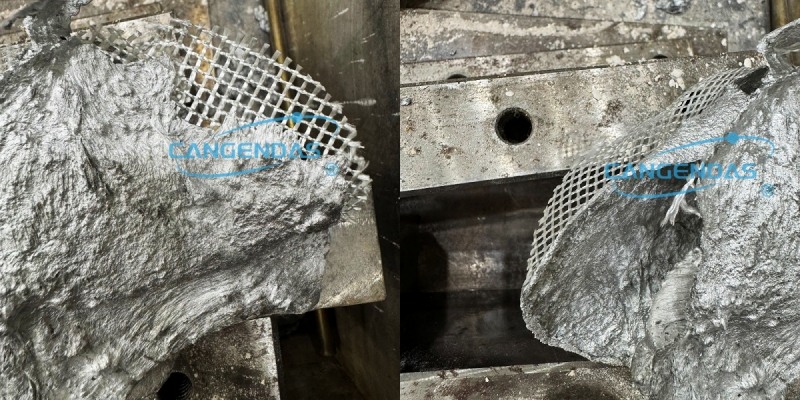
The casting iron melting process is prone to generating graphite slag, sulfide inclusions, and suspended furnace slag, which are the main causes of brittle cracking and reduced wear resistance of the castings. Commonly used components such as pipes, pump bodies, and mechanical shells all have strict quality requirements.
Consequences of no filtration: The castings have poor toughness, are prone to cracking, and have insufficient wear resistance. They are prone to cracking and leakage when subjected to pressure use.
Core purpose of filtration: To purify the iron liquid impurities and enhance the toughness, wear resistance, and pressure-bearing stability of the castings.
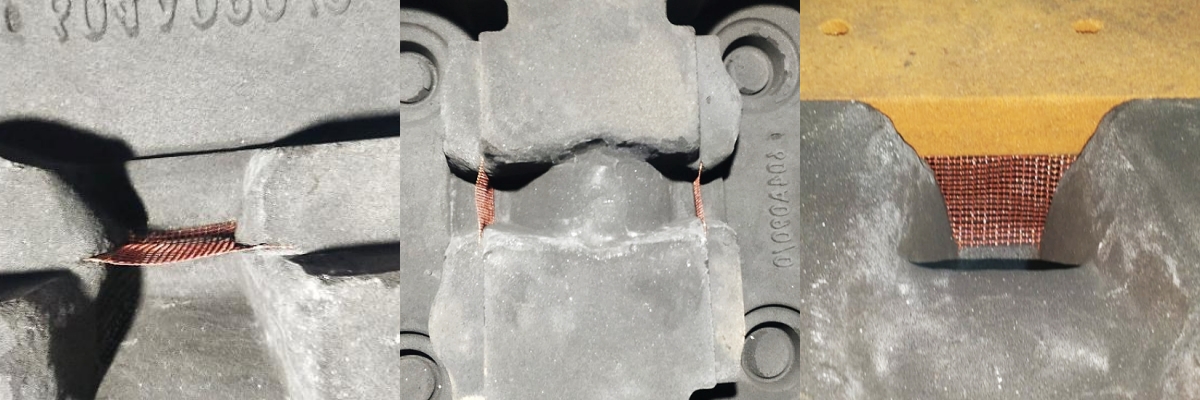
Copper alloys are mostly used for electrical conductivity, heat conductivity, and corrosion resistance in precision components.
Impurities will directly damage the homogeneous structure of the metal and affect the core performance.
Consequences of not filtering: Castings have sand holes and porosity, the electrical and thermal conductivity decreases, corrosion resistance deteriorates, and the service life is shortened.
The purpose of filtration: To maintain the purity of the copper liquid and ensure the core performance of the castings for electrical conductivity, heat conductivity, and corrosion resistance.
The melting temperature of molten steel is extremely high, and oxide inclusions and refractory debris pose the greatest threat.
Cast steel parts are mainly used in pressure vessels, mechanical precision components, and military accessories.
It is strictly required that the flaw detection be qualified.
Consequences of no filtration: Excessive internal inclusions, unqualified flaw detection, the castings are prone to fracture under force, and there are serious safety hazards.
The core purpose of filtration: Remove micrometer-sized inclusions, stabilize the metallographic structure, and meet the requirements of high-strength and high-flaw detection standards for high-end castings.
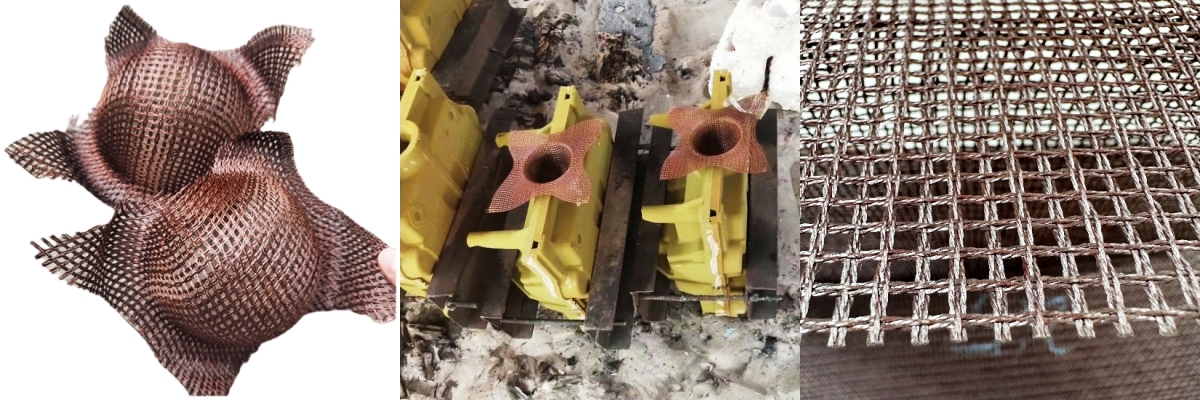
All casting metals such as aluminum, iron, copper and steel, after melting, all have their own oxide slag, suspended impurities and free gases.
The turbulent pouring process will also continuously cause defects.
Filtration is not an optional process, but a basic and necessary process for improving casting quality, reducing waste, conducting non-destructive testing, and ensuring delivery.
We, Hebei CangChen, are a professional manufacturer of foundry filtration products in China.
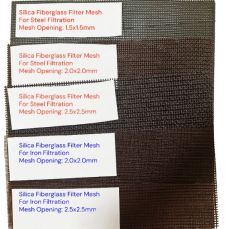
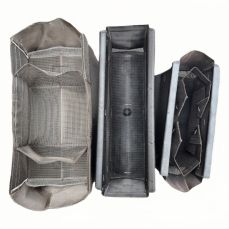
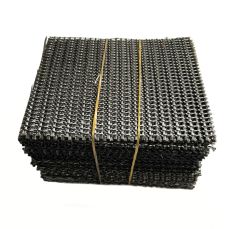
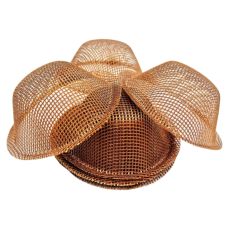
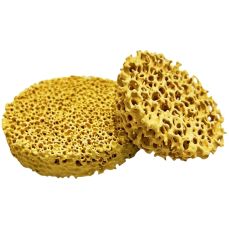
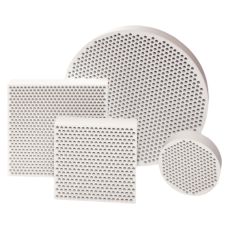
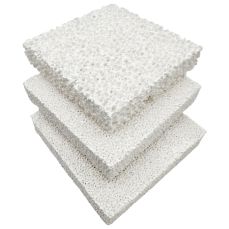
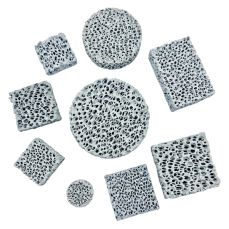
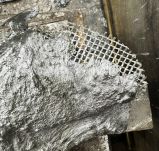
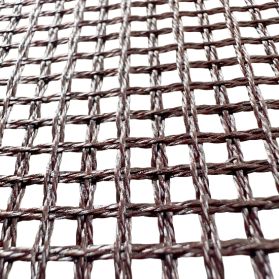
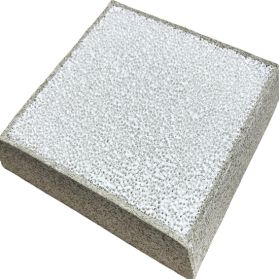
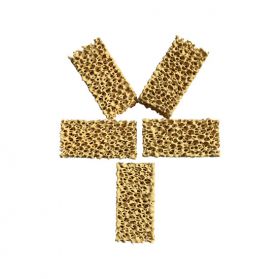
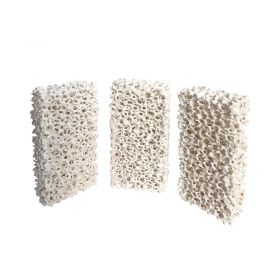
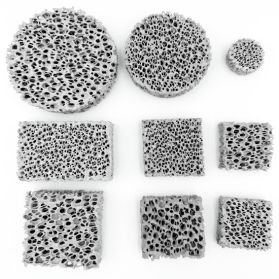
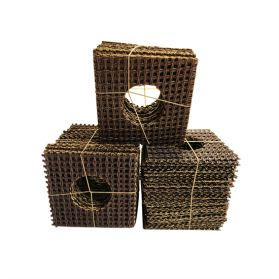
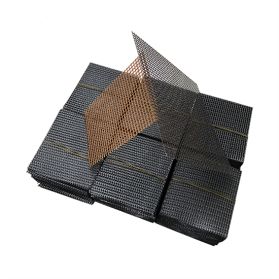
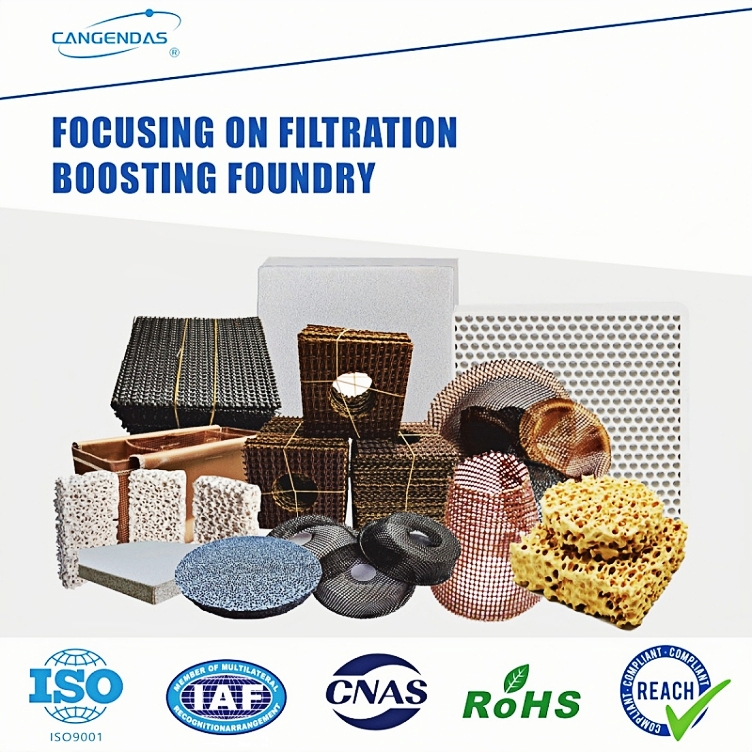
Our product range covers fiberglass filter mesh, ceramic foam filters (Al₂O₃ / SiC / ZrO₂) and straight-hole honeycomb filters, which are widely used for aluminum, iron, copper and steel casting.
1. Complete specifications
Full sizes and different PPI grades are available to match all kinds of casting processes.
2. Custom service supported
We can customize size, thickness, shape, packaging and logo according to customers' drawings and requirements.
3. Flexible order quantity
We accept both small trial orders and large bulk orders. No MOQ limit for regular models.
4. Stable quality & factory price
With strict quality control system, our filters effectively remove inclusions, reduce porosity, stabilize molten metal flow, and greatly improve casting quality and qualification rate.
We sincerely welcome global customers for inquiry, sample testing and long-term cooperation.
We will provide you with reliable quality, competitive price and professional service.
SiC Ceramic Foam Filter – Application & Performance
Sep. 23, 2026
Contact Us
+86 158 3011 4065
Guoruiyuan Building, ShengLi North Street, Chang'An District, Shijiazhuang City, Hebei Province, China.
Navigation
Navigation