Application
Mar. 28, 2022
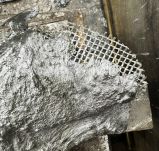
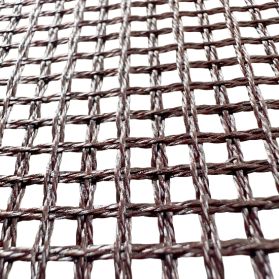
Fiberglass filtration mesh is used in foundries to filter molten metal before it enters the mold cavity. It helps capture slag, oxide films, refractory particles and other non-metallic inclusions while also helping regulate molten metal flow through the gating system.
The filter can be installed at different locations depending on the casting process, mold structure, pouring method, alloy type and required filtration efficiency. Common installation positions include the pouring cup, sprue, sprue base, runner, ingate and molten metal transfer system.
Correct filter placement is important. The filter should intercept inclusions before the molten metal reaches the casting cavity without excessively restricting flow or causing incomplete filling.
Widely used in automobile and motorcycle wheels, cylinder pistons, aluminum rods, aluminum materials, aluminum ingots, aluminum plates and precision casting of all types of aluminum alloy casting.
Effectively remove impurities, reduce turbulence and eliminate air bubbles, thereby improving the quality of castings and reducing costs. At the same time does not pollute the aluminum liquid and affect the chemical properties of the metal. Therefore, aluminum waste containing the filter mesh, aluminum liquid from sprue and the riser can be directly returned to the furnace for remelting, greatly reducing costs.
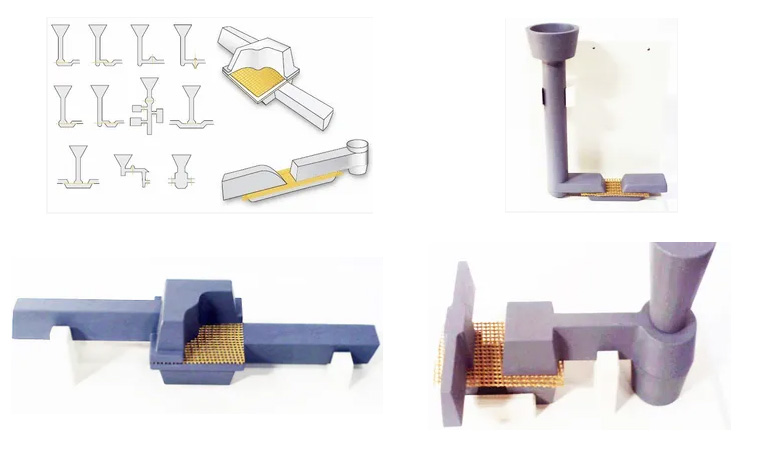
Fiberglass filtration mesh can be positioned directly below the pouring cup at the top of the sprue.
In this position, the molten metal passes through the filter immediately after pouring. This helps capture larger slag particles and other visible inclusions before they enter the main gating system.
This location is suitable for:
Simple sand-casting molds
Small and medium aluminum castings
Castings requiring early-stage filtration
Gating systems with sufficient metal head pressure
Applications where the filter needs to be installed and inspected easily
The filter must be properly supported so that it does not move, fold or become displaced during pouring.
Installing the filter at the bottom of the sprue allows molten metal to pass through it before entering the horizontal runner.
This is one of the most common locations for fiberglass casting filters because it combines filtration with flow control. It can help reduce the direct impact of molten metal entering the runner and promote a more stable flow pattern.
Typical applications include:
Aluminum wheel casting
Aluminum piston casting
Automotive component casting
Sand casting
Gravity casting
General aluminum alloy casting
A filter installed at the sprue base should have sufficient filtration area to prevent excessive flow restriction.
A flat fiberglass mesh filter can be placed horizontally or vertically inside the runner.
Runner placement allows the filter to remove inclusions after the molten metal has entered the gating system but before it is distributed to the individual ingates.
This position is suitable for:
Molds with long runner systems
Multiple-cavity molds
Castings with several ingates
Large or complex aluminum castings
Applications requiring more controlled metal distribution
The filter may be installed at the beginning, middle or end of the runner according to the gating design.
Placing fiberglass filtration mesh immediately before the ingates provides final-stage filtration before the molten metal enters the casting cavity.
This position can be useful for castings with strict surface-quality or internal-cleanliness requirements because inclusions generated or released inside the runner can still be captured before entering the product.
Typical applications include:
Precision aluminum castings
Thin-wall castings
Structural components
Automotive safety components
Castings requiring machining or polishing
Products with demanding surface-finish requirements
Because the filter is close to the mold cavity, it must provide adequate flow capacity to avoid cold shuts, misruns or incomplete filling.
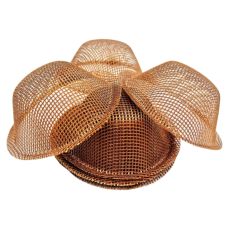
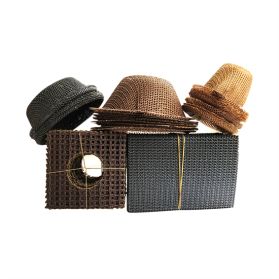
Fiberglass mesh can be formed into a cap, cup, bag or hat-shaped filter and installed in the sprue cup, at the bottom of the gate or inside a specially designed mold recess.
Cap filters provide a larger filtration surface than a simple flat sheet and can hold their position more securely in selected mold designs.
They are commonly used for:
Aluminum pistons
Automotive and motorcycle wheels
Aluminum housings
Small precision castings
Gravity die casting
Sand casting
Repetitive production molds
The cap diameter, depth, flange size and mesh specification should be matched to the sprue and available mold space.

Fiberglass filter mesh may also be used outside the mold during the transfer of molten aluminum.
Possible installation locations include:
Transfer launders
Holding-furnace outlets
Ladle outlets
Transfer funnels
Furnace-to-mold transfer systems
Aluminum ingot casting lines
In these applications, the filter removes inclusions before the molten aluminum reaches the casting station or mold.
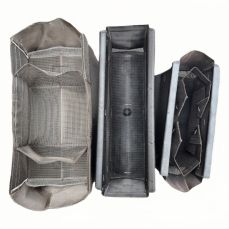
Filter bags, cone filters and specially shaped mesh products may be used where a flat sheet is not suitable.
In sand casting, fiberglass mesh filters can be installed:
Below the pouring basin
At the top or bottom of the sprue
Inside the runner
Before the ingates
Inside a molded filter chamber
Sand casting systems should provide sufficient support around the filter to prevent sand erosion, mesh movement and molten metal bypass.
Permanent mold and gravity casting commonly use fiberglass filters in sprue bushings, runners and transfer channels.
Typical products include:
Aluminum wheels
Brake components
Engine housings
Cylinder heads
Pistons
Pump housings
Transmission components
Rigid or preformed fiberglass filters may be selected where a loose mesh sheet could move under the force of the molten metal.
In low-pressure casting, molten aluminum rises through a stalk tube and enters the mold under controlled pressure.
A suitably designed rigid fiberglass filter may be installed in the sprue bushing or metal-flow path. The filter must remain stable during the pressure cycle and should not create an excessive pressure drop.
This configuration is commonly used in aluminum wheel and automotive component production.
Fiberglass filtration products can be used in molten aluminum transfer and distribution systems before the metal enters ingot, slab or rod molds.
Typical products include:
Aluminum ingots
Aluminum slabs
Aluminum billets
Aluminum rods
Aluminum plates
Continuous-casting products
Filter bags and transfer-system filters can be used to intercept inclusions during furnace-to-mold metal transfer.
Fiberglass filtration mesh is widely used for the production of:
Automobile wheels
Motorcycle wheels
Aluminum pistons
Cylinder heads
Engine and transmission housings
Pump and valve housings
Aluminum rods
Aluminum billets
Aluminum ingots
Aluminum slabs
Aluminum plates
Precision aluminum alloy castings
Decorative aluminum castings
General industrial components
The appropriate filter material must be selected according to the molten metal and pouring temperature.
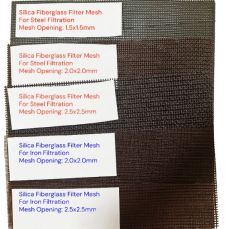
Standard treated fiberglass mesh is mainly used for aluminum and lower-temperature non-ferrous casting applications. High-silica fiberglass mesh or another high-temperature filter material should be selected for cast iron, steel, copper and higher-temperature alloys.
| Filter Location | Main Purpose | Suitable Applications |
|---|---|---|
| Under the pouring cup | Early removal of large inclusions | Simple molds and small castings |
| Top of the sprue | Filter metal immediately after pouring | General sand casting |
| Bottom of the sprue | Combine filtration and flow control | Wheels, pistons and automotive castings |
| Inside the runner | Filter before metal distribution | Multiple-cavity and complex molds |
| Before the ingates | Final filtration close to the cavity | Precision and high-quality castings |
| Sprue cap or filter chamber | Provide a larger, stable filter area | Repetitive aluminum casting |
| Transfer launder | Filter metal before the casting station | Ingot, slab, billet and rod production |
| Ladle or furnace outlet | Remove inclusions during metal transfer | Foundries and aluminum cast houses |
No single installation position is suitable for every casting. The location should be selected according to the gating design, casting size, pouring rate and required metal cleanliness.
Before deciding where to install fiberglass filtration mesh, foundries should evaluate:
Confirm whether the filter will be used for:
The filter material must withstand the actual pouring temperature.
Specify whether the application uses:
Sand casting
Permanent mold casting
Gravity casting
Low-pressure casting
Investment casting
Continuous ingot or slab casting
Different processes may require flat mesh, cap filters, bags or rigid preformed filters.
The filter must provide enough open area for the required volume of molten metal to pass through without interrupting mold filling.
A filter that is too small or too fine may increase filling time and create incomplete casting defects.
Molten metal containing a high level of slag or oxide inclusions may require:
A larger filtration area
More suitable mesh size
Improved upstream melt treatment
Multiple-stage filtration
More frequent filter replacement
A filter should not be used as a substitute for proper furnace cleaning, degassing and melt-handling practices.
The sprue, runner, ingates and filter chamber should be designed as one system.
Important considerations include:
Available filter-support area
Metal head height
Flow direction
Runner cross-section
Distance from the mold cavity
Risk of filter movement
Risk of metal bypass
Required mold-filling time
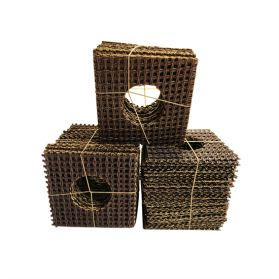
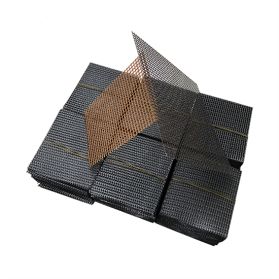
Available fiberglass filter forms include:
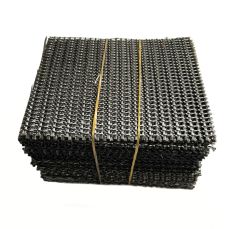
Cut mesh sheets
Mesh rolls
Round filters
Square filters
Rectangular filters
Cap filters
Cone filters
Filter bags
Custom-shaped filters
The filter should cover the complete metal-flow path without gaps around its edges.
Correctly selected and positioned fiberglass filtration mesh can help:
Remove slag and non-metallic inclusions
Reduce oxide films entering the mold cavity
Stabilize molten metal flow
Reduce excessive turbulence
Improve casting surface quality
Reduce internal inclusion defects
Improve machining performance
Reduce rejected castings
Improve production consistency
Reduce unnecessary cleaning and reworking
The final result depends on the filter specification, gating design, molten metal condition and pouring process.
We can supply fiberglass filtration mesh in different:
Mesh sizes
Fabric weights
Coating types
Temperature grades
Sheet dimensions
Roll widths
Cap diameters
Bag shapes
Custom-cut profiles
To recommend a suitable product and installation location, please provide:
Molten metal type
Pouring temperature
Casting process
Casting weight
Pouring time
Sprue and runner dimensions
Required filter shape
Current casting defects
Annual consumption
Send us your casting process, molten metal type, pouring temperature and gating-system drawing. Our team can recommend a suitable fiberglass filtration mesh type, size, shape and installation location for your foundry application.
SiC Ceramic Foam Filter – Application & Performance
Sep. 23, 2026
Contact Us
+86 158 3011 4065
Guoruiyuan Building, ShengLi North Street, Chang'An District, Shijiazhuang City, Hebei Province, China.
Navigation
Navigation