Ceramic Foam Filter
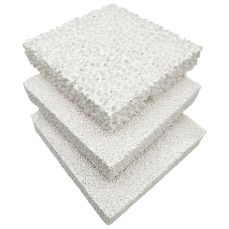
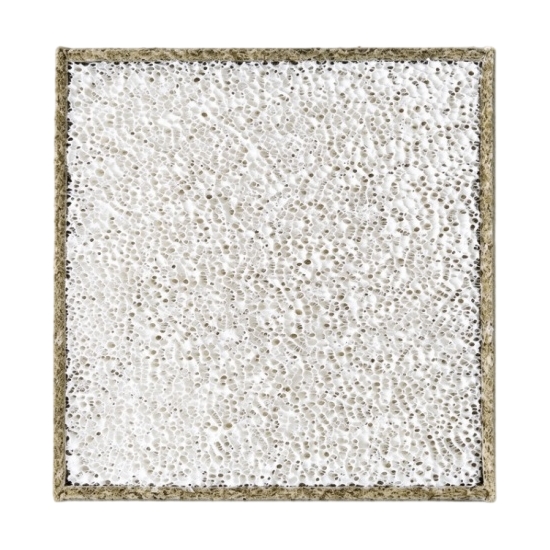
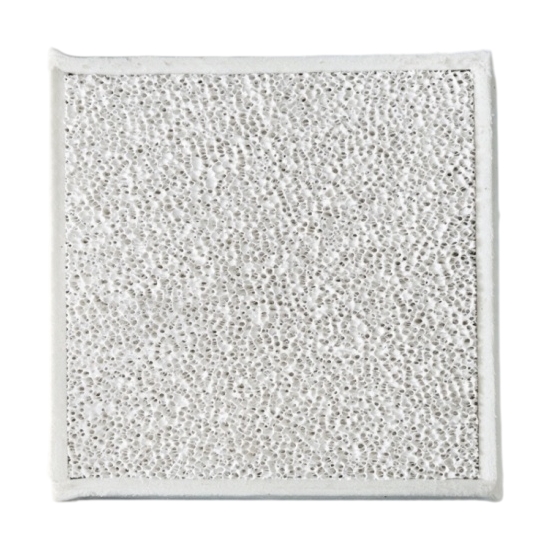
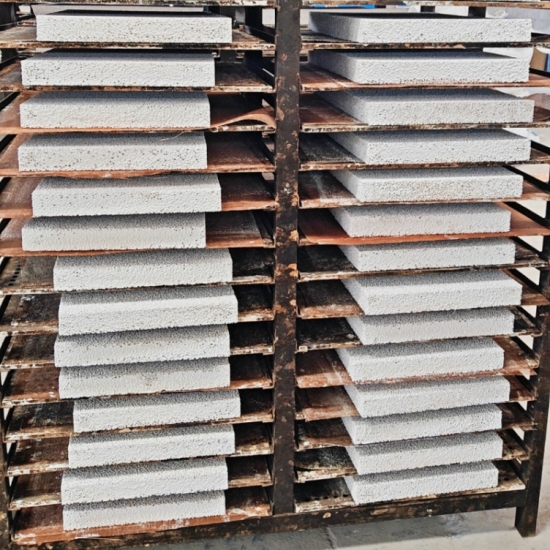
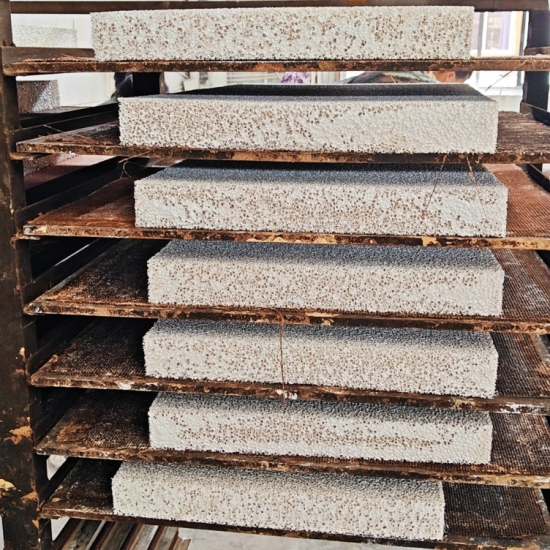
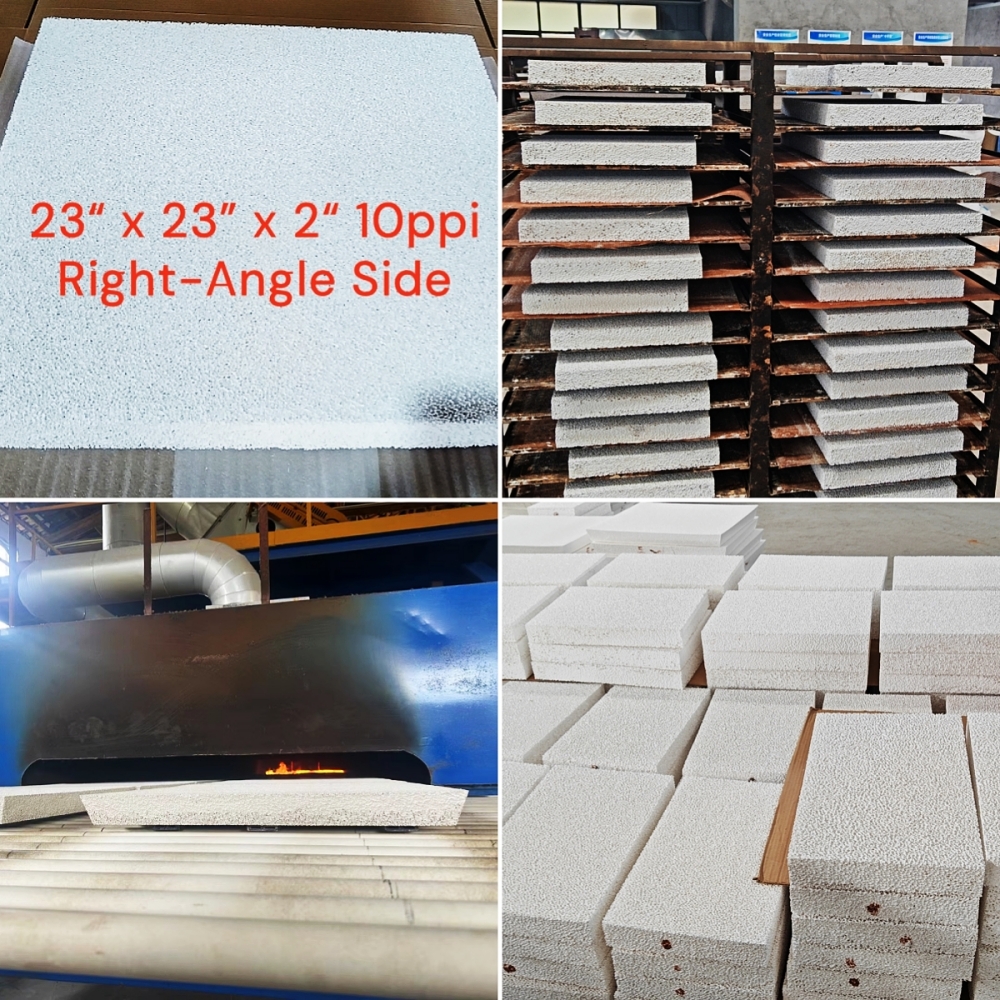
Large-format alumina (Al₂O₃) ceramic foam plates designed to sit in a refractory filter box in the aluminum launder or gating system. The plate is sealed around the rim so that the full metal stream passes through the open-cell foam; oxide films, alumina particles, bifilms, flux residues, and refractory fragments are retained through the plate thickness, and the outflow is straightened into a steady laminar flow.
7–26 in. square plates · 10–60 PPI · continuous service ~1100 °C · edge-sealed with fiber, paper, or expansive gasket · single plate per filter-box campaign
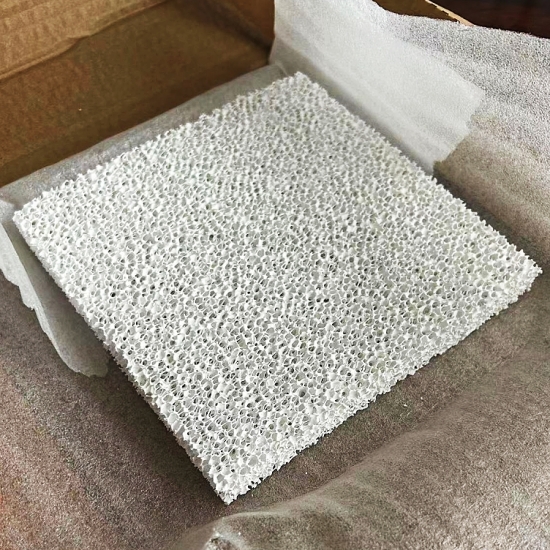
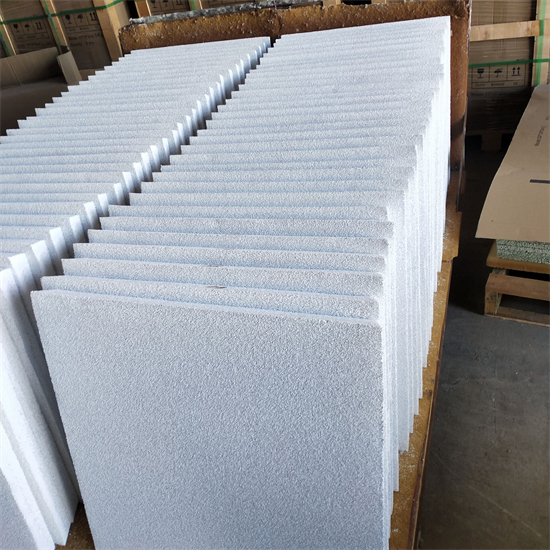
● Large-format plate construction — rigid white ceramic foam, 40–75 mm thick, trimmed to ±2 mm, sized for standard filter-box seats
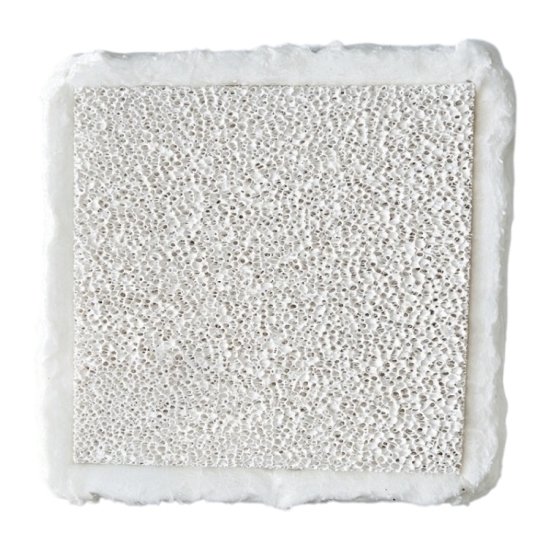
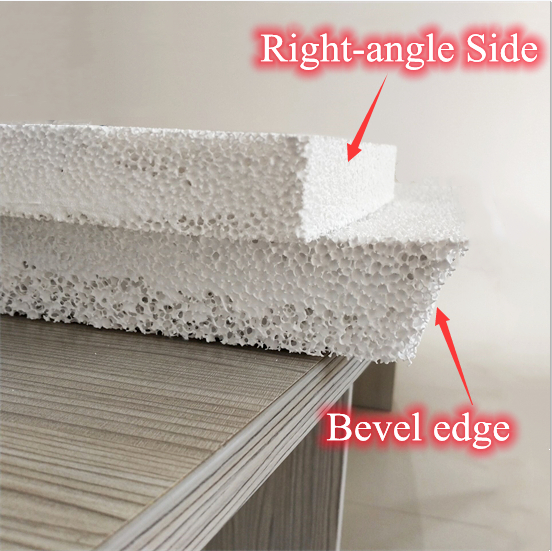
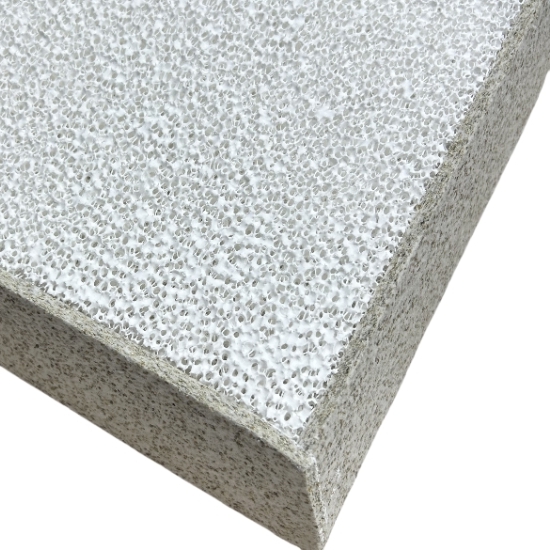
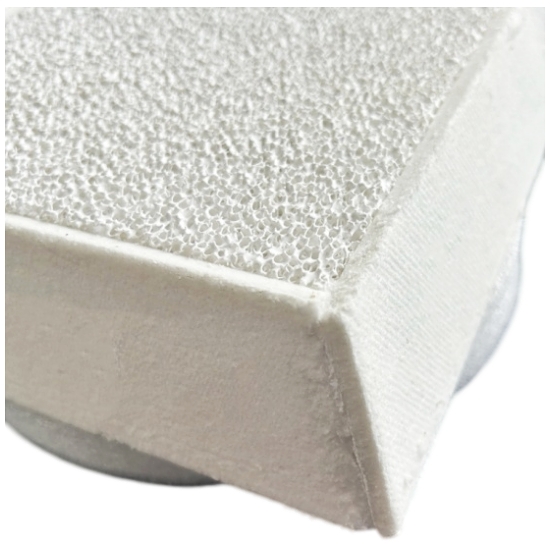
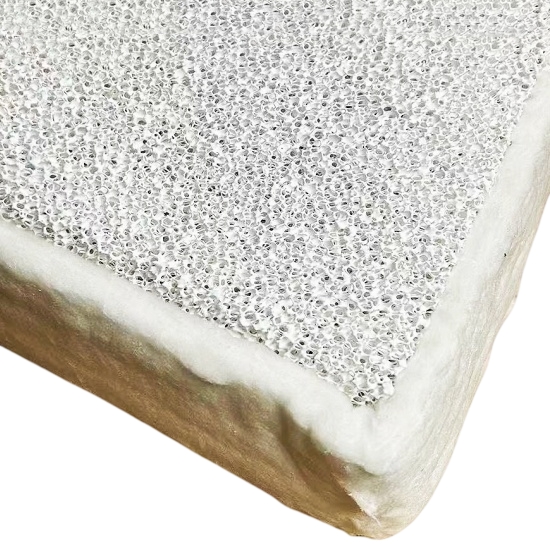
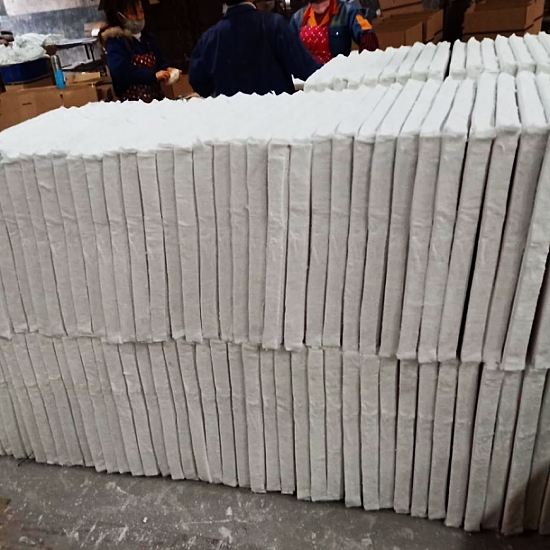
● Sealed perimeter — fiber, paper, or expansive gasket closes the gap between plate and box wall, preventing metal bypass
● Depth filtration through the full plate — fine inclusions below the nominal pore opening are captured inside the strut network, not only on the entry face
● Chemically inert in molten aluminum — no reaction with the melt, no silica or binder shed into the metal
● Flow straightening — the foam breaks up the incoming stream, lowers the Reynolds number, and suppresses fresh oxide-film folding after the plate
Suitable for pure aluminum and 3xxx, 4xxx, 5xxx, 6xxx, 7xxx series alloys, and high-silicon casting alloys such as A413 and ADC12. Standard sizes from 7 to 26 inches square, with custom cut plates up to about 700 mm.
Description
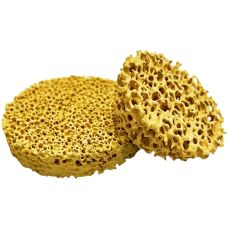
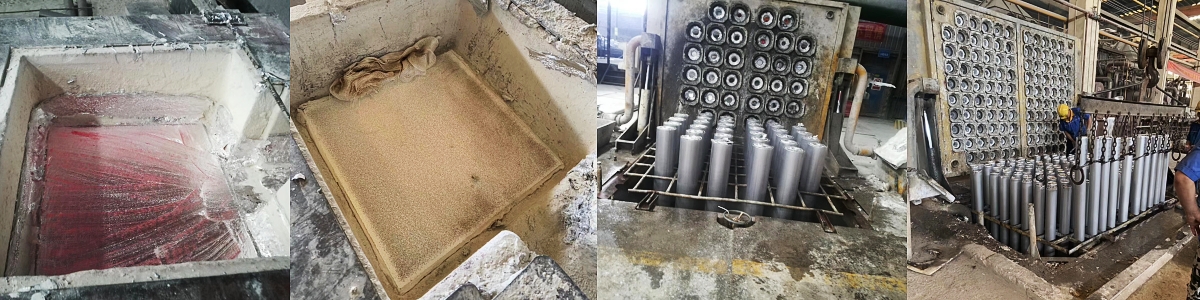
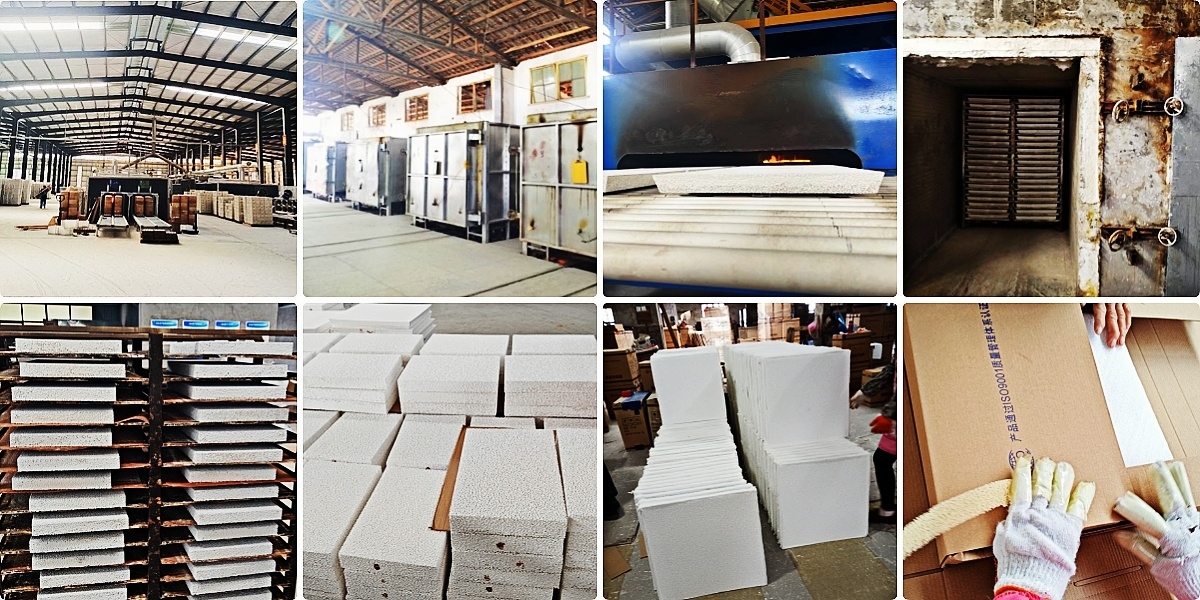
The plate is manufactured by impregnating a reticulated polyurethane sponge with an alumina ceramic slurry, removing excess slurry, drying, and sintering at high temperature. The polymer skeleton is burned out during firing, leaving a rigid white ceramic foam with an open, interconnected pore network that mirrors the original sponge geometry.
Alumina is the standard filtration material for molten aluminum. It is chemically inert across the full aluminum processing range (about 660–900 °C), mechanically strong enough to withstand the hydrostatic head in a filter box, and its surface provides good adhesion for the aluminum oxide inclusions that dominate aluminum melts.
Key physical properties:
● Continuous service temperature — about 1100 °C, with short-term resistance up to about 1200 °C, well above the 680–780 °C aluminum pouring range.
● Open porosity — 80–90%, giving a large internal contact surface for inclusion capture.
● Bulk density — 0.30–0.45 g/cm³, light enough to seat and handle in the filter box.
● Compressive strength — 0.8–1.5 MPa at room temperature.
● Thermal shock resistance — 5–6 cycles from 800–1100 °C to room temperature without cracking.
● Color — white to off-white.
The most common failure mode in aluminum filtration is bypass. If a gap remains between the edge of the ceramic plate and the wall of the filter box, unfiltered metal leaks around the rim and enters the mold without contacting the foam.
To prevent this, every plate is supplied with a sealed perimeter.
Three gasket types are available:
| Gasket type | Description | Typical use |
| Expansive (expanding) gasket | Expands on heating to fill the gap between plate edge and box wall | Continuous and semi-continuous casting; preferred for long campaigns |
| Fiber Paper gasket | Ceramic-fiber rim bonded around the plate edge | Gravity and permanent-mold foundries |
| Cotton gasket | High-temperature textile cotton fibre | Economical baseline gasket choice |
| Un-gasketed | Bare ceramic edge | For casthouses that seal with their own refractory paste or fiber rope |
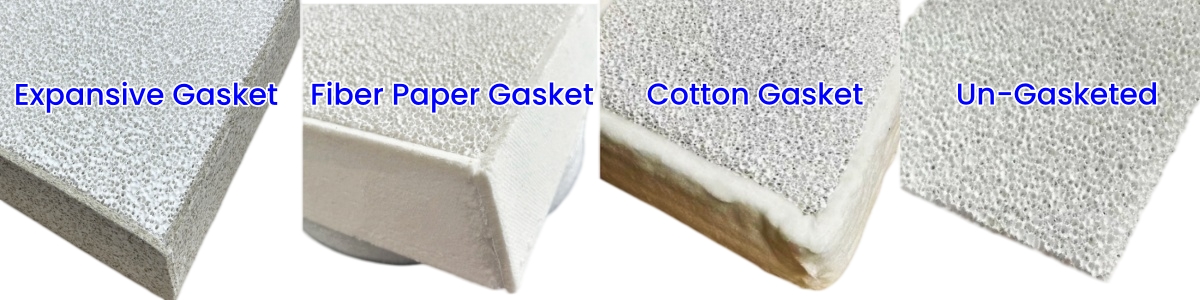
When the plate is seated, the gap to the box wall is closed to 1 mm or less. The filter box should have a stepped seat that supports the full underside of the plate. The metal head above the plate is held to about 300–400 mm maximum; beyond this, the plate may be pushed down, tilted, or cracked.
| Item | Detail |
| Material | Alumina (Al₂O₃) ceramic foam, high-temperature refractory bond |
| Al₂O₃ content | Typically 60–95% (higher grades available) |
| Continuous service temperature | ~1100 °C (short term ~1200 °C) |
| Aluminum pouring range | 680–780 °C, alloy-dependent |
| Pore density | 10 / 20 / 25 / 30 / 40 / 50 / 60 PPI |
| Porosity | 80–90% open |
| Bulk density | 0.30–0.45 g/cm³ |
| Compressive strength | 0.8–1.5 MPa at room temperature |
| Thermal shock resistance | 5–6 cycles, 800–1100 °C to room temperature |
| Edge seal | Expansive / fiber / paper gasket, or un-gasketed |
| Standard sizes | 7 · 9 · 12 · 15 · 17 · 20 · 23 · 26 in. (178–660 mm) |
| Thickness | 40 / 50 / 60 / 75 mm |
| Dimensional tolerance | ±2 mm |
| Edge gap after seating | ≤1 mm |
| Maximum metal head | ~300–400 mm |
| Preheat target | Box and plate to ~700–800 °C |
| Use | Single-use, one plate per campaign |
Molten aluminum forms a thin alumina film on contact with air. Turbulence in the launder or gating folds this film over on itself; the two oxide skins meet but do not bond, producing a bifilm that remains as an internal unbonded plane in the solidified metal. The melt also carries solid alumina particles, dross, flux residues, and refractory fragments.
As aluminum passes through the interconnected foam struts, three effects occur simultaneously:
1. Mechanical sieving— coarse material larger than the pore openings is retained at the entry face and accumulates as a filter cake.
2. Depth capture — fine particles and thin oxide films follow the tortuous strut path, collide with the ceramic walls, and adhere by surface-tension and van der Waals forces. Capture occurs across the full plate thickness, so inclusions below the nominal pore opening are retained.
3. Flow straightening — the incoming stream is broken into parallel sub-streams, lowering the Reynolds number and suppressing fresh bifilm formation after the plate.
Plates are selected to match the existing filter-box seat, with rated flow sized about 20% above the maximum pour rate to allow for gradual clogging:
| Plate size | Typical flow rate | Typical campaign capacity |
| 9" × 9" (228 mm) | 0.3–1.0 kg/s | 10–16 tons |
| 12" × 12" (305 mm) | 0.8–2.5 kg/s | ~15 tons |
| 15" × 15" (381 mm) | 2.2–4.5 kg/s | ~25 tons |
| 17" × 17" (432 mm) | 3.0–5.5 kg/s | ~35 tons |
| 20" × 20" (508 mm) | 4.0–6.5 kg/s | ~45 tons |
| 23" × 23" (584 mm) | 5.0–8.6 kg/s (≈360–700 kg/min) | 60+ tons |
Thicker plates (60–75 mm) are used for high-throughput slab casting, where a longer filtration path and greater holding capacity are required. Custom cut plates up to about 700 mm are available for non-standard launder and filter-box designs.
Pore density is selected according to the downstream product and cleanliness requirement:
| Application | Recommended PPI | Rationale |
| Double-zero foil, ultra-clean metal, aerospace castings | 50–60 | finest capture; zero surface-defect tolerance |
| DC extrusion billet (6xxx, 7xxx), premium profiles and plate | 40–50 | prevents die lines and surface rejection in extrusion and rolling |
| Automotive structural parts, T6 heat-treated, DC rolling slab | 30–40 | balances cleanliness with flow for fatigue-critical parts |
| LPDC wheels, engine blocks and cylinder heads | 30 | pressure tightness and fatigue life |
| HPDC structural parts | 20–30 | high filling speed; moderate cleanliness |
| General HPDC housings and covers | 20 | cost-effective, non-structural parts |
| Sand castings, general foundry, high flow | 10–20 | coarse inclusions only, maximum throughput |
1. What does the edge gasket do?
It closes the gap between the plate rim and the filter-box wall. Without a seal, unfiltered aluminum leaks around the edge and bypasses the foam. The expansive gasket expands on heating and maintains the seal through the campaign.
2. How is the correct PPI chosen?
By downstream product: 10–20 PPI for general sand castings, 20 PPI for standard HPDC, 30 PPI for wheels and engine parts, 30–40 PPI for structural and rolling slab, 40–50 PPI for extrusion billet and premium profiles, and 50–60 PPI for foil and aerospace castings.
3. What preheat temperature is required?
The filter box and plate are preheated gradually to about 700–800 °C before metal is introduced. Early slow heating drives off stored moisture; a cold plate freezes aluminum in its pores and can crack under thermal shock.
4. Are custom sizes available?
Yes. Standard plates run 7–26 inches square; custom cut plates up to about 700 mm are supplied to match non-standard launder and filter-box geometry.
Application:
Suitable for pure aluminum and 3xxx, 4xxx, 5xxx, 6xxx, 7xxx series alloys, and high-silicon casting alloys.
A413 and ADC12. Standard sizes from 7 to 26 inches square, with custom cut plates up to about 700 mm.
Look forward to hearing from you:
Contact Us
+86 158 3011 4065
Guoruiyuan Building, ShengLi North Street, Chang'An District, Shijiazhuang City, Hebei Province, China.
Navigation
Navigation